

Start With a Use-Frequency Audit
Before buying a single organizer, spend twenty minutes pulling everything out of one cabinet or drawer and sorting it by how often you actually reach for it. Daily items, weekly items, and rarely-used items almost never share the same storage needs - but they frequently end up in the same cramped drawer.
Items used every day should live between counter height and eye level, with nothing blocking them. Weekly-use tools can go in deeper cabinets or higher shelves. Seasonal equipment - a turkey roasting pan, a fondue set - belongs in the hardest-to-reach spots, or even outside the kitchen entirely.
This habit connects naturally to a broader principle: managing what enters your home matters as much as rearranging what's already there. A kitchen reorg that ignores incoming items will drift back to clutter within months.
Work Vertically - Especially Inside Cabinets
Most cabinet interiors have 12 to 18 inches of vertical clearance, yet most stacks of pots or plates use only the bottom six. Shelf risers, wire stackers, and tension-mounted shelves let you treat each cabinet like a two- or three-story building rather than a single floor.
Inside deep lower cabinets, pull-out organizers - whether built-in drawers or aftermarket slide-out trays - prevent the common problem of items disappearing into the back. If a full cabinet refit isn't feasible, a simple turntable (sometimes called a lazy Susan) placed in a corner cabinet recovers a surprising amount of accessible space.
For pots and pans, vertical dividers or pegboard-style rack inserts let lids stand upright and cookware nest without requiring the entire stack to be dismantled for the bottom piece. For a broader look at how these principles scale room by room, see this room-by-room reference.
The Counter Is Not Storage - It's a Workspace
Counter space in a small kitchen is among the most valuable real estate in the home. Every appliance sitting on the counter competes directly with your actual workspace. A general rule worth testing: if an appliance isn't used at least three to four times per week, it probably doesn't belong on the counter.
When deciding which small appliances genuinely earn their footprint, consider both frequency and what they replace - for more on that evaluation, this appliance guide covers what each compact tool actually enables and who it's suited for.
Items that stay on the counter should be grouped intentionally: a coffee station near the sink, a toaster near the bread storage. Grouping by workflow creates natural "zones" and reduces the constant moving of items that erodes any system over time.
Pantry and Cabinet Consistency Pays Off
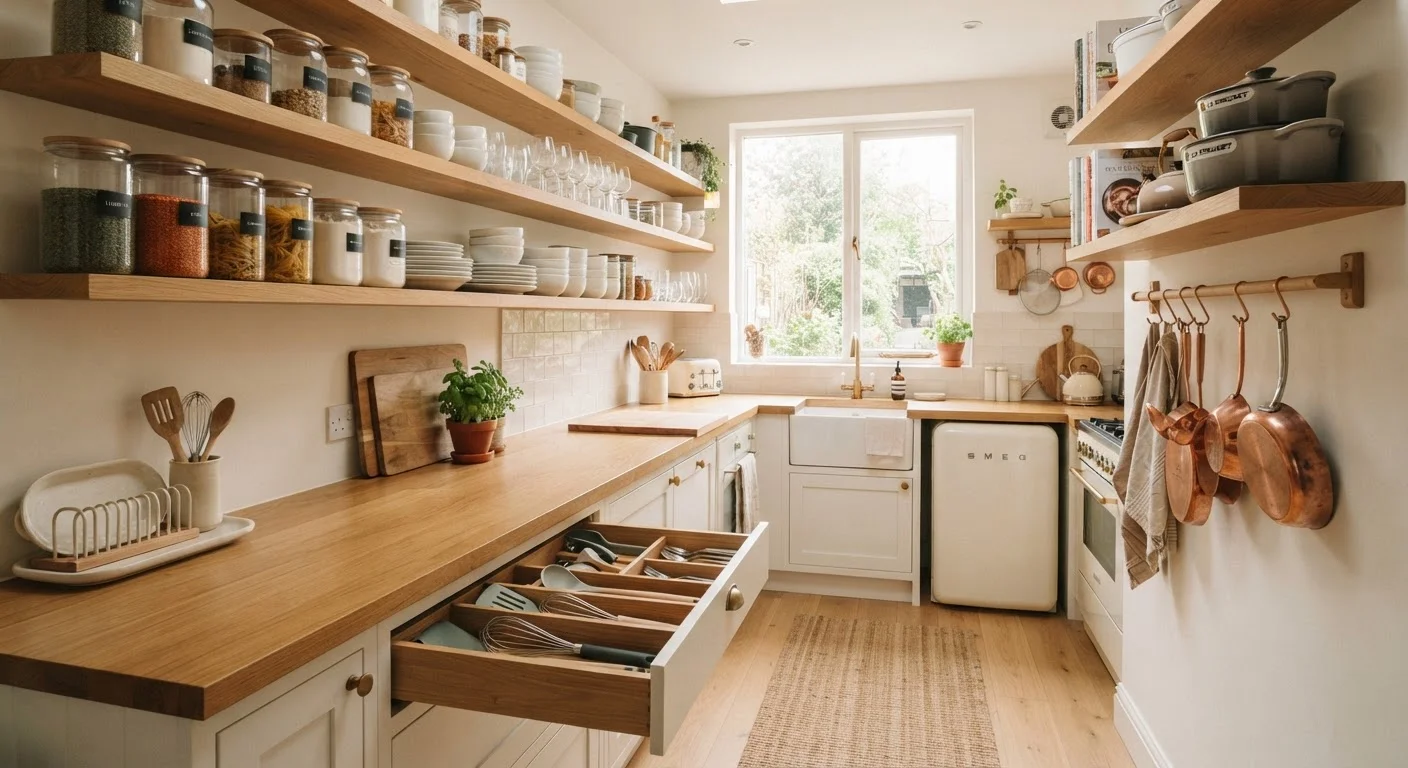
Uniform containers - same height, same lid style - allow shelves to stack cleanly and make it possible to see contents at a glance. Decanting dry goods like pasta, rice, and flour into clear containers with labels isn't just aesthetic; it lets you identify quantities quickly and prevents duplicate purchasing.
For the pantry specifically, a first-in, first-out rotation (moving older items to the front when restocking) prevents waste and reduces the frustration of discovering expired goods. A well-structured pantry guide can help you build a system that supports both organization and everyday meal prep.
Keep like items together - baking supplies, canned goods, snacks - but resist over-categorizing. Too many sub-zones create their own friction. Aim for groupings that reflect how you actually cook, not an idealized inventory system.
Maintain the System, Not Just the Look
A kitchen that looks organized after a Sunday reset often falls apart by Wednesday if the system requires too much daily effort. The most durable setups share one trait: every item has a specific home, and returning it takes no more effort than tossing it somewhere approximate.
Build in a brief weekly reset - five to ten minutes - rather than relying on a major reorganization every few months. This is the equivalent of maintenance over renovation: lower effort, more consistent results.
Finally, reconsider periodically. Cooking habits shift, households change size, new tools arrive. An annual review of what's in your cabinets - informed by how often you actually reached for each item - keeps the system calibrated to real life rather than an earlier version of it. For pantry-specific stocking decisions, this guide to pantry staples offers useful criteria for deciding what truly earns its shelf space.
The content on this site is provided for informational purposes only and should not be considered a substitute for professional advice. While we strive to provide accurate and up-to-date information, we make no guarantees regarding its completeness or accuracy. Always consult a qualified professional for advice specific to your circumstances before making any decisions.