

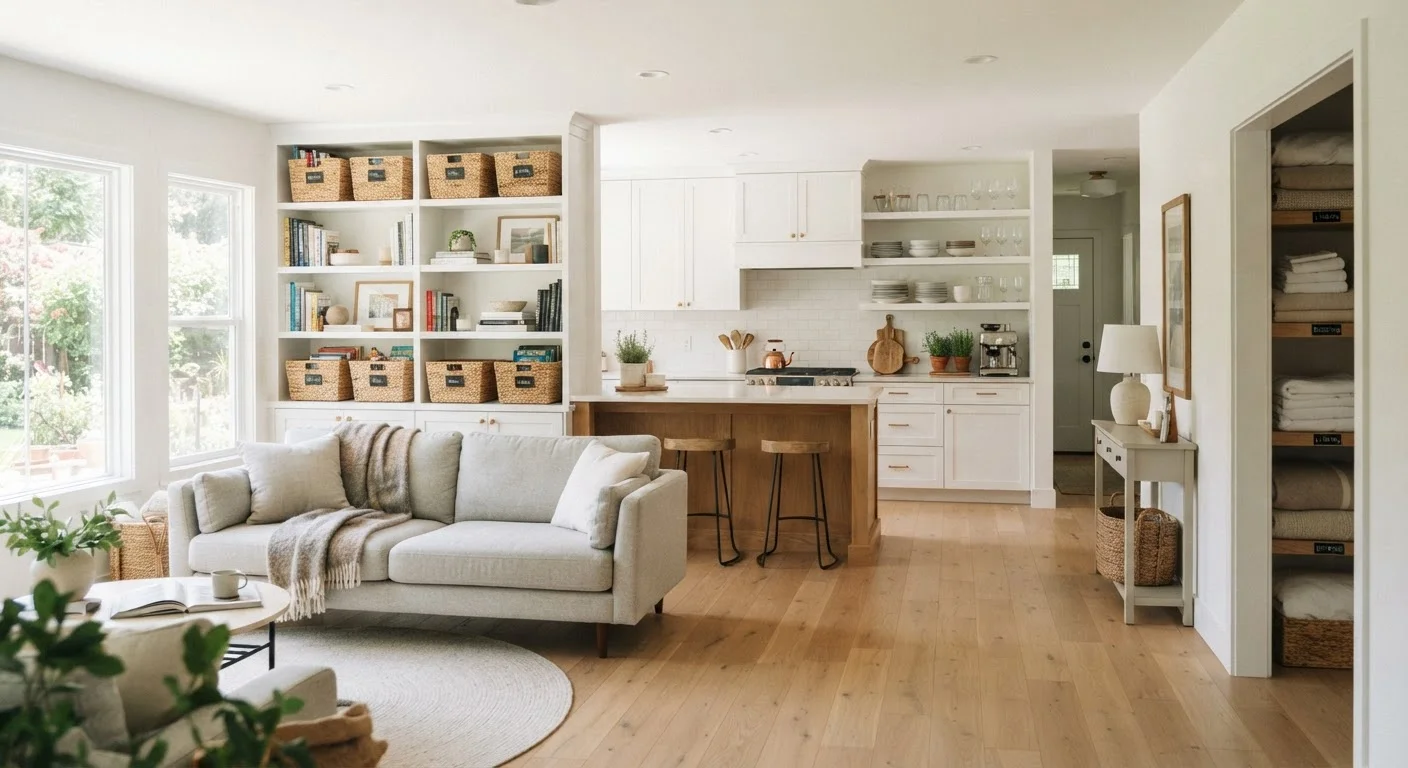
The Core Principles That Apply to Every Room
Before reaching for a basket or shelf divider, it helps to understand the principles that make organisation durable rather than decorative. The same logic applies whether you're tackling a kitchen drawer or a bedroom wardrobe.
Category first. Group items by what they are and how they're used - not by where they happen to fit. Mixing first-aid supplies with spare batteries because both are small creates a drawer you dread opening. Meaningful categories reduce search time and make restocking intuitive.
Frequency determines proximity. Items used daily belong at arm's reach. Things used monthly can go on a higher shelf or toward the back of a cabinet. Seasonal items earn the hardest-to-reach spots. This tiered approach prevents the common problem of prime real estate being occupied by rarely used objects.
Declutter before you organise. Acquiring bins and dividers before reducing volume is one of the most common and costly organisation missteps. Removing what you no longer need or use first ensures that storage solutions are sized to actual need.
Do a single room completely before moving to the next. Partial organisation across multiple rooms often means none of them reach a functional state.
Momentum matters in organisation projects; completing one space provides visible results that motivate the next phase and prevents the household from existing in prolonged disorder.
Use a 'one in, one out' rule for categories that tend to accumulate - like kitchen gadgets or bathroom products - to prevent future overflow.
Without a check on incoming volume, even well-organised spaces revert to clutter over time as new items arrive without old ones leaving.
Contain, then label. Containment keeps categories intact when items are returned carelessly. Labels remove ambiguity - they're especially valuable in shared households where different people put things away.
Kitchen and Pantry
The kitchen rewards organisation more than almost any other room because disorganisation directly slows down daily tasks. A few structural decisions go a long way.
Group countertop items by use: coffee station together, prep tools near the cutting area, dish drying away from the stove. Counters cleared of rarely used appliances give you functional workspace. Inside cabinets, place frequently reached items - everyday plates, glasses, go-to spices - at eye level or just below. Stack less-used pieces above.
Drawer organisation benefits from dividers that hold utensil categories in fixed zones. A drawer that mixes spatulas, measuring spoons, and rubber bands will be reshuffled within a week. Dividers make returning items to the right spot the path of least resistance.
For pantry organisation, the same frequency and category logic applies. Canned goods grouped by type, dry staples in clear or labeled containers, and a dedicated snack zone all reduce the time spent searching. See our complete pantry organisation guide for a deeper breakdown of dry goods, spices, and shelf arrangement. If you're setting up a kitchen from scratch, this room-by-room equipment plan covers what to prioritise from the start.
1 hr+
Time lost weekly searching for misplaced items
Research on household productivity suggests many adults spend over an hour per week locating misplaced items at home.
80%
Of clutter is items never or rarely used
Organisation professionals commonly estimate that the large majority of household clutter consists of items used infrequently or not at all.
Bedrooms and Closets
Bedroom organisation centres on two zones: the closet and the sleep environment. Mixing the two - using nightstands or under-bed space as catch-alls - tends to create low-level visual noise that disrupts rest.
In the closet, hanging clothes by category (work, casual, occasion) and then by colour within each category dramatically reduces the time spent choosing outfits. Folded items benefit from vertical folding methods - standing garments upright in drawers rather than stacking them flat keeps every piece visible without disturbing others below it.
Seasonal rotation is a practical strategy in smaller closets: store off-season items in labeled bins on high shelves or under the bed in flat containers, and rotate them as the season changes. This approach keeps only relevant clothing accessible.
Nightstands and dressers accumulate clutter quickly. Limiting the nightstand to items used nightly - a book, charging cable, water glass, lamp - and giving everything else a designated home elsewhere prevents the surface from becoming a default landing zone.
Bathrooms and Linen Storage
Bathrooms present a specific challenge: high humidity limits some storage materials, and small footprints demand creative use of vertical space. Drawer dividers, cabinet door organisers, and over-toilet shelving units all reclaim space without requiring any permanent installation.
Group bathroom items by person in shared bathrooms (each person's products in a dedicated bin or drawer section) or by category in a personal bathroom (skin care, hair care, medication). Either approach reduces the rummaging that leads to products migrating out of place.
Medicine cabinets and under-sink areas benefit from turntables - sometimes called lazy Susans - that give access to items stored at the back without removing everything in front. Avoid storing medications in high-humidity areas; a bedroom drawer or hallway closet is often a more appropriate location.
Linen closets work best with folded sets stored together: a pillowcase tucked inside its matching sheet set keeps the closet coherent and makes bed changes faster. Towels roll more compactly than they fold flat, freeing shelf space for other items. Spare toiletries and cleaning supplies each deserve their own shelf zone so restocking is straightforward.
Living Areas, Entryways, and Laundry Spaces
Entryways are the first and last stop in the daily routine, making them high-stakes for organisation. A designated landing zone - hooks for bags and coats, a tray or small bin for keys and mail, a shoe rack or bench with storage - prevents the entryway shuffle that delays departures and clutters the space.
Living areas accumulate a mix of media, games, blankets, and children's items that resist neat categorisation. Baskets and ottomans with interior storage contain categories visually while keeping them accessible. The key is assigning every recurring item a specific home so that tidying becomes a matter of returning things rather than deciding where they belong.
Laundry rooms and spaces reward organisation that reduces steps. Sorting hampers at the point of collection - lights, darks, delicates - mean laundry is pre-sorted when wash day arrives. Supplies stored within arm's reach of the machines, and a folding surface or rack nearby, keep the process efficient. Our detailed guide on laundry room organisation covers layout strategies for both large and compact spaces.
Choosing Storage Products Wisely
The market for storage products is large and varied, which means it's easy to accumulate solutions that don't solve the actual problem. A few evaluation criteria help narrow choices effectively.
Measure before buying. A bin that's a half-inch too wide for a drawer slot is unusable. Taking precise measurements of shelves, drawers, and cabinet interiors before shopping eliminates most returns and second-guessing.
Match the material to the environment. Fabric bins work well in dry bedroom closets but deteriorate in damp bathrooms. Wicker looks appealing but can harbour dust in open-air pantries. Solid-sided bins in moisture-prone areas and breathable options in dry, ventilated spaces will serve better over time.
Prioritise visibility and access. Clear containers or open-top bins make contents visible at a glance. Lids are appropriate for long-term storage but add a step to daily-use items - factor in how often you'll access the contents. For smart home tools that can help track household inventory or manage home systems, see our Home Tech & Gadgets hub.
Start with the problem, not the product. Identify where friction occurs in daily use, then select a product that directly addresses it. Organisation purchases made without a specific functional goal tend to add volume rather than reduce it.
The content on this site is provided for informational purposes only and should not be considered a substitute for professional advice. While we strive to provide accurate and up-to-date information, we make no guarantees regarding its completeness or accuracy. Always consult a qualified professional for advice specific to your circumstances before making any decisions.