

The Decluttering Trap Most People Fall Into
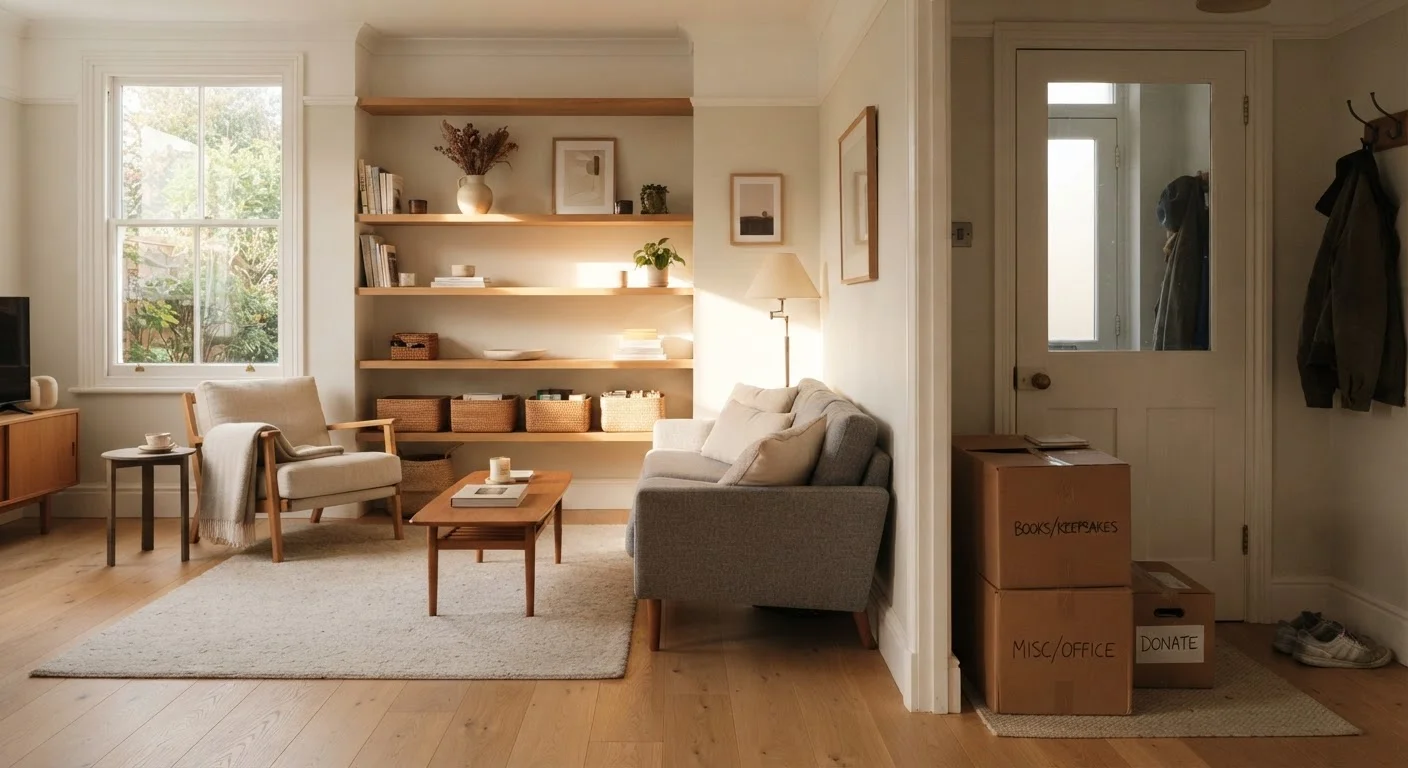
Every few months, many households go through the same cycle: a weekend purge, bags for donation, a satisfying empty shelf - followed, within weeks, by the gradual return of stuff. This isn't a failure of willpower. It's a structural problem. Decluttering addresses what's already there, but it doesn't change the flow of what keeps arriving.
Think of it like bailing water from a boat without fixing the leak. The effort is real, but the result won't hold. If your buying habits, gift-acceptance patterns, and free-item reflexes stay unchanged, cleared surfaces simply become temporary. Understanding this gap is the first step toward making any organizing effort actually last.
For a practical companion to this thinking - specifically in your kitchen - see our kitchen equipment audit guide, which walks through evaluating every tool and appliance you own.
Myth
If I just get organized once - really thoroughly - it will stay that way.
Fact
Organization is a maintained state, not a finished project. Without intake controls, clutter returns regardless of how thorough the initial purge was.
A one-time clear-out removes existing items but does nothing to change the rate at which new ones arrive. Research on household organization consistently points to accumulation habits - not storage capacity - as the primary driver of clutter. Sustained tidiness requires an ongoing decision process, not a single event.
Myth
I just need more storage - then I'll have enough room for everything.
Fact
Adding storage without reducing intake typically results in more filled containers, not less clutter.
More bins, shelves, or closet organizers can make a space feel temporarily manageable, but they also create capacity for more items to accumulate. Professionals who work in organizing commonly observe that households with the most storage often have the most stuff - because available space tends to get filled. The constraint isn't usually the containers; it's the volume of items relative to what the space genuinely needs to function.
Myth
Free items don't count as clutter because they didn't cost anything.
Fact
Free items occupy the same physical space as purchased ones and create the same organizational burden.
Promotional products, gifts, hand-me-downs, and items rescued from curbside all enter the home without a deliberate purchase decision - which makes them especially easy to accumulate without noticing. The zero price tag doesn't change the space they take up or the mental load of managing them. Applying a consistent filter to free items - asking whether you'd buy it if it weren't free - is one of the more effective intake habits to develop.
Myth
Decluttering is mainly about getting rid of things you no longer love.
Fact
Effective decluttering addresses both what leaves and what continues to enter - love-based criteria alone won't slow accumulation.
Emotional attachment frameworks for sorting (keeping only what brings joy, for example) are useful for evaluating existing possessions, but they're backward-looking. They don't create a forward-looking filter for new acquisitions. A home can be thoroughly sorted by emotional value and still refill with clutter within months if purchasing and acquisition habits aren't also examined. Both sides of the equation - outflow and inflow - need attention for lasting results.
Myth
Clutter is a sign that someone is disorganized by nature.
Fact
Clutter is most often the result of accumulation systems and environmental design, not a fixed personality trait.
Framing clutter as a character flaw can lead people to focus on willpower rather than systems - which rarely works long-term. Behavioral research on habit formation suggests that environment and friction matter far more than motivation. A household that makes it easy for items to come in and hard for them to leave will accumulate clutter almost regardless of who lives there. Changing the system - how items enter, where they land, and when decisions get made - is more effective than trying to change personality.
Building an Intake System That Works
An intake system doesn't have to be complicated. At its core, it's a decision-making habit applied before anything new enters your home. The most widely cited framework is the one in, one out rule: when something new comes in, something comparable leaves. It sounds simple, but it requires a moment of deliberate thought at the point of acquisition - not after the item is already on the shelf.
80%
Of kept items rarely or never used
Organizational research frequently estimates that roughly 80% of stored household items are seldom or never used, suggesting intake decisions matter more than storage solutions.
48 hrs
Recommended pause before non-essential buys
A short waiting period before purchasing discretionary items is a commonly recommended strategy among consumer behavior researchers to reduce impulse-driven acquisition.
Beyond the one-in-one-out rule, a few practical habits make a real difference:
- Implement a 48-hour pause before non-essential purchases. If you still want it in two days, it's less likely to be impulse-driven clutter.
- Create a landing zone review - a weekly five-minute check of any surface that tends to collect items: entryway tables, kitchen counters, and the bedroom chair that becomes a clothes pile.
- Set a 'free item' filter. Promotional goods, conference swag, and hand-me-downs all enter the home without a purchase decision. Apply the same scrutiny you'd give a bought item: does this serve a real need?
If you're setting up a household from scratch, these habits are worth building from day one. Our guide on setting up a new home covers which essentials to prioritize - a useful framework for keeping acquisitions intentional from the start.
For smaller spaces where overcrowding becomes a problem faster, the organizing principles in our small kitchen storage guide apply well beyond the kitchen: limit categories, assign fixed homes to items, and don't let storage space justify acquiring more.
Clutter management is ultimately a decision-making practice. The physical act of sorting and donating matters, but its effects are durable only when paired with consistent choices about what earns a place in your home in the first place.
The content on this site is provided for informational purposes only and should not be considered a substitute for professional advice. While we strive to provide accurate and up-to-date information, we make no guarantees regarding its completeness or accuracy. Always consult a qualified professional for advice specific to your circumstances before making any decisions.