

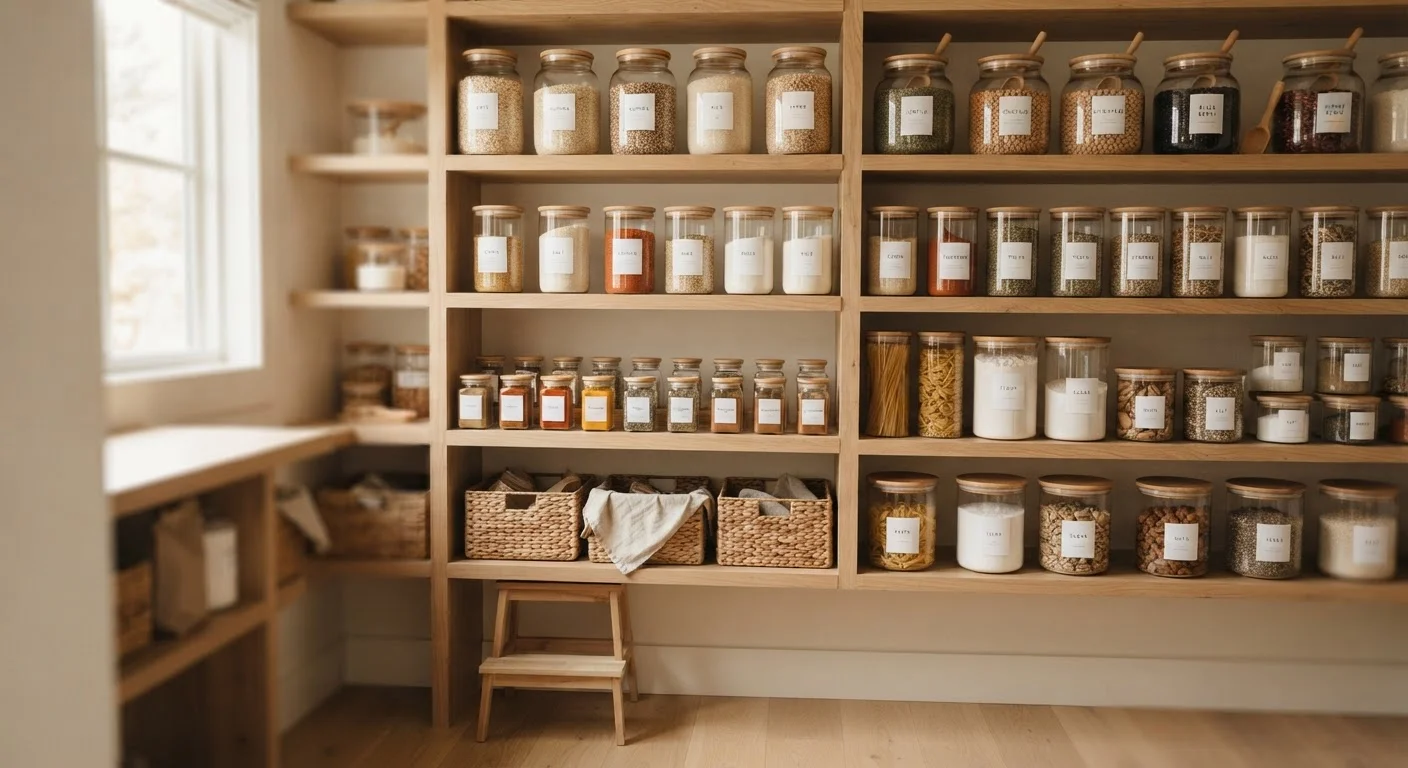
Why Pantry Organisation Actually Matters
A disorganised pantry doesn't just cause frustration - it actively works against you. Duplicate purchases stack up when you can't see what you have. Ingredients expire unnoticed behind taller items. Meal planning stalls because you're not sure what's available. The pantry, more than any other storage space in the kitchen, directly shapes whether cooking feels manageable or chaotic.
The goal isn't a photogenic display. It's a system where you can locate any ingredient in under ten seconds, assess what needs restocking at a glance, and reduce the mental load that comes with daily meal decisions. A functional pantry also makes mise en place prep faster and more reliable, since half the work is already done before you even turn on the stove.
The Core Pantry Categories to Build Around
Rather than approaching the pantry as a comprehensive ingredient library, think in terms of functional categories. Each category covers a different role in cooking, and stocking one or two reliable options within each keeps things manageable.
- Grains and starches: Rice, pasta, oats, and one or two whole grains form the backbone of most weeknight meals. These are shelf-stable for months and versatile enough to anchor dozens of dishes.
- Legumes: Canned or dried beans and lentils provide protein and texture. Canned versions offer convenience; dried extend your budget and expand variety.
- Canned goods: Whole tomatoes, coconut milk, broth, and chickpeas cover a wide range of cuisines and cooking methods. Prioritise options with minimal additives.
- Baking essentials: All-purpose flour, baking powder, baking soda, sugar (white and brown), and cornstarch handle most everyday baking and sauce-thickening needs.
- Sweeteners and acids: Honey, maple syrup, apple cider vinegar, and white wine vinegar balance flavors across savory and sweet applications.
For a deeper look at which specific ingredients justify permanent shelf space, see our guide on pantry staples that earn their place.
30-40%
Household food wasted annually in the US
The USDA estimates that between 30 and 40 percent of the US food supply is wasted, much of it at the consumer level due to disorganisation and poor storage.
1-2 years
Shelf life of most ground spices
The FDA notes that ground spices typically retain best quality for one to two years; after that, potency declines noticeably even if the spice is technically safe to consume.
3-6 months
Recommended use window for opened cooking oils
Most culinary oil producers and food safety sources recommend using opened bottles within three to six months to avoid rancidity affecting dish quality.
How to Arrange Your Pantry for Daily Use
The most common organisation mistake is grouping items by category rather than by frequency of use. Putting all canned goods together sounds logical, but it means your everyday pasta shares a shelf with the canned pumpkin you use once a year. A more practical approach:
- Eye-level zone: Reserve this for items you reach for daily - oils, the grains you cook most often, go-to spices, and any snacks in regular rotation.
- Upper shelves: Store infrequently used items here: specialty flours, backup supplies, and seasonal ingredients.
- Lower shelves: Heavy items (large oil bottles, bulk grains, canned goods) belong here for stability and ease of lifting.
- Door or side storage: Ideal for packets, foil, small jars, and single-use items that don't need prime real estate.
If you're working with limited space, the same principles scale down. Our resource on small kitchen storage principles covers how to maximise vertical and door space effectively.
Use a single consistent bin or basket per zone rather than individual items scattered across a shelf. Grouping creates a natural boundary that makes restocking and retrieval faster.
Professional kitchen prep cooks rely on station organisation - everything for a task lives together - because it eliminates seconds lost to scanning. The same logic applies at home.
When you open a new spice or dry good, write the date on the bottom of the container with a marker. It takes two seconds and removes all guesswork at the next audit.
Without a date reference, most people massively overestimate how long they've had an ingredient - leading to wasted food and degraded cooking results.
Spices, Oils, and Condiments: The Supporting Cast
Spices, oils, and condiments are where pantries most commonly go wrong - either overcrowded with rarely used items or stocked with ingredients past their prime. Both situations undermine the food you're making.
Spices
Ground spices generally hold potency for one to two years; whole spices last somewhat longer. Store them away from heat and direct light - above the stove is one of the worst locations despite being common. A small, curated collection of genuinely useful spices outperforms a crowded rack of half-empty jars every time. Core candidates: kosher salt, black pepper, cumin, smoked paprika, coriander, chili flakes, garlic powder, and dried oregano.
Oils
Keep a neutral oil (such as vegetable or canola) for high-heat cooking and an extra-virgin olive oil for finishing and dressings. Once opened, most oils should be used within three to six months. Rancid oil imparts an off-flavor that affects the entire dish, so don't hold onto bottles indefinitely.
Condiments
Soy sauce, fish sauce, Worcestershire, and hot sauce cover a remarkable range of flavor-building scenarios. Many of these belong in the refrigerator after opening - check labels consistently. For condiments that stay shelf-stable, group them together in a dedicated door rack or lower shelf bin.
Maintaining a Pantry That Stays Functional
Setting up a pantry once isn't enough - the system needs light, regular maintenance to remain useful. The two habits that matter most are consistent labeling and periodic audits.
Labeling: Decant dry goods into clear, uniform containers and label them with the contents and the date they were opened or purchased. This single habit eliminates the guesswork that causes waste and duplicate buying. You don't need expensive containers - consistent sizing matters more than material.
Quarterly audits: Every three months, pull everything forward, check expiration dates, and assess what you've actually been using. Items that haven't moved in two audits are candidates for removal. This practice also naturally aligns your pantry with seasonal cooking shifts. Linking your audit to your weekly meal planning routine makes the whole process more purposeful.
First in, first out: When restocking, place newer items behind older ones. It's a standard commercial kitchen practice that dramatically reduces expired-ingredient waste at home.
For a broader view of how these principles apply across the rest of your home, room-by-room organisation principles offer a useful framework. And if you're building your kitchen from scratch, a first kitchen equipment plan pairs well with this guide.
Start With What You Actually Cook
Before buying containers or reorganising shelves, spend a week noting which pantry items you reach for and which ones you skip. Your pantry should reflect your real cooking patterns, not an idealised version of them. Building around actual habits makes the system far more likely to hold up over time.
The content on this site is provided for informational purposes only and should not be considered a substitute for professional advice. While we strive to provide accurate and up-to-date information, we make no guarantees regarding its completeness or accuracy. Always consult a qualified professional for advice specific to your circumstances before making any decisions.