

Start here
Choosing the Right Spot
Next
Preparing and Improving Your Soil
Then
Deciding What to Grow First
Build your routine
Watering, Feeding, and Ongoing Care
Refine your approach
Common Beginner Mistakes to Avoid
Choosing the Right Spot
The location you pick shapes everything that follows. Vegetables are sun-hungry plants, and most productive crops need a minimum of six full hours of direct sunlight each day. Walk your yard at different times and note which areas receive consistent, unobstructed sun from morning through mid-afternoon - that's typically your strongest growing zone.
Proximity to a water source matters almost as much as light. Dragging a hose across the yard every day makes watering feel like a chore rather than a routine, and inconsistent watering is one of the fastest ways to stress plants. Flat or gently sloped ground is preferable to steep grades, which can cause water to run off before it soaks in. If your available space is limited or your native soil is very poor, you may find it worthwhile to explore your options - our guide on raised beds vs. in-ground planting weighs the practical trade-offs of each approach.
Preparing and Improving Your Soil
Soil is the foundation of a productive garden. Good vegetable-growing soil drains well, holds enough moisture between waterings, and contains the nutrients plants need to thrive. Before you plant anything, invest time in understanding what you're working with.
A basic soil test - available through most county cooperative extension offices - tells you your soil's pH and key nutrient levels. Most vegetables do best in soil with a pH between 6.0 and 7.0. If your soil is compacted, sandy, or heavily clay-based, incorporating several inches of compost into the top 8-12 inches of soil makes a significant difference. Compost improves drainage in clay soils and helps sandy soils retain moisture.
Soil pH
A measure of how acidic or alkaline your soil is, scored on a scale from 0 to 14. Most vegetables grow best when pH falls between 6.0 and 7.0.
Compost
Decomposed organic material - kitchen scraps, leaves, yard waste - mixed into soil to improve its structure, drainage, and fertility.
Hardiness Zone
A USDA-defined geographic category based on average annual minimum winter temperatures, used to determine which plants can survive or thrive in a given region.
Direct sowing
Planting seeds directly into garden soil rather than starting them indoors first. Some crops, like carrots and beans, prefer this method.
Transplant
A young plant started from seed indoors or purchased from a nursery, then moved into the garden. Tomatoes and peppers are commonly grown as transplants.
Soil amendment
Any material added to soil to improve its physical or chemical properties. Examples include compost, perlite, lime, and aged manure.
If you're concerned about how organic matter, amendments, and compost interact with plant nutrition, it's worth consulting our article on organic gardening myths - it separates fact from folklore on common soil management claims.
Deciding What to Grow First
Restraint pays off in your first season. A smaller, well-managed garden will produce more satisfaction - and more food - than a sprawling plot you can't keep up with. Choose crops that suit your climate, your household's eating habits, and your willingness to check on them regularly.
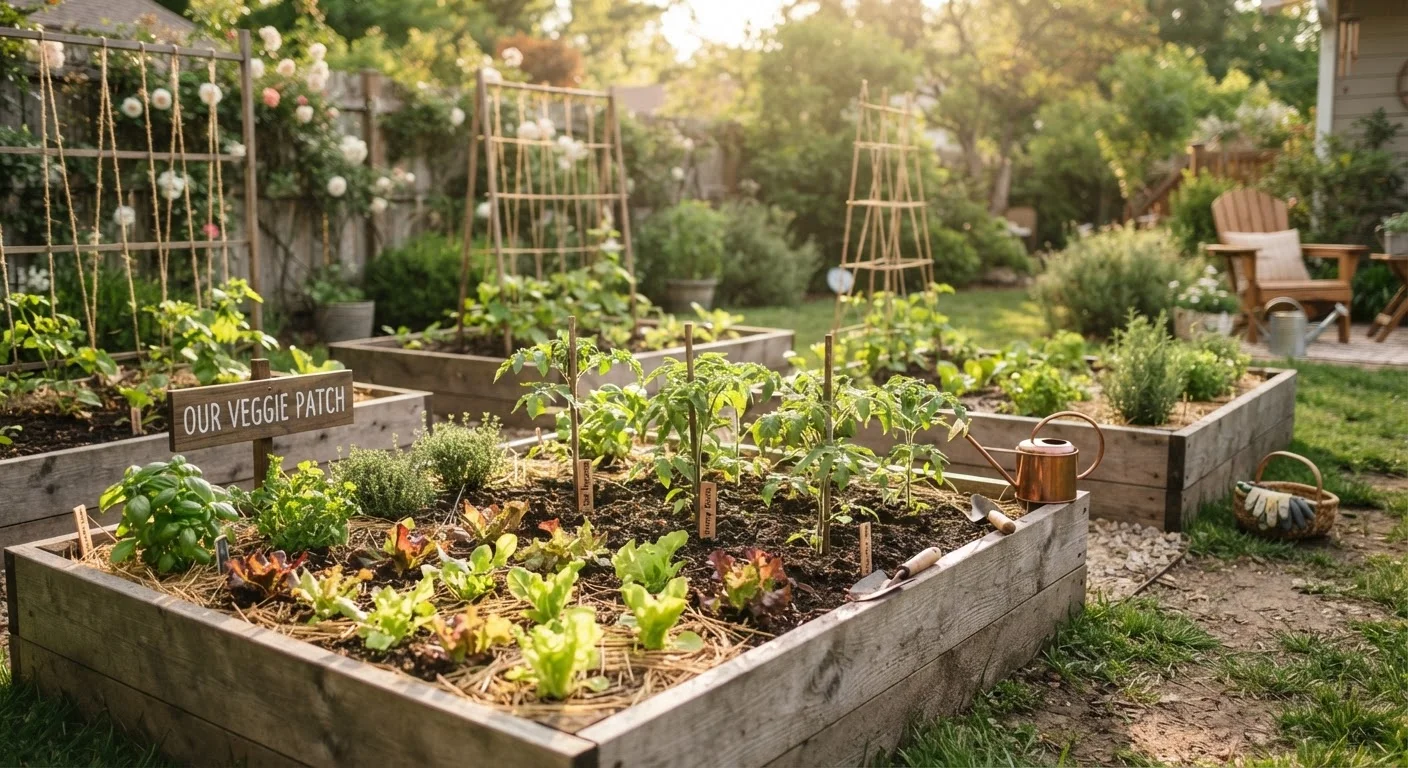
Easy, rewarding beginner crops include cherry tomatoes, zucchini, green beans, lettuce, radishes, and Swiss chard. These varieties germinate reliably, mature relatively quickly, and tolerate minor mistakes from new growers. Radishes, for instance, can be ready to harvest in as little as three weeks - a confidence-building win early in the season.
If you're interested in also growing culinary herbs alongside your vegetables, our guide on growing herbs outdoors covers placement and harvesting without damaging the plant. And once you're harvesting, you'll want to use your produce at its peak - learn how to avoid common cooking errors with our article on overcooking vegetables.
Watering, Feeding, and Ongoing Care
Vegetables need consistent moisture - roughly one inch of water per week is a common guideline, though actual needs vary by crop, climate, and soil type. Deep, infrequent watering encourages roots to grow downward, which makes plants more resilient during dry spells. Shallow, frequent watering tends to produce shallow roots that are more vulnerable to heat stress.
Watering at the base of plants rather than overhead reduces the risk of fungal disease on leaves. If you're thinking about how to manage water efficiently across your garden, compare the options in our overview of drip irrigation vs. sprinkler systems.
Check Soil Moisture Before You Water
Rather than watering on a fixed daily schedule, press your finger two to three inches into the soil. If it feels dry at that depth, water thoroughly; if it still feels damp, wait a day and check again. This simple habit prevents both underwatering and overwatering - two of the most common causes of poor plant performance.
Feeding matters too. A balanced, slow-release fertilizer applied at planting time, followed by light feedings during the growing season, keeps plants productive without overwhelming them. Always follow product label directions and avoid over-fertilizing with nitrogen, which can produce lush foliage at the expense of fruit production.
Common Beginner Mistakes to Avoid
Most early gardening setbacks follow predictable patterns. Planting too much too soon is the most common - it leads to maintenance overwhelm and plants that don't get the individual attention they need. Start with a bed or two, learn the rhythms, then expand in future seasons.
Ignoring spacing requirements is another frequent misstep. Crowded plants compete for light, water, and nutrients, and poor airflow between them encourages disease. Seed packets and transplant tags include spacing recommendations for a reason - follow them even when seedlings look impossibly small.
Finally, many beginners give up after one setback - a pest outbreak, a heat wave, or a disease problem. These are normal parts of gardening, not signs of failure. Observing what went wrong and adjusting the next season is how experienced gardeners develop their knowledge. For a broader view of keeping your outdoor space productive across the calendar, see our seasonal planning guide: Year-Round Outdoor Living.
Frequently Asked Questions
Most food crops - tomatoes, peppers, squash, and beans - require six to eight hours of direct sun each day. Leafy greens like lettuce and spinach can tolerate four to five hours, making them better choices for shadier spots. Before choosing a site, track sun exposure across a full day.
Both approaches work well, and the right choice depends on your soil quality, budget, and available space. Raised beds offer better drainage and easier soil control, while in-ground planting costs less upfront. See our detailed comparison to help you decide which suits your situation.
Zucchini, green beans, lettuce, radishes, and cherry tomatoes are widely considered reliable starter crops. They germinate readily, grow quickly, and give visible results that keep new gardeners motivated. Starting with one or two varieties lets you learn without becoming overwhelmed.
Most vegetable gardens need roughly one inch of water per week from rain or irrigation, applied consistently rather than in large, infrequent doses. Check soil moisture a few inches below the surface - it should feel damp but not waterlogged. Frequency varies by climate, soil type, and the specific crops you're growing.
Timing depends on your USDA Hardiness Zone and the last expected frost date in your area. Cool-season crops like peas and lettuce can go in weeks before the last frost; warm-season crops like tomatoes and peppers wait until frost risk has passed. Local cooperative extension websites publish planting calendars by region.
Dark color alone doesn't confirm nutrient levels - a soil test is the reliable way to know what, if anything, your soil needs. Vegetables are heavy feeders and can deplete nutrients quickly, so a light feeding regimen during the season is usually beneficial even in seemingly good soil.
The content on this site is provided for informational purposes only and should not be considered a substitute for professional advice. While we strive to provide accurate and up-to-date information, we make no guarantees regarding its completeness or accuracy. Always consult a qualified professional for advice specific to your circumstances before making any decisions.