

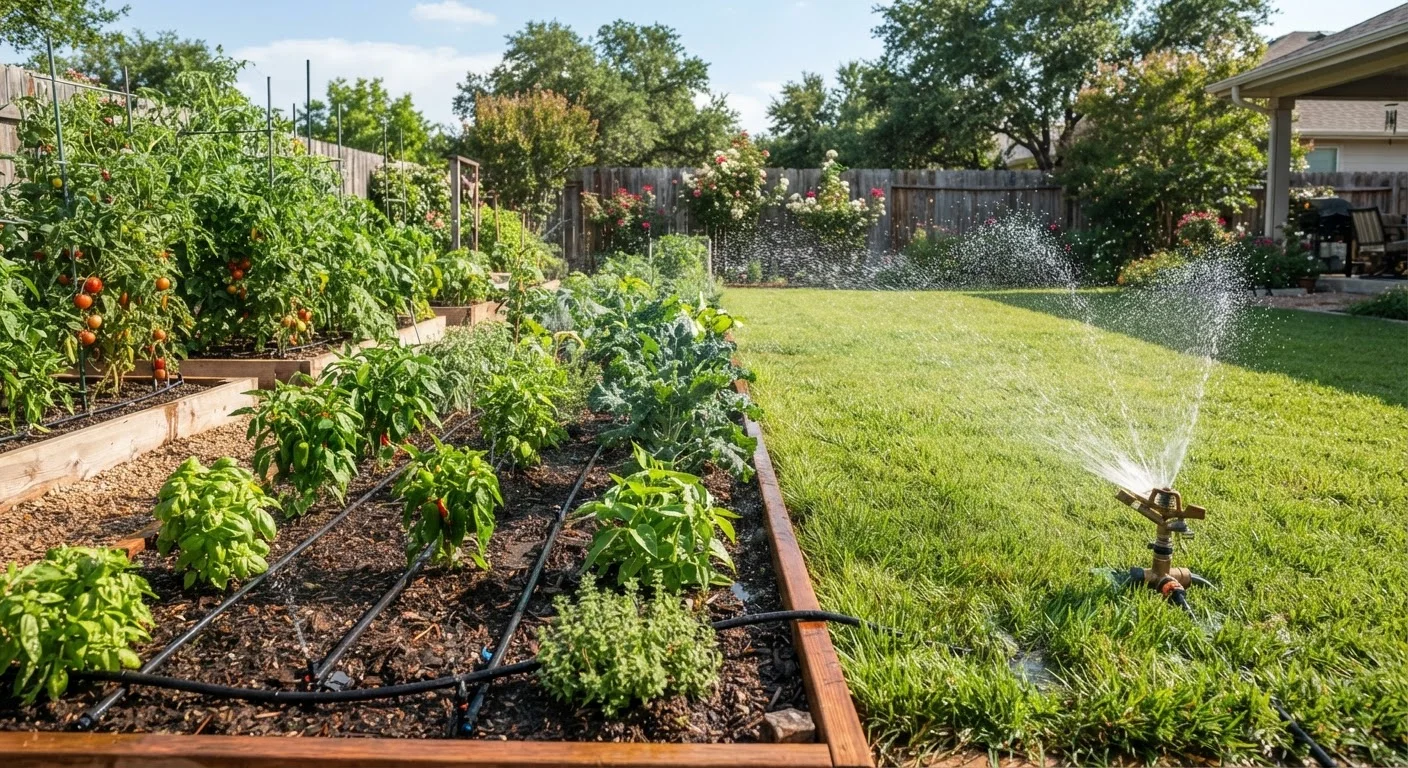
Option A
Drip Irrigation
The precise, water-efficient delivery method.
Best for: Best for vegetable gardens, raised beds, shrubs, and water-sensitive plants that benefit from slow, targeted root-zone watering.
Option B
Sprinkler Systems
The broad-coverage, lawn-friendly option.
Best for: Best for lawns, ground covers, and large open areas where uniform overhead coverage across wide zones is the priority.
How Each System Delivers Water
Understanding the mechanics behind each system helps clarify why they suit different plants and spaces.
Drip irrigation uses a network of flexible tubing, emitters, and connectors to release water slowly - typically at 0.5 to 2 gallons per hour - directly at or just below the soil surface near individual plants. Because water seeps in slowly, it penetrates deeply into the root zone with minimal runoff or surface evaporation. Emitters can be placed precisely, making the system especially adaptable to irregular planting layouts, container gardens, and raised beds.
Sprinkler systems distribute water through overhead spray heads or rotary nozzles, mimicking rainfall. Fixed spray heads cover smaller, defined zones, while rotary (or rotor) heads spin to cover larger radii - sometimes 15 to 50 feet. The result is broad, relatively uniform coverage suited to open turf or densely planted ground covers. Most in-ground systems are zoned, with each zone controlled by a valve tied to a central timer.
| Criterion | Drip Irrigation | Sprinkler Systems |
|---|---|---|
| Water delivery method | Slow release at root zone | Overhead spray or rotation |
| Best application | Vegetables, shrubs, containers | Lawns and large open areas |
| Evaporation loss | Low | Moderate to high |
| Weed encouragement | Minimal (water targets roots) | Higher (wets surface broadly) |
| Installation complexity | Low to moderate (DIY-friendly) | Moderate to high (often pro-installed) |
| Ongoing maintenance | Regular emitter checks needed | Head alignment and winterization |
| Foliar disease risk | Low (leaves stay dry) | Higher (foliage gets wet) |
| Coverage flexibility | Highly customizable per plant | Zone-based, less granular |
For more on pairing irrigation strategy with your planting approach, see raised beds vs. in-ground planting.
Which Plants and Spaces Each Suits
Neither system is universally superior - plant type, bed layout, and yard size all shape which is more appropriate.
Drip irrigation excels for:
- Vegetable and herb gardens - rows and raised beds where targeted delivery reduces foliar disease by keeping leaves dry
- Shrubs and trees - deep, slow watering encourages deep root development
- Slopes - slow delivery prevents runoff that sprinklers can cause on inclines
- Container plants - emitters placed in individual pots eliminate guesswork and missed waterings
Sprinkler systems excel for:
- Lawns and turf - the primary use case, where blanket coverage is required
- Ground covers and low-growing perennials - plants that tolerate or benefit from overhead watering
- Large open areas - where running individual drip lines would be impractical
Many gardeners find that using drip irrigation in their planting beds and a sprinkler system for their lawn is the most practical combination. If you're planning a new vegetable garden from scratch, our beginner's vegetable gardening guide covers soil preparation and layout considerations alongside watering needs.
Check Local Water Restrictions First
Many US municipalities impose outdoor watering schedules, restrictions on watering methods, or rebate programs for installing drip systems. Before purchasing or installing either system, contact your local water utility or municipal authority to understand applicable rules and any available incentives for efficient irrigation. Requirements vary significantly by region and can change seasonally.
Installation, Maintenance, and Water Use
Cost and effort differ meaningfully between the two systems, both at setup and over time.
Drip irrigation is generally lower cost and easier to install as a DIY project. Basic above-ground kits are widely available and can be configured with simple hand tools. However, drip systems require periodic maintenance: emitters can clog with mineral deposits or debris, tubing can shift or be damaged by digging, and the layout may need seasonal adjustments as plants grow. Flushing the system and checking emitter output each season keeps it performing reliably.
In-ground sprinkler systems involve more significant upfront installation - trenching, pipe laying, and wiring to a controller - and are typically best handled by a licensed irrigation contractor. (Always check local permit requirements before installing an in-ground system, as regulations vary by municipality.) Once installed, sprinklers require less day-to-day tinkering, though head alignment, pressure regulation, and winterization in cold climates are ongoing considerations.
Water use is a critical factor. Drip systems can reduce outdoor water consumption compared to overhead systems by limiting evaporation and overspray, though actual savings depend on soil type, plant density, and scheduling practices. For a broader look at water-efficient strategies, water-wise gardening principles offers practical guidance on reducing outdoor water use.
Up to 50%
Potential water savings with drip vs. overhead irrigation
The US Environmental Protection Agency (EPA) WaterSense program notes that drip irrigation can use significantly less water than conventional sprinkler systems when properly designed and maintained.
50%
Of US household water used outdoors on average
According to the EPA, roughly half of household water use in the US goes to landscape irrigation, making system choice a meaningful factor in overall household consumption.
Pairing either system with mulch can reduce soil moisture loss further - see what different garden mulches actually do for material comparisons.
The content on this site is provided for informational purposes only and should not be considered a substitute for professional advice. While we strive to provide accurate and up-to-date information, we make no guarantees regarding its completeness or accuracy. Always consult a qualified professional for advice specific to your circumstances before making any decisions.