

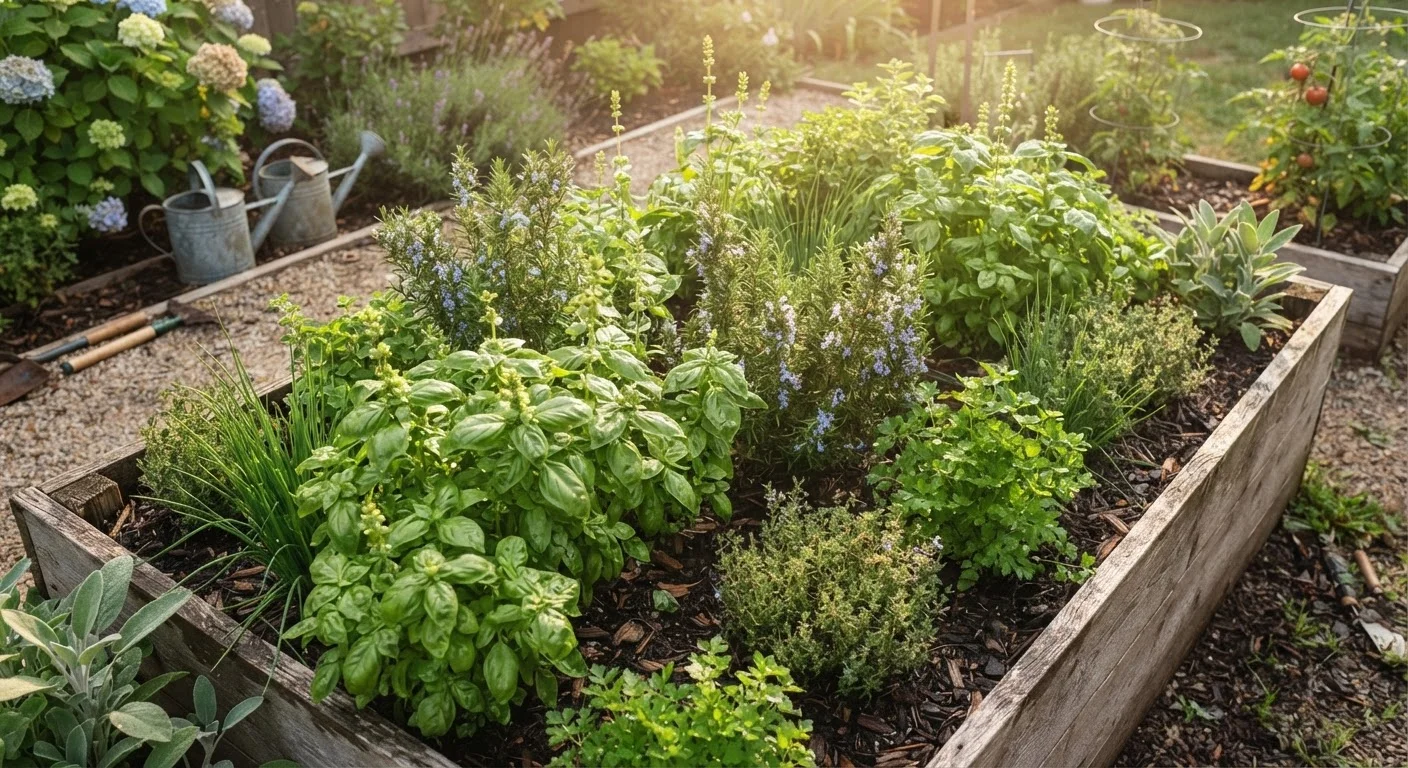
Choosing the Right Spot for Outdoor Herbs
Placement is the single decision that determines whether your herb garden thrives or merely survives. Most culinary herbs - basil, rosemary, thyme, oregano, sage, and parsley - are Mediterranean in origin and evolved in dry, sunny conditions. That means they perform best with six to eight hours of direct sun per day and soil that never stays waterlogged.
Before planting, observe how sunlight moves across your yard throughout the day. South- and west-facing locations typically accumulate the most hours of direct exposure. For a deeper look at how sun paths and airflow affect planting zones, see our guide to outdoor light and shade planning.
Soil quality matters just as much as light. Compacted, clay-heavy, or nutrient-depleted soil will suppress growth even in a sunny spot. Herbs generally prefer slightly lean, well-draining soil over rich, heavily amended beds - too much nitrogen pushes leafy growth at the expense of flavor. For foundational guidance, our article on soil health explains how to read and improve your garden's growing medium before planting.
A few herbs buck the full-sun rule. Mint, cilantro, and chervil tolerate partial shade (three to five hours of sun) and actually benefit from afternoon protection in hot climates, where excessive heat can trigger premature bolting - the process where a plant rushes to flower and seed, making leaves bitter.
What you will need
Pruning Techniques That Keep Plants Productive
Pruning is not optional maintenance - it is how you communicate to the plant to keep producing leaves rather than flowers and seeds. The mechanics differ slightly by herb type, but the core principle is the same: cut above a leaf node (the point where a pair of leaves meets the stem) to encourage two new shoots to branch from that point.
For basil, pinch or snip the top two sets of leaves as soon as the plant reaches about six inches tall. Remove any flower buds the moment you spot them. Allowing basil to flower signals the end of productive leaf growth for that stem. Check plants every five to seven days during peak summer heat.
For woody perennials - rosemary, sage, and thyme - prune more conservatively. These plants build a woody structure over time, and cutting into old, brown wood often results in dieback rather than regrowth. Trim only the soft, green new-growth tips, removing up to one-third of that season's growth at any single session.
For chives and parsley, cut stems down to about two inches from the base. Both regenerate vigorously from the crown. Chives can be harvested this way three or four times in a single season.
Sharpen Your Tools Before the Season Starts
Dull scissors and shears crush stem tissue rather than cutting cleanly, leaving ragged wounds that invite fungal infection. A quick sharpening before the growing season - and periodically throughout - makes a real difference in plant health. Wipe blades with rubbing alcohol between different herb plants to further reduce disease risk.
Harvesting Without Setting Back the Plant
The one-third rule is the most practical guideline in herb gardening: never remove more than one-third of a plant's total foliage in a single harvest. Taking more stresses the plant and slows recovery, particularly during hot or dry spells.
Harvest timing within the day also matters. Morning - after the dew has dried but before the afternoon heat peaks - is when essential oil concentration is highest in aromatic herbs. This translates directly to stronger flavor in the kitchen.
For herbs approaching the end of the season, you can harvest more aggressively before the first frost, cutting basil and other annuals almost to the soil. Perennials like rosemary and thyme should be trimmed lightly in fall, then left to harden off before winter. For a full seasonal wrap-up process, the end-of-season garden close-down checklist covers overwintering perennial herbs step by step.
If you find yourself with more than you can use fresh, most leafy herbs dry well when hung upside down in a warm, ventilated space away from direct sunlight. Woody herbs like thyme and rosemary air-dry especially well and retain strong flavor for months.
The content on this site is provided for informational purposes only and should not be considered a substitute for professional advice. While we strive to provide accurate and up-to-date information, we make no guarantees regarding its completeness or accuracy. Always consult a qualified professional for advice specific to your circumstances before making any decisions.