

Why Organic Gardening Myths Persist
Organic gardening sits at the crossroads of science, tradition, and marketing - fertile ground for misconceptions to take root. Well-meaning advice passed down through generations mingles with terminology borrowed from certification standards and promotional language from product labels. The result is a body of common wisdom that is often partly right, partly outdated, and occasionally counterproductive.
Clearing up these myths isn't about undermining organic principles. The core goals - building living soil, reducing synthetic chemical dependence, and working with ecological processes - are well-supported by horticultural science. But acting on faulty assumptions can lead to wasted effort, crop failures, and even unintended environmental harm. Accurate knowledge makes organic practice more effective, not less committed.
Myth
Natural pesticides are always safe for people, pets, and beneficial insects.
Fact
Many plant-derived or mineral pesticides are acutely toxic and can harm pollinators, soil organisms, and human health if misapplied.
The word natural is not a safety certificate. Rotenone, derived from tropical plants, has been linked to neurological damage in animal studies. Copper sulfate, widely permitted in organic programs, is toxic to earthworms and accumulates in soil with repeated use. Pyrethrin, extracted from chrysanthemum flowers, is highly toxic to bees and aquatic invertebrates. Always read label directions, apply during low-pollinator periods (early morning or evening), and store safely - regardless of whether the product carries an organic label. See also our companion piece on what organic and natural labels actually mean.
Myth
Compost alone provides everything a vegetable garden needs to thrive.
Fact
Compost is a superb soil amendment, but it supplies nutrients in variable, often insufficient quantities for heavy-feeding crops.
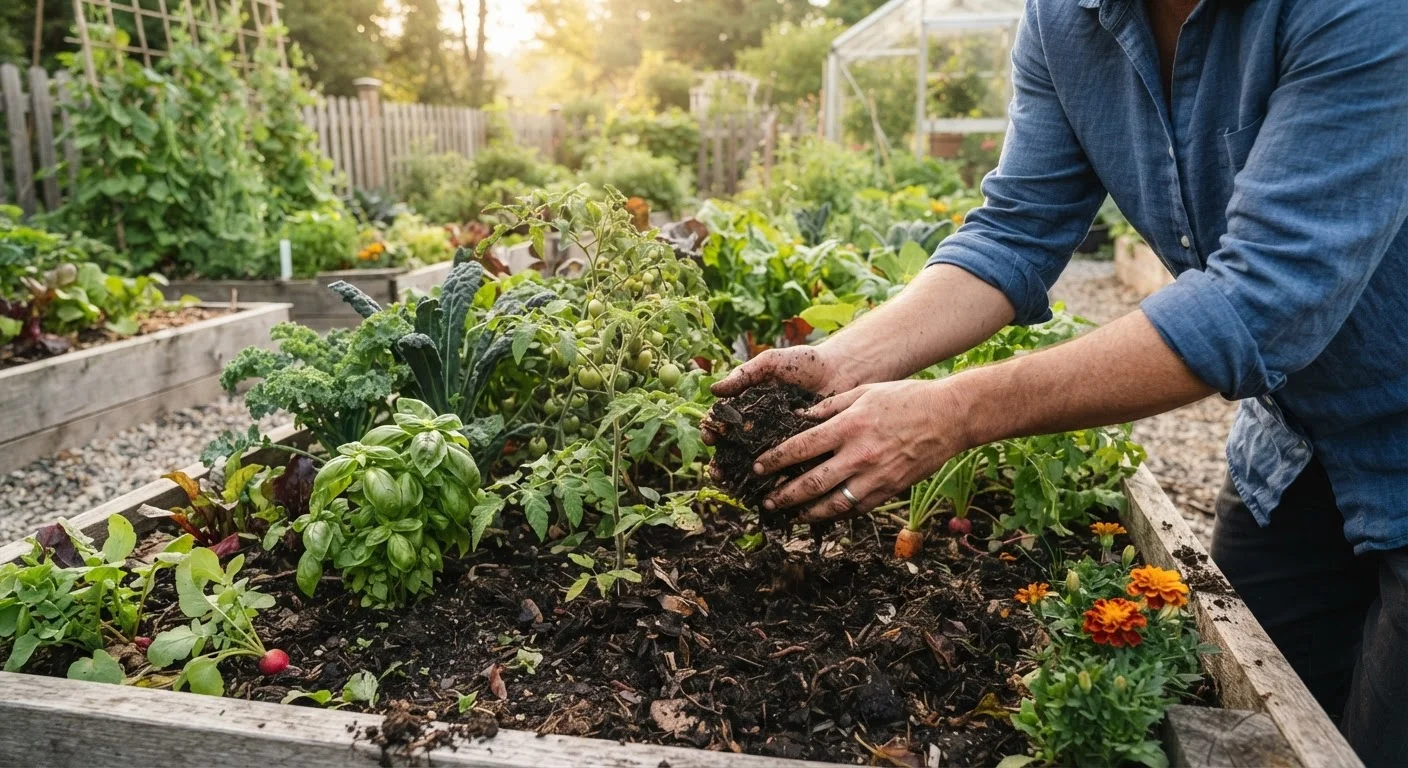
Mature compost improves water retention, feeds soil microbes, and adds organic matter - benefits that are genuinely transformative. However, its nutrient analysis varies enormously depending on inputs, and fast-growing vegetables like corn, brassicas, and tomatoes typically need more nitrogen and phosphorus than compost can reliably deliver. Soil testing is the only way to know what your specific plot actually lacks. Approved organic fertilizers - fish meal, bone meal, greensand - are often needed alongside compost to fill nutritional gaps. For a deeper look at what soil actually requires, see our guide on soil health fundamentals.
Myth
Organic gardening means using absolutely no chemicals.
Fact
Organic systems permit certain synthetic and many natural chemicals; the distinction is about approved inputs and prohibited practices, not zero chemical use.
Certified organic production is governed by specific standards - in the US, primarily USDA National Organic Program (NOP) rules - that prohibit synthetic fertilizers, most synthetic pesticides, and genetically modified organisms. However, the list of allowed substances includes many compounds that are chemically complex. Copper hydroxide, sulfur fungicides, and various mineral amendments are all permissible. The philosophy centers on building ecological resilience rather than achieving chemical purity. Understanding this distinction helps gardeners make more informed decisions rather than dismissing entire product categories based on a label.
Myth
All weeds are enemies that must be eradicated immediately.
Fact
Many weeds are indicators of soil conditions, harbor beneficial insects, or fix nitrogen - their presence is often informative rather than purely harmful.
Clover enriches soil by fixing atmospheric nitrogen through root-associated bacteria. Dandelions send deep taproots that help break up compaction and bring subsoil minerals to the surface. Certain weeds signal pH imbalance or poor drainage, acting as free diagnostic tools. That said, aggressive spreading weeds like bindweed or nutsedge can genuinely compete with crops and require timely management. A more discerning approach - identify the weed, understand what it signals, then decide - produces better outcomes than blanket removal. Our composting guide covers which pulled weeds are safe to compost and which are not.
Myth
Crop rotation is a minor extra step that doesn't significantly affect organic yields.
Fact
Rotation is one of the most effective tools in organic systems precisely because chemical fallbacks are limited - skipping it invites compounding pest and disease problems.
When the same plant family grows in the same spot year after year, soil-borne pathogens and host-specific pests build to damaging levels. Club root in brassicas, early blight in tomatoes, and onion white rot all intensify under monoculture conditions. In conventional growing, synthetic fungicides and nematicides can partially compensate. In organic systems, rotation is a primary line of defense. A simple four-bed rotation - legumes, brassicas, root crops, fruiting crops - systematically interrupts pest and disease cycles with minimal cost or effort.
Putting Accurate Knowledge to Work in Your Garden
Each myth above points toward the same underlying need: a more evidence-informed approach to organic growing. That means testing soil before amending it, reading pesticide labels regardless of whether a product is certified organic, and treating weeds as diagnostic clues before reaching for a hoe.
1 in 3
Organic gardeners who skip soil testing
Extension service surveys consistently find that a large share of home gardeners amend soil without first testing pH or nutrient levels, often leading to over- or under-application.
4-7 years
Time for copper to reach toxic soil levels
Research published in horticultural soil science literature indicates that repeated copper-based fungicide applications can accumulate to phytotoxic concentrations within a single growing decade.
If you're starting a new growing space, our beginner vegetable garden guide walks through site selection and soil preparation in practical terms. And because soil health underpins everything discussed here, revisiting what makes soil biologically active is time well spent - see Soil Health: The Foundation Every Garden Depends On for a grounded overview. Organic gardening, practiced with clear thinking, remains one of the most rewarding approaches to growing food and building a thriving outdoor space.
Always Read Pesticide Labels - Even Organic Ones
No pesticide - natural or synthetic - should be applied without reading and following its label directions. The label is a legal document specifying safe application rates, protective equipment requirements, and environmental precautions. Misapplication of even an approved organic input can harm beneficial insects, contaminate water, and create legal liability. When in doubt, consult your local cooperative extension service for region-specific guidance.
The content on this site is provided for informational purposes only and should not be considered a substitute for professional advice. While we strive to provide accurate and up-to-date information, we make no guarantees regarding its completeness or accuracy. Always consult a qualified professional for advice specific to your circumstances before making any decisions.