

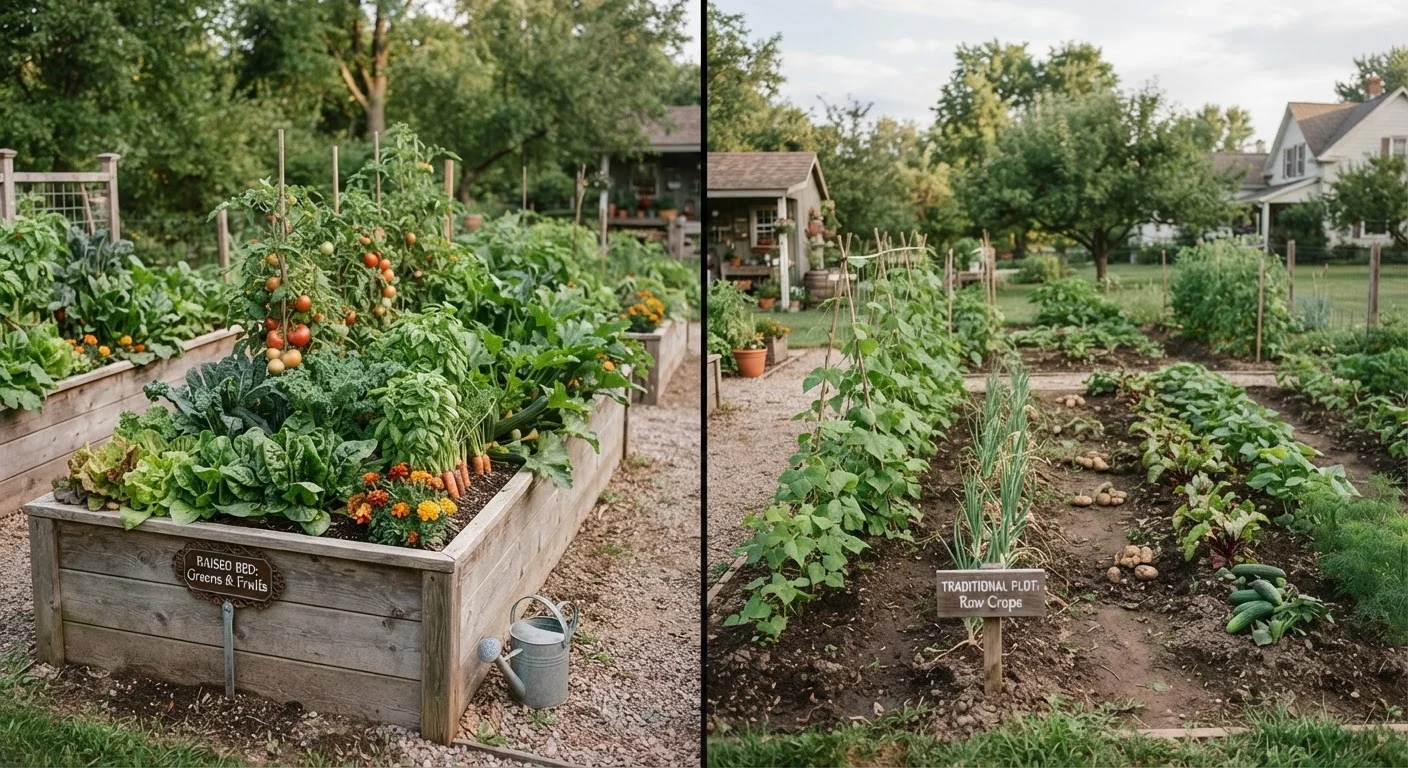
Option A
Raised Beds
The controlled, high-performance growing environment.
Best for: Gardeners dealing with poor native soil, limited mobility, or compaction-prone yards who want precise control over growing conditions.
Option B
In-Ground Planting
The traditional, low-barrier approach to growing.
Best for: Gardeners with healthy, workable native soil who want to grow larger volumes of plants with minimal upfront investment.
What Actually Separates These Two Approaches
At their core, raised beds and in-ground planting differ in one fundamental way: where your plant roots live. A raised bed is a contained growing structure - typically framed in wood, metal, or composite material - filled with imported or amended soil above the native ground level. In-ground planting works directly with the existing earth, amended as needed but never fully replaced.
That distinction cascades into nearly every practical consideration: soil quality, drainage, warmth, pest pressure, cost, and physical effort. Neither method is universally superior. Understanding the tradeoffs lets you match the approach to your specific yard, budget, and physical situation. If you're just getting started growing food, our beginner vegetable garden guide walks through site selection and soil basics that apply to both methods.
| Criterion | Raised Beds | In-Ground Planting |
|---|---|---|
| Upfront cost | Higher (materials + fill soil) | Lower (amendment only) |
| Soil control | Full - custom fill mix | Partial - amend native soil |
| Drainage | Excellent; may dry faster | Varies with native soil type |
| Spring warm-up | Earlier - 2 to 4 weeks | Standard seasonal timeline |
| Weed pressure | Lower; defined borders help | Higher; edges need management |
| Physical accessibility | High - adjustable height | Low - requires kneeling |
| Scalability | Moderate - limited by cost | High - expands easily |
| Best for problem soil | Yes - bypasses native soil | No - relies on native soil |
Soil, Drainage, and Growing Conditions
Raised beds shine when native soil is the problem. Heavily compacted ground, clay-dense subsoil, or yards with a history of contamination (common near older structures) can make in-ground growing difficult or even inadvisable. A raised bed lets you fill with a purpose-built mix - typically a blend of topsoil, compost, and a coarser amendment like perlite - giving roots exactly what they need without fighting the ground beneath.
In-ground plots rely on what's already there, supplemented by regular compost additions and occasional pH adjustments. If your native soil is already well-draining loam with reasonable organic matter, the in-ground approach works efficiently and improves steadily over seasons of amendment. However, heavy soils take years of conditioning to transform meaningfully. Good mulching practices help both methods retain moisture and regulate soil temperature throughout the year.
Drainage is another clear differentiator. Raised beds drain faster by nature of their elevation and loose fill - beneficial in wet climates, but a liability in hot, dry regions where soil moisture evaporates quickly and plants need more frequent watering. In-ground beds hold moisture longer, which can be an advantage in drier conditions but a problem where standing water collects.
6-8 inches
Minimum raised bed depth for most vegetables
Most cooperative extension guidelines recommend at least 6 inches of quality growing medium for shallow-rooted crops, and 12 inches or more for root vegetables.
2-4 weeks
Earlier planting window in raised beds
Because raised bed soil warms faster than ground-level earth in spring, many gardeners report being able to plant noticeably earlier in cooler climates.
~1.5 cubic yards
Soil needed for a 4×8-foot bed at 12 inches deep
Fill volume is a significant cost factor when planning raised beds; calculating soil needs before purchasing materials helps avoid both shortfalls and waste.
Cost, Effort, and Long-Term Maintenance
Upfront cost favors in-ground planting significantly. Preparing a traditional garden bed requires little more than soil amendment, tools you likely already own, and time. Raised beds carry material costs for framing - lumber, galvanized metal, or composite panels - plus the soil volume to fill them, which adds up quickly for larger or deeper beds.
Over time, however, raised beds can reduce some ongoing labor. Their defined boundaries limit lateral weed encroachment, and their height reduces the need for kneeling. Weeding is generally easier and less frequent compared to a ground-level plot surrounded by lawn or paths. In-ground beds require consistent edge management and more regular weeding, particularly in their early seasons before the soil culture is well established.
Both approaches benefit from thoughtful irrigation planning. Drip irrigation vs. sprinkler systems covers how each watering method pairs differently with concentrated raised beds versus sprawling in-ground rows - a practical consideration as your garden matures.
Seasonal Performance and Accessibility
Raised beds warm up earlier in spring because the exposed sides of the frame absorb heat and the elevated soil mass heats through faster than ground-level earth. This can translate to planting two to four weeks earlier in colder climates, extending your effective season at both ends. For gardeners who want to keep their outdoor space productive year-round, that seasonal head start matters.
In-ground beds, insulated by the surrounding earth, stay cooler longer in spring but also resist temperature swings better in summer - an advantage for crops that bolt or stress under heat. For large plantings of sprawling crops like squash, melons, or sweet corn, in-ground rows simply offer more practical room to expand without additional construction.
Physical accessibility is a real factor worth planning around. Standard raised beds built to 24-30 inches in height eliminate most crouching and kneeling, making gardening more sustainable for people managing back pain or mobility limitations. That design choice also pairs well with structured hardscaping elements like paths and edging, which can create a fully navigable, organized outdoor space. In-ground beds ask more of the body but impose no structural height limitation on what or how much you grow.
The content on this site is provided for informational purposes only and should not be considered a substitute for professional advice. While we strive to provide accurate and up-to-date information, we make no guarantees regarding its completeness or accuracy. Always consult a qualified professional for advice specific to your circumstances before making any decisions.