

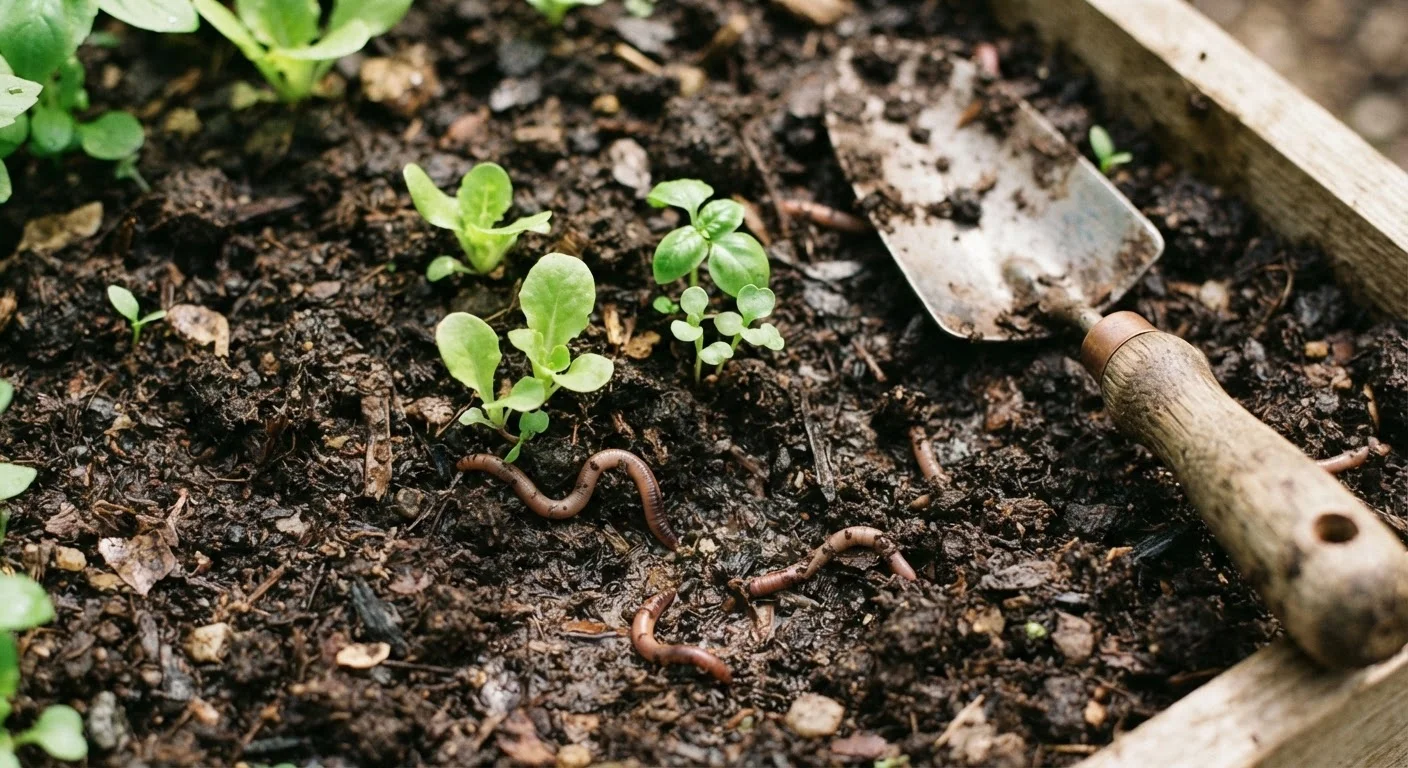
What Soil Is Actually Made Of
Garden soil is not a single substance - it is a layered system built from four main components: mineral particles, organic matter, water, and air. The mineral fraction includes sand (the largest particles), silt (medium), and clay (the finest). The ratio of these three is called soil texture, and it governs almost everything else: how quickly water drains, how well roots can penetrate, and how tightly nutrients are held.
Organic matter - decomposed plant and animal material - is a smaller fraction by volume but disproportionately important. It feeds soil microorganisms, improves structure in both sandy and clay soils, and acts as a slow-release reservoir of nutrients. The living component of soil includes bacteria, fungi, protozoa, nematodes, and larger invertebrates like earthworms. These organisms are not incidental; they actively break down organic material into forms plants can absorb.
Air and water fill the pore spaces between particles. Roots need both: oxygen for respiration and water for nutrient transport. Compacted soil squeezes out these pores, starving roots even when surface conditions look fine.
1 teaspoon
Microorganisms in healthy garden soil
USDA Natural Resources Conservation Service estimates that one teaspoon of productive soil contains up to 1 billion bacteria.
5%
Organic matter target for productive garden soil
Many soil scientists consider 5% organic matter a benchmark for good soil structure and fertility, though averages in US topsoil often fall below this.
6.0-7.0
Optimal pH range for most vegetables
Within this range, the major plant nutrients - nitrogen, phosphorus, and potassium - are most readily available to plant roots.
Reading Your Soil's Signals
Soil communicates its condition clearly once you know what to look for. Persistent puddles after rain suggest poor drainage - often from compaction or high clay content. Pale, yellowing plants in otherwise well-watered beds may point to pH imbalance rather than nutrient deficiency, because an out-of-range pH chemically locks nutrients away from roots regardless of their presence in the soil.
pH is measured on a scale from 0 to 14, with 7 being neutral. Most garden crops prefer a range of 6.0 to 7.0. Soils that are too acidic (below 6.0) or too alkaline (above 7.5) restrict uptake of specific nutrients. Lime raises pH in acidic soils; sulfur lowers it in alkaline ones - but amendments should follow a soil test, not guesswork.
A simple home test kit or a lab test through your state's CES reveals pH, phosphorus, potassium, and sometimes nitrogen levels. For gardeners planning a new vegetable bed, testing before planting is genuinely worthwhile. See our beginner's guide to starting a vegetable garden for how to integrate soil prep into your overall plan.
How to Build Healthier Soil Over Time
Improving soil is a gradual process, but organic matter is the single most reliable lever. Finished compost - added as a top dressing or lightly incorporated - feeds the microbial population, improves drainage in clay, and increases water retention in sand. If you're not already composting at home, it's worth exploring: our guide on composting kitchen and garden waste explains how to build a productive heap from everyday materials.
Mulch is another practical tool. A 2- to 3-inch layer of organic mulch on the soil surface reduces moisture loss, moderates temperature swings, suppresses weeds, and slowly breaks down into organic matter. Different mulch types behave differently - our breakdown of what different garden mulches actually do can help you choose the right material for your beds.
Test Before You Amend
Adding lime, sulfur, or fertilizer without a soil test is guesswork - and over-correcting can create new problems. An inexpensive home kit or a cooperative extension lab test gives you a clear starting point. Most extension services provide region-specific amendment recommendations alongside results, making the investment in testing genuinely useful.
Avoiding compaction matters as much as adding amendments. Designate permanent paths so foot traffic stays off planting areas, and avoid working wet soil - both preserve the pore structure roots depend on. Gardeners weighing raised beds against in-ground planting often find that raised beds offer easier compaction control; see our comparison of raised beds vs. in-ground planting for a full breakdown.
Soil Health Across the Seasons
Soil is not static - its biology slows in winter and accelerates in warm, moist conditions. Fall is a productive time to add compost or plant cover crops (fast-growing plants like clover or rye that protect bare soil, reduce erosion, and fix nitrogen). Turning them in before spring planting adds a green manure boost that feeds the next crop cycle.
Spring is the moment to retest pH if you amended last year, to top-dress beds before planting, and to assess drainage before committing to a planting plan. Summer management focuses on maintaining moisture through mulching - a practice that directly supports water-wise gardening goals by reducing surface evaporation. Thinking about soil as part of a year-round system - not just a spring-planting task - keeps it productive across seasons. For a broader seasonal framework, see our year-round outdoor living guide.
Frequently Asked Questions
Look for dark color, a crumbly texture that holds its shape loosely, and visible earthworms when you dig a few inches down. Healthy soil also drains well after rain without staying waterlogged for days. A basic home soil test can confirm pH and nutrient levels more precisely.
Most vegetables and ornamentals perform well in soil with a pH between 6.0 and 7.0, which is slightly acidic to neutral. Outside this range, certain nutrients become chemically locked and unavailable even when physically present. Your local cooperative extension office can advise on amendments for your specific region.
A 1- to 2-inch layer of finished compost worked into beds once or twice a year - typically in spring and fall - is a widely recommended starting point. Frequency depends on how intensively you're growing and how depleted your existing soil is. Consistent annual additions steadily build organic matter over time.
Yes. Repeated additions of organic matter - compost, aged manure, leaf mold - improve both extremes over several growing seasons. Clay soil becomes better draining and less compaction-prone; sandy soil gains moisture and nutrient retention. There is no shortcut, but consistent effort produces real results.
Tilling can be useful for initially breaking compacted ground or incorporating amendments, but frequent deep tilling disrupts fungal networks and soil structure. Many gardeners now use minimal-till or no-till approaches, relying on top-dressing with organic matter instead. The right approach depends on your soil type and gardening goals.
Home test kits provide a useful snapshot of pH and basic nutrient levels and are a practical starting point for most gardeners. For a more detailed picture - including micronutrients, organic matter content, and specific amendment recommendations - a lab test through your state's cooperative extension service offers greater accuracy and local context.
The content on this site is provided for informational purposes only and should not be considered a substitute for professional advice. While we strive to provide accurate and up-to-date information, we make no guarantees regarding its completeness or accuracy. Always consult a qualified professional for advice specific to your circumstances before making any decisions.