

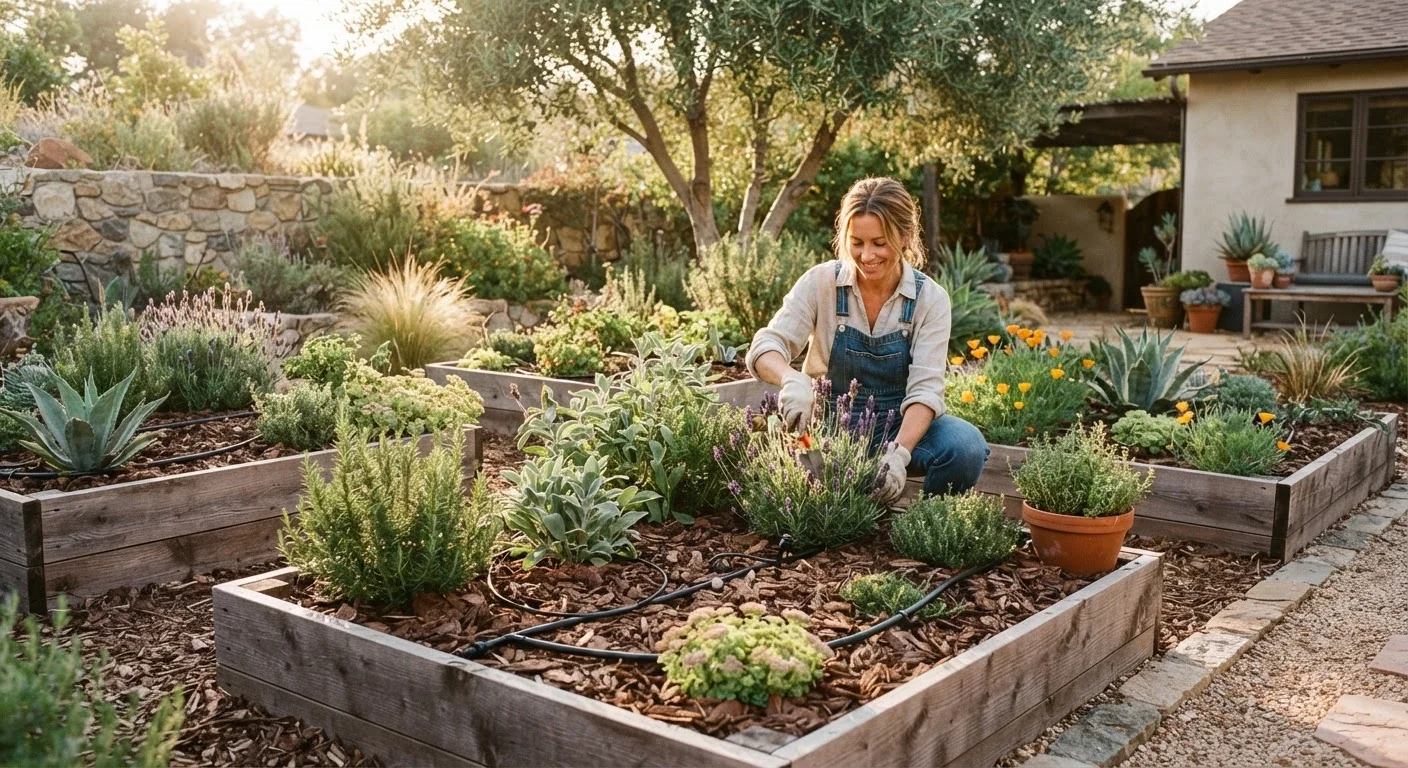
Why Water Efficiency Matters Beyond the Water Bill
Outdoor irrigation accounts for a substantial share of household water use across the United States - in drier regions, it can represent more than half of total consumption. But water-wise gardening isn't just about lowering utility costs. Overwatering is one of the most common causes of plant disease, root rot, and poor yield in home gardens. Learning to water strategically means your plants perform better, not just that you use less.
The principles covered here apply whether you're tending a vegetable patch, a flower border, or a mixed landscape. For a broader view of keeping your outdoor space productive through the seasons, see our year-round garden planning guide.
Core Practices for Reducing Garden Water Use
These approaches are grounded in soil science, plant biology, and landscape design. Applying even two or three of them consistently can meaningfully change how your garden handles dry spells.
Build soil organic matter before planting to improve water retention.
Sandy soils drain too fast to hold moisture for roots; compacted clay soils repel water rather than absorbing it. Adding compost improves the structure of both, creating pore spaces that hold water where roots can access it. This reduces how often supplemental watering is needed. See our soil health guide for a deeper look.
Apply a 2-3 inch layer of organic mulch over all planted areas.
Bare soil loses moisture rapidly to evaporation, especially in hot or windy conditions. Mulch acts as an insulating blanket, slowing evaporation, moderating soil temperature, and suppressing weeds that compete for water. Organic mulches like shredded bark or straw also break down gradually, feeding soil life.
Water deeply and infrequently rather than lightly and often.
Frequent shallow watering keeps moisture near the surface, encouraging roots to stay shallow and making plants more vulnerable to heat stress and drought. Deep, less frequent watering drives moisture further into the soil, prompting roots to follow it downward - producing more resilient plants overall.
Group plants with similar water needs together (hydrozoning).
When drought-tolerant plants and water-hungry ones share a zone on the same irrigation circuit, you inevitably over-water one or under-water the other. Designing beds so that high-, medium-, and low-water plants occupy separate zones lets you tailor irrigation to each group precisely. This is especially important when using automated systems.
Water in the early morning to minimize evaporation and disease risk.
Midday watering loses a significant portion of moisture to evaporation before it can penetrate the soil. Evening watering leaves foliage wet overnight, creating conditions favorable for fungal diseases. Morning watering gives plants moisture when temperatures are still cool, and foliage dries quickly once the day warms.
Use rain gauges and soil moisture checks before scheduling irrigation.
Many gardens are watered on rigid schedules that ignore recent rainfall or actual soil conditions. Checking soil moisture a few inches below the surface - it should feel moist but not waterlogged - before watering prevents unnecessary supplemental irrigation. A basic rain gauge helps you track how much natural rainfall your garden received.
Getting Started: Quick Actions You Can Take This Week
You don't need to redesign your entire garden to start conserving water. A few targeted changes can have measurable results within a single growing season.
“The goal of water-wise landscaping is not a sparse or barren garden - it is a garden designed to thrive within the natural water budget of its region.”
— University Cooperative Extension Service, Water-Wise Landscaping Program, Western US
Choosing Plants That Work With Your Climate
Plant selection is one of the most durable water-saving decisions you can make. Once established, native plants and regionally adapted species draw on natural rainfall patterns far more effectively than plants sourced from different climates. Our guide to native versus ornamental exotic plants walks through the trade-offs in detail.
If you're growing edibles, water-wise principles apply equally. Starting a vegetable garden from scratch covers how early decisions about site and soil - both central to water efficiency - set the tone for the whole season. Herbs, which tend to be naturally drought-tolerant, are another good starting point; see our outdoor herb growing guide for placement and care specifics.
Established Plants vs. New Transplants
Water-efficient practices are most relevant for established plants, which have developed root systems capable of seeking out soil moisture. Newly transplanted seedlings and recently installed perennials typically need more frequent watering - sometimes daily - for their first few weeks. Once roots are established (usually after one full growing season), you can transition to a less frequent, deeper watering schedule.
50%+
Share of home water used outdoors in dry US climates
The EPA's WaterSense program estimates that landscape irrigation accounts for nearly one-third of total residential water use nationally, and significantly more in arid or semi-arid regions.
50%
Outdoor water wasted through inefficiency
According to EPA WaterSense data, approximately half of outdoor water use in the US is lost to evaporation, runoff, or overwatering - much of it preventable with better timing and delivery methods.
The content on this site is provided for informational purposes only and should not be considered a substitute for professional advice. While we strive to provide accurate and up-to-date information, we make no guarantees regarding its completeness or accuracy. Always consult a qualified professional for advice specific to your circumstances before making any decisions.