

Why Mulch Matters
Mulch is any material spread over the soil surface to protect and improve the ground beneath it. The benefits are real and measurable: reduced moisture loss, moderated soil temperature, suppressed weed germination, and - for organic types - gradual improvement of soil structure as the material breaks down. But not every mulch delivers every benefit equally, and the wrong choice for your conditions can cause problems as easily as it solves them.
Understanding what each type does (and doesn't do) helps you match the material to your specific planting situation. For context on what's happening beneath that mulch layer, see our guide to soil health.
| Recommended organic mulch depth | 2-4 inches |
| Gap to leave around plant stems | 2-3 inches minimum |
| How often organic mulch needs replenishing | Typically once per year |
| Inorganic mulch lifespan | Many years (no decomposition) |
| Weed suppression mechanism | Blocks light needed for seed germination |
| Soil benefit of organic mulches | Adds organic matter as it decomposes |
Organic Mulches: What They Are and How They Behave
Organic mulches are made from once-living plant material. They decompose over time, feeding soil organisms and gradually adding organic matter - a meaningful advantage for long-term soil structure. The trade-off is that they need periodic replenishment.
Shredded Bark and Wood Chips
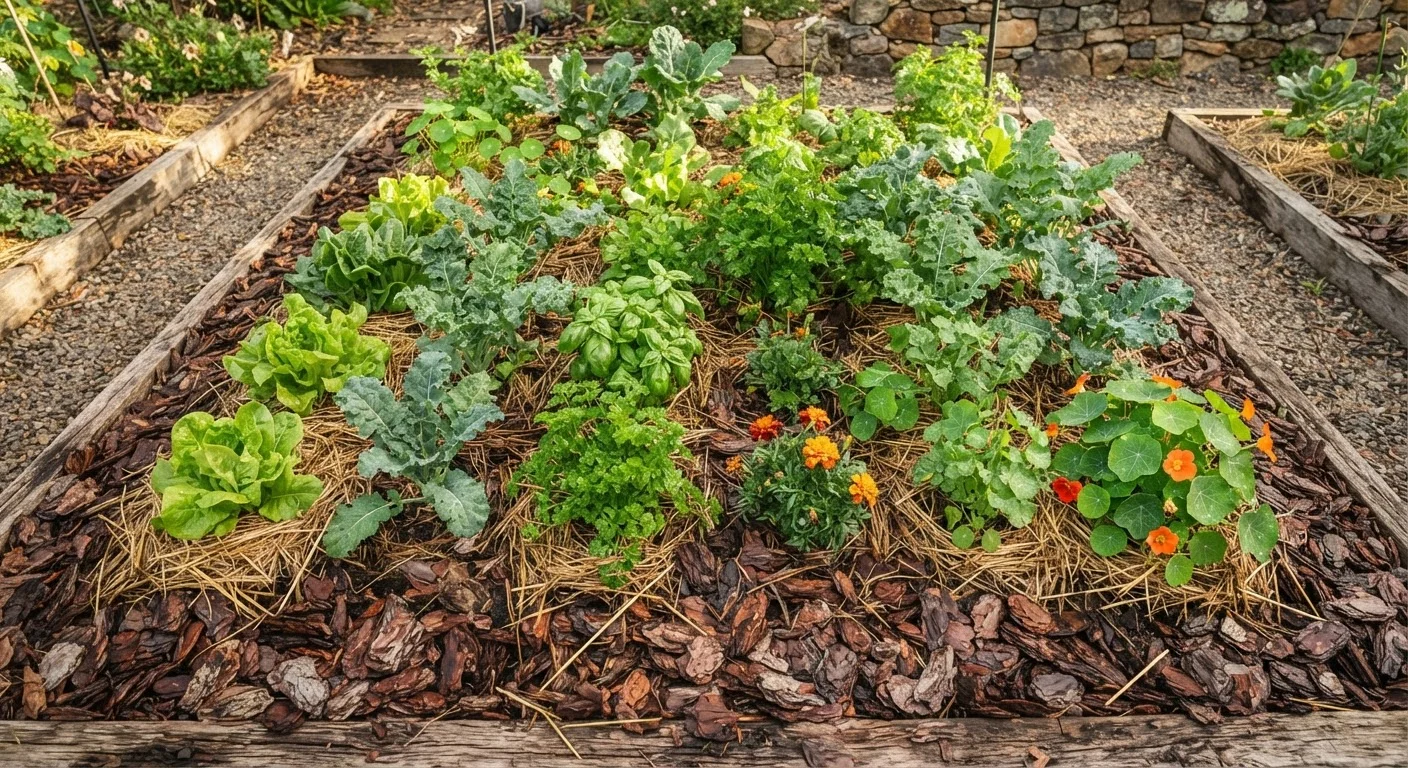
Among the most widely used organic mulches, shredded bark and wood chips are durable, slow to decompose, and effective at suppressing weeds when applied at 2-3 inches deep. They work well around trees, shrubs, and perennial borders. One important caveat: fresh wood chips temporarily tie up soil nitrogen as they break down, so avoid mounding them directly against plant stems or tilling them into planting beds. Allow a small gap around trunks and stems.
Straw
Straw - the dried stalks of grain crops, not to be confused with hay - is lightweight, easy to apply, and an excellent insulator for vegetable gardens. It breaks down faster than bark, which means it needs replenishing annually but also feeds the soil more quickly. It can harbor slugs in very wet conditions, so monitor accordingly.
Compost
Finished compost used as mulch does double duty: it protects the soil surface while also delivering nutrients as it's worked in by rain and earthworms. Apply a 1-2 inch layer. For guidance on producing your own, visit our article on composting at home.
Shredded Leaves
Free and locally abundant in fall, shredded leaves decompose into leaf mold - a low-nutrient, highly moisture-retentive material beloved by soil microbes. Whole leaves can mat together and block water penetration; shredding solves this. A practical choice for woodland-style plantings or any situation where budget matters.
Organic mulch
Any mulch made from plant-based or once-living material - such as bark, straw, or leaves - that decomposes over time and contributes organic matter to the soil.
Inorganic mulch
Mulch made from materials that do not decompose, such as gravel, stone, or rubber. Durable and low-maintenance, but provides no soil nutrition.
Nitrogen tie-up
A temporary reduction in available soil nitrogen caused by soil microbes breaking down high-carbon materials like fresh wood chips. It affects plants growing nearby if the material is incorporated into the soil.
Leaf mold
The dark, crumbly material produced when leaves decompose fully. Highly valued for improving soil moisture retention and supporting beneficial soil microbes.
Landscape fabric
A woven or spun synthetic barrier placed over soil to suppress weeds. Often used beneath stone mulch in ornamental areas, though long-term use can impede soil health.
Inorganic Mulches: Durability Over Soil Building
Inorganic mulches don't break down, so they don't need replacing as often and don't feed the soil. They're valued for durability, heat retention (or reflection), and situations where permanent coverage is preferred.
Gravel and River Rock
Stone mulches excel in desert-style or drought-tolerant plantings, around Mediterranean herbs, and in situations where drainage is a priority. They retain and radiate heat, which suits plants native to warm, dry climates. In cooler, wetter regions that same heat retention can stress plants. Weeds do still establish in gravel over time - wind-deposited debris creates a seedbed above the stone - so landscape fabric beneath is often paired with it, though fabric has its own limitations (it degrades and impedes deep soil health).
Rubber Mulch
Made from recycled tires, rubber mulch is extremely long-lasting and frequently used in playground surfaces and around ornamental plantings. It doesn't decompose or attract pests. However, it provides no soil benefit, can leach compounds into surrounding soil over time, and retains significant heat - making it unsuitable near heat-sensitive plants. Research on its long-term environmental effects is still evolving; weigh that uncertainty before using it in food-growing areas.
Landscape Fabric
Technically a mulch barrier rather than a mulch itself, landscape fabric is woven or spun material laid over soil to block weeds. It works best when used temporarily or beneath stone mulch in ornamental areas. Over time, organic debris accumulates on top, weeds root into the fabric itself, and soil health beneath can decline. It's not generally recommended for vegetable beds or areas where active planting or soil improvement is ongoing.
For a look at how permanent ground-level materials interact with the broader garden design, the article on hardscaping elements covers paths, patios, and edging in useful detail.
Choosing the Right Mulch for Your Situation
The most useful question isn't which mulch is universally best - it's which material fits the specific combination of your climate, soil, plant types, and goals.
- Vegetable beds: Straw, shredded leaves, or compost. All decompose into the soil and are safe around edible plants.
- Trees and shrubs: Wood chips or shredded bark at 2-3 inches; keep clear of stems and trunks.
- Drought-tolerant or xeriscape plantings: Gravel or decomposed granite, sized to the planting style.
- Perennial borders: Shredded bark or compost, replenished annually in spring.
- Paths and permanent areas: Gravel or larger stone, ideally paired with a thoughtful edging strategy.
Depth matters as much as material: too shallow and weeds push through; too deep and water can't penetrate or roots may be smothered. Two to four inches is the practical range for most organic mulches. Mulch applied alongside a sound watering strategy - whether drip or overhead - helps extend the moisture-retention benefits further. Our piece on drip irrigation vs. sprinkler systems covers how delivery method affects soil moisture.
The content on this site is provided for informational purposes only and should not be considered a substitute for professional advice. While we strive to provide accurate and up-to-date information, we make no guarantees regarding its completeness or accuracy. Always consult a qualified professional for advice specific to your circumstances before making any decisions.