

Summary
22 items · 10-25 minutes
What Mise en Place Actually Means - and Why It Matters
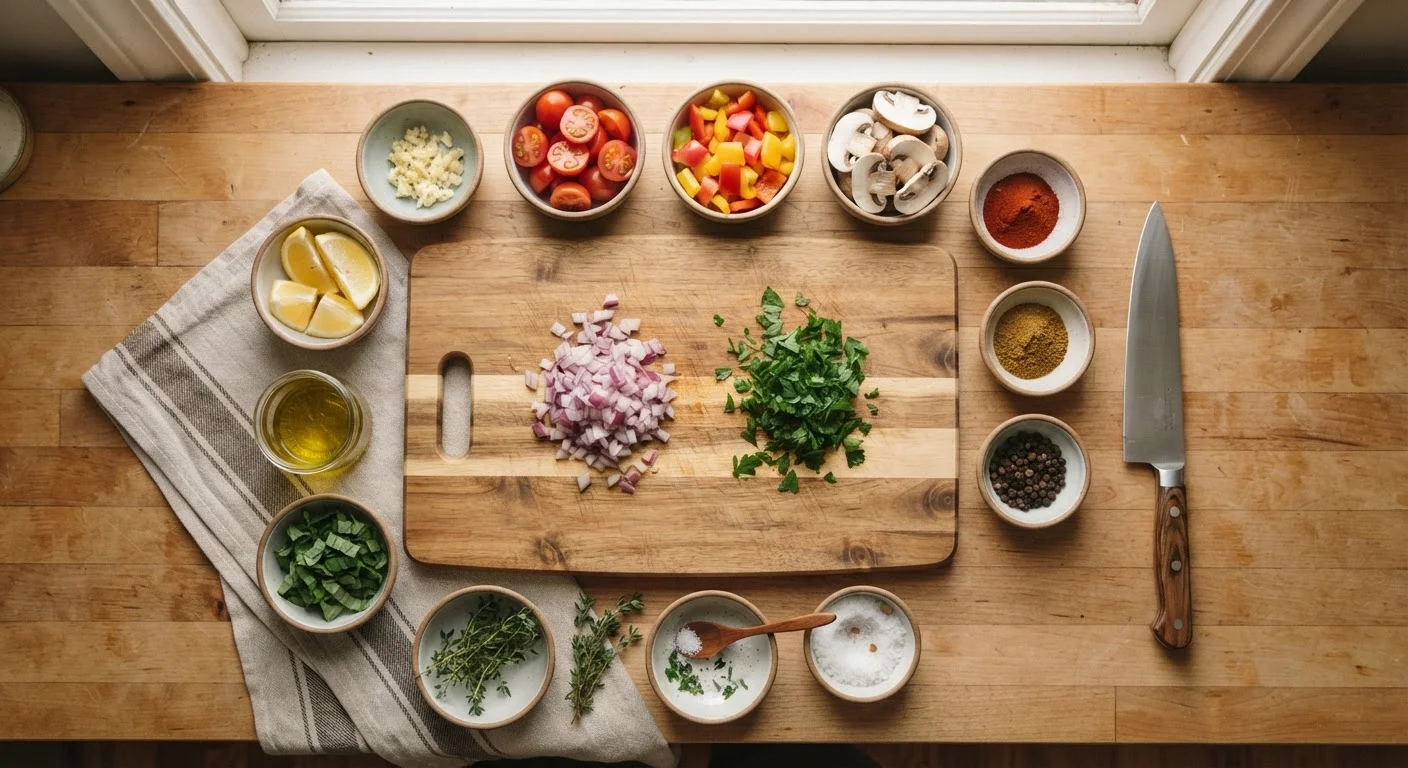
The French phrase mise en place (pronounced meez ahn plahs) translates literally to "everything in its place." In professional kitchens, it's not a suggestion - it's the non-negotiable discipline that allows cooks to produce complex meals under pressure without losing control. For home cooks, adopting even a simplified version of this mindset can transform the cooking experience from chaotic to genuinely satisfying.
The core idea is straightforward: before the heat goes on, everything you need should be identified, gathered, prepped, and positioned. No scrambling for a missing spice while a pan smokes, no realizing mid-recipe that you're out of an ingredient, no misreading a step because you're rushed. Preparation absorbs the chaos so the actual cooking can flow.
This checklist walks through the full mise en place process in logical order - from reading the recipe to final workspace setup. Whether you're cooking a weeknight dinner or tackling a more ambitious dish, working through these steps before you start will make the time you spend at the stove more controlled and more enjoyable. For a deeper look at how to equip your kitchen to support this kind of cooking, see our first kitchen equipment guide.
Tools and Equipment You'll Want on Hand
The mise en place process itself requires a few reliable basics. Having these ready before you begin means the prep phase stays organized rather than becoming its own problem to solve. If you're evaluating whether your current kitchen setup is working for you, the kitchen equipment audit checklist is a useful companion resource.
Prep bowls or ramekins
Hold pre-measured and pre-cut ingredients so they're organized and ready to add during cooking.
Sharp chef's knife and cutting board
Essential for efficient, safe prep of vegetables, herbs, and proteins.
Measuring cups and spoons
Ensure accurate quantities, especially for baking or spice-sensitive recipes.
Kitchen scale
Provides more precise measurements than volume tools, particularly useful for baking.
Instant-read thermometer
Confirms correct internal temperature for proteins and candy or frying applications.
Timer (dedicated or phone-based)
Tracks multiple simultaneous cooking stages without relying on memory.
The Mise en Place Checklist
Work through these groups in order. The earlier groups lay the foundation - skipping them tends to cause problems that show up mid-cook, when you have the least capacity to deal with them.
Recipe Review
Ingredient Audit
Prep and Measurement
Workspace and Equipment Setup
Never Skip the Full Recipe Read
The single most common cause of mid-cook problems is starting without reading the recipe in full. Steps that seem like they come later - a long rest, an overnight chill, a sauce that needs to reduce for 30 minutes - are easily missed when you read as you go. Reading the entire recipe before touching an ingredient takes two to three minutes and reliably prevents the most frustrating cooking surprises.
Building the Habit Over Time
Mise en place feels time-consuming at first, partly because it makes all the invisible work visible. When you're used to grabbing ingredients as you go, doing it systematically before cooking can feel like an extra step. In practice, the total time rarely changes - you're just front-loading the effort rather than distributing it chaotically through the cooking process.
Start with the "must" items on this checklist and build from there. Reading the full recipe before starting and pre-measuring anything that needs precise timing are the two habits that tend to yield the most immediate results. For measurement reference while you prep, common cooking measurement conversions are worth keeping accessible. As the process becomes familiar, the full checklist takes less conscious effort - and cooking starts to feel significantly more under control. A well-organized pantry also supports faster, more reliable mise en place; our pantry organization guide covers how to build one that genuinely works.
Don't Prep Too Far in Advance
While mise en place encourages preparation, some ingredients degrade quickly once cut or measured. Avocado browns, cut apples oxidize, and pre-salted proteins can release unwanted moisture. Prep most vegetables and aromatics close to when you'll cook them, and keep delicate or reactive ingredients covered if there's any lag time.
The content on this site is provided for informational purposes only and should not be considered a substitute for professional advice. While we strive to provide accurate and up-to-date information, we make no guarantees regarding its completeness or accuracy. Always consult a qualified professional for advice specific to your circumstances before making any decisions.