

Our Verdict
A vehicle maintenance log is one of the simplest habits a driver can adopt, and the payoff consistently outweighs the modest effort required. The main drawbacks - occasional time investment and the discipline to stay consistent - are manageable for most drivers. Whether you own a new car or a high-mileage vehicle, keeping accurate service records is a straightforward way to stay organized, protect your investment, and communicate more effectively with mechanics.
Ideal for any driver who wants to reduce surprise repair costs, support future resale negotiations, or simply stay on top of their vehicle's needs without relying on memory alone.
What a Vehicle Maintenance Log Actually Is
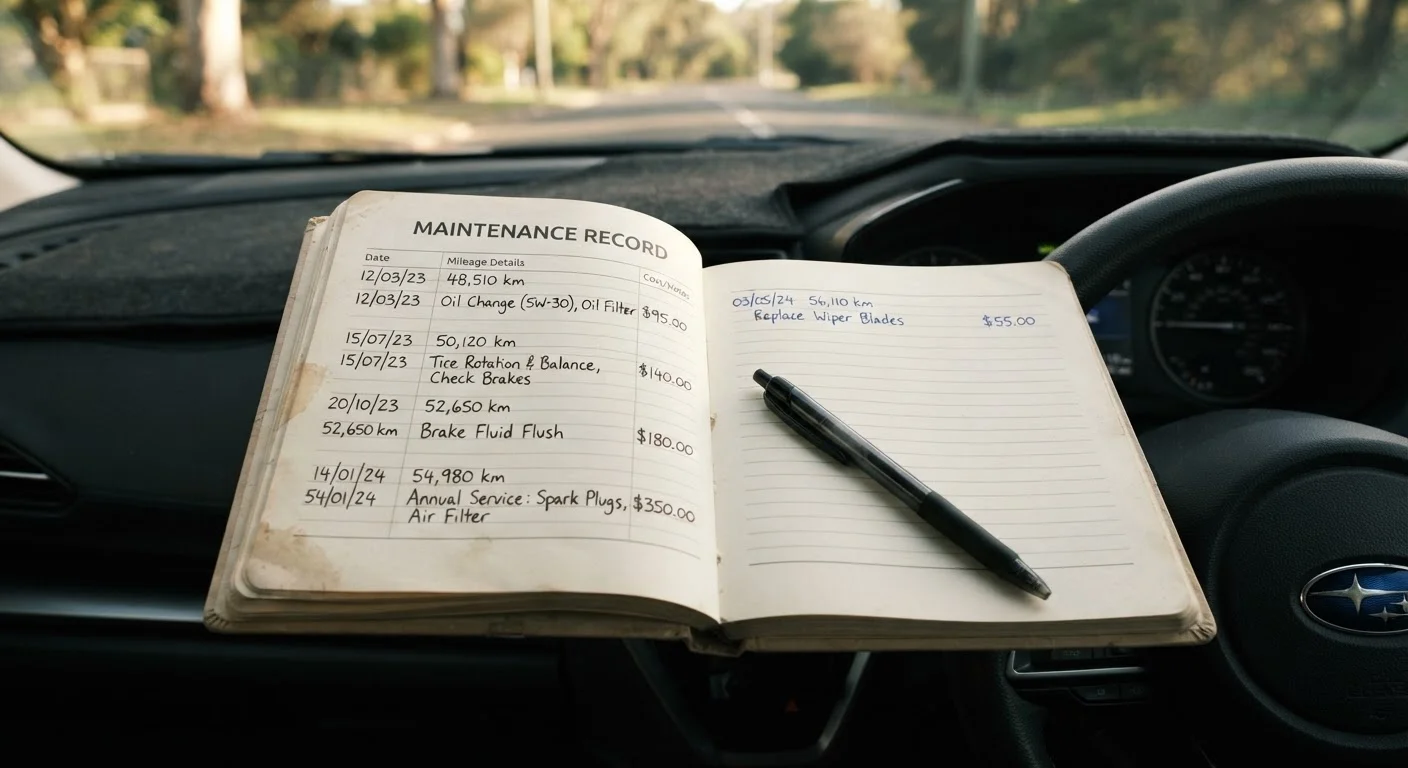
A vehicle maintenance log is a running record of every service, repair, and inspection performed on your car. It typically includes the date, mileage, work performed, parts replaced, and - where relevant - who did the work and what it cost. Some drivers keep a spiral notebook in the glove compartment; others use a dedicated app or a simple spreadsheet.
The format is less important than the habit. A consistent log creates a factual timeline of your vehicle's health, something neither your memory nor a mechanic's verbal estimate can reliably replicate. If you're new to car ownership, our guide for first-time owners explains the broader maintenance fundamentals that make log-keeping even more valuable.
The Advantages of Keeping a Log
For most drivers, the case for a maintenance log comes down to a handful of concrete, practical benefits.
Supports warranty claims with documented proof
Many manufacturer and extended warranties require evidence that scheduled maintenance was performed on time. A log provides that paper trail, which can be critical when a claim is disputed.
Strengthens resale value and buyer confidence
A verifiable service history signals responsible ownership to potential buyers, often making a vehicle easier to sell and supporting a stronger asking price compared to a car with no records.
Helps identify recurring or developing problems
When the same component keeps appearing in your log, that pattern is a red flag worth discussing with a mechanic - ideally before a minor issue becomes a major repair.
Makes scheduling future service straightforward
Knowing exactly when and at what mileage the last oil change, tire rotation, or brake inspection occurred removes guesswork and helps you stay within manufacturer-recommended intervals.
Gives mechanics accurate context for faster diagnosis
Technicians can work more efficiently when they know precisely what's been done - reducing the chance of redundant services or missed items.
~$400
Average annual car repair cost per vehicle
Industry estimates suggest US drivers spend several hundred dollars annually on unplanned repairs - costs that proactive maintenance tracking can help anticipate and reduce over time.
3-5 years
Typical warranty coverage requiring service records
Most new vehicle limited warranties span three to five years; manufacturers commonly require documented proof of scheduled maintenance to process covered repair claims.
Beyond the numbers, a log gives your mechanic real context. Rather than estimating when the last transmission fluid change happened, you can tell them exactly - which often leads to more precise diagnoses and fewer unnecessary services. For high-mileage vehicles especially, this historical clarity becomes increasingly important. See our article on keeping a high-mileage car roadworthy for more on why documented service history matters as vehicles age.
The Disadvantages Worth Considering
A maintenance log isn't without its friction points. Understanding the limitations helps you build realistic expectations.
Requires consistent effort to stay current
A log that's three months out of date is significantly less useful than one updated after every service. Maintaining the habit demands a small but genuine commitment.
Easy to lose if stored only in physical form
A paper logbook left in a glove compartment can be damaged, misplaced, or lost if the vehicle is stolen or sold. Backing up records digitally mitigates this risk.
Offers limited value if started late or inconsistently
A log begun after years of undocumented service provides an incomplete picture. While it's still worth starting, the full benefits accrue to drivers who begin early and stay consistent.
Doesn't replace professional diagnostic tools
A maintenance log records what was done, not the condition of every component. Unusual symptoms or warning lights still require a qualified mechanic's assessment.
Digital vs. Paper: Both Work
There's no universally superior format for a maintenance log. Paper notebooks are simple, require no connectivity, and stay in the car. Apps and spreadsheets make searching, backing up, and sharing records easier. Some drivers combine both - a quick paper note at the shop, then a digital entry at home. What matters most is updating the log promptly and consistently, regardless of format.
None of these drawbacks are insurmountable, but they're worth acknowledging. The drivers who benefit most from logs are those who commit to updating them promptly rather than trying to reconstruct entries weeks later.
How to Start and Sustain the Habit
Starting a log requires nothing more than deciding what format suits you and recording your next service. A few practical tips make it easier to maintain:
- Log immediately after service. The longer you wait, the more detail you lose. Set a phone reminder if the car is serviced and you're away from your logbook.
- Keep receipts with the log. Paper receipts tucked inside a physical notebook, or photos stored alongside a digital file, make it easy to verify what was done and by whom.
- Record mileage every time. Mileage-based intervals (oil changes, tire rotations, brake inspections) become much easier to anticipate when you can see past patterns at a glance.
- Include even minor items. A new wiper blade or a topped-off coolant reservoir is worth noting. Patterns in minor items sometimes flag developing issues before they escalate.
Our seasonal car maintenance checklist pairs well with a log - use the checklist to identify what needs doing each season, then record what was completed.
What a Log Reveals Over Time
One of the quieter benefits of a maintenance log only becomes apparent after a year or two of consistent use: pattern recognition. When you can see that a particular component has been serviced three times in eighteen months, or that fuel economy noted informally has shifted, you have data - not just an uneasy feeling - to discuss with a mechanic.
This is particularly useful for commonly overlooked maintenance tasks that don't have obvious warning signs. A log makes it easier to track intervals for items like cabin air filters, coolant flushes, and serpentine belts - jobs that often get skipped until they cause a breakdown.
When it comes time to sell or trade in the vehicle, a complete log also functions as evidence of responsible ownership. Prospective buyers and dealers often respond to documented service history, particularly when a vehicle history report alone can't capture the full picture of how a car has been maintained.
The content on this site is provided for informational purposes only and should not be considered a substitute for professional advice. While we strive to provide accurate and up-to-date information, we make no guarantees regarding its completeness or accuracy. Always consult a qualified professional for advice specific to your circumstances before making any decisions.