

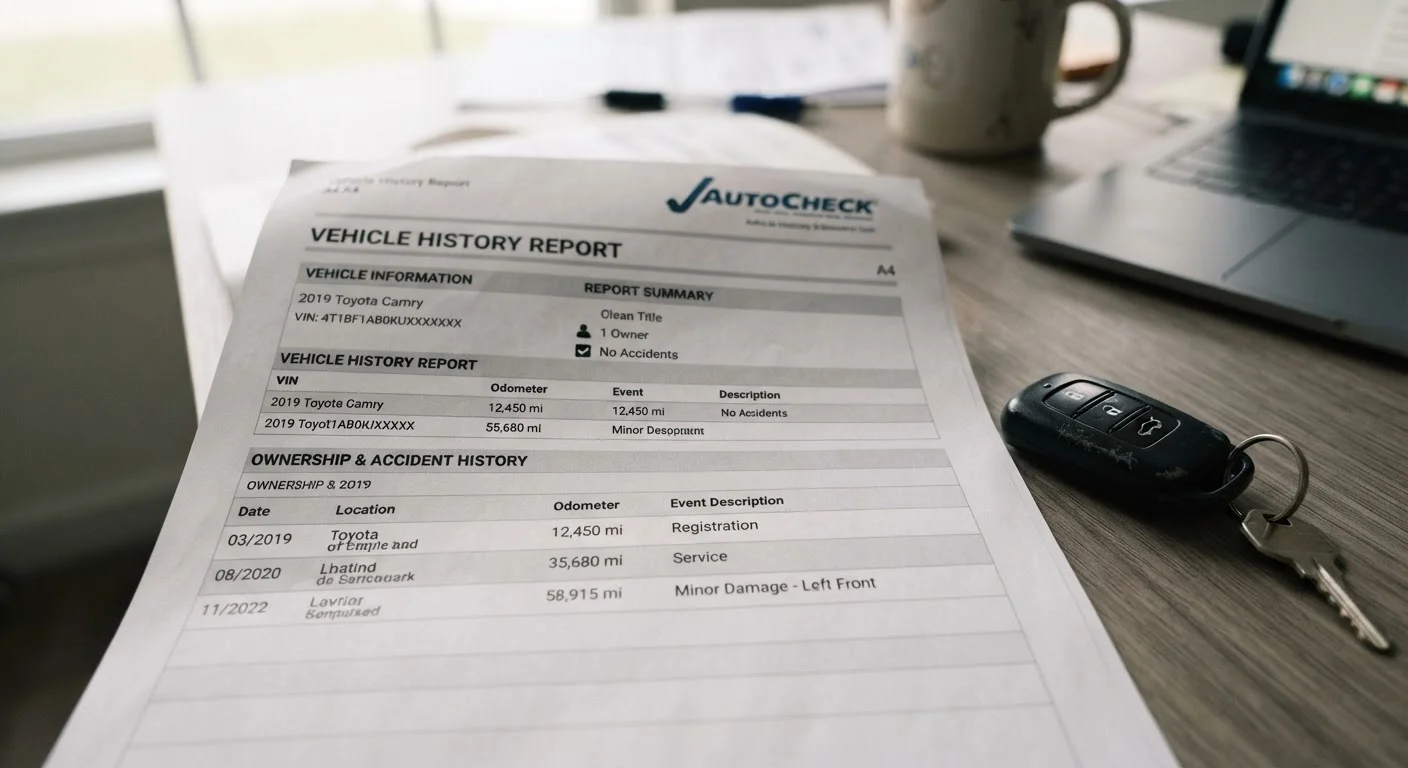
What a Vehicle History Report Actually Tells You
A vehicle history report aggregates data from state DMVs, insurance companies, auto auctions, and repair facilities to create a timeline of a vehicle's recorded life. The key word is recorded. Reports only capture events that were officially documented - cash-only repairs, private accidents, and informal sales often leave no trace.
That context matters before you interpret any entry. A clean report doesn't guarantee a clean car; it means no red flags surfaced in the data sources consulted. Use the report as one layer of due diligence, not the final word. Pair it with a physical inspection and, when possible, an independent mechanical evaluation.
| Data Sources in Typical Reports | DMVs, insurers, auctions, repair shops, police records |
| Salvage Threshold (approximate) | 75-80% of vehicle value, varies by state |
| Odometer Fraud Law | Federal Truth in Mileage Act (49 U.S.C. § 32701) |
| Report Limitation | Only captures documented, reported events |
| Lemon Law Buyback Disclosure | Required by law at point of resale in most states |
The Red Flags That Warrant Serious Attention
Salvage or Rebuilt Title
A salvage title is issued when an insurer declares a vehicle a total loss - typically when repair costs exceed a threshold percentage of the car's value, often around 75-80%, though this varies by state. A rebuilt title means the vehicle was repaired and passed a state inspection, but the salvage designation stays in the title chain permanently. Structural integrity, safety system function, and future insurability can all be affected. Financing a rebuilt-title vehicle is often difficult, and resale value is typically lower than comparable clean-title cars.
Odometer Discrepancy or Rollback Flag
Reports flag odometer readings that appear out of sequence - for example, a reading lower than a previous recorded mileage. Odometer fraud is a federal offense under the Truth in Mileage Act, yet it persists. A flagged discrepancy warrants direct explanation from the seller, supported by documentation. Even without a rollback flag, look at whether reported mileage aligns with the vehicle's age and the owner history.
Multiple Accidents or Structural Damage
A single minor collision - a low-speed fender bender with documented, professional repair - is far less concerning than repeated impacts or any notation of frame or structural damage. Structural repairs affect crash performance in ways that aren't always visible. If the report shows airbag deployment, that signals a significant impact; confirm all airbags and sensors were properly replaced by a qualified shop, not just reset.
Flood or Fire Damage
Water intrusion causes long-term electrical corrosion that can manifest months after a vehicle is dried out and cleaned. Fire damage similarly affects wiring harnesses and safety components in ways that aren't always apparent. Both designations are serious enough that many buyers and lenders treat them as disqualifying, regardless of subsequent repairs.
Lemon Law Buyback
This entry means a manufacturer previously repurchased the vehicle under a state lemon law due to unresolved defects. The vehicle can legally be resold, but disclosure is required, and the underlying defect history should be fully understood before proceeding. Ask for all documentation related to the original complaint and repair attempts.
Airbag Deployment Is a Significant Event
When a report shows airbag deployment, the repair goes well beyond replacing the airbag itself. Sensors, clock springs, seat belt pretensioners, and control modules are often part of the repair scope. Improper or incomplete airbag system repairs are a genuine safety concern. Always ask for documented evidence that the full system - not just the visible bag - was restored to manufacturer specification by a qualified facility.
Frequent Ownership Changes or Short Ownership Periods
Four owners in five years isn't automatically a problem, but it's worth asking why. Rapid turnover - especially when combined with other flags - can suggest the vehicle had recurring issues that each owner eventually gave up on. Cross-reference this with service records to see whether maintenance was performed consistently between ownership changes. Review our guide on decoding seller claims to help contextualize what you're told versus what the data shows.
How to Use These Flags in Practice
Not every flag is a dealbreaker, and context changes the calculus. A reported accident on a five-year-old work truck with 120,000 miles carries different weight than the same flag on a two-year-old vehicle presented as like-new. Ask sellers for itemized repair invoices - not just verbal assurances - and verify shop credentials where possible.
When a report shows anything involving structural damage, flood, fire, or rebuilt title, consider having an independent mechanic perform a pre-purchase inspection before making any financial commitments. Asking the right questions before you sign can surface details that neither the report nor the seller volunteered. And if you do purchase a vehicle, starting a vehicle maintenance log from day one creates your own paper trail - one that adds value when you eventually sell.
Salvage Title
A title designation issued by a state DMV when an insurer has declared a vehicle a total loss due to damage exceeding a set threshold of the vehicle's value. It remains on the title permanently and affects insurability and resale.
Rebuilt Title
A title status given to a previously salvaged vehicle that has been repaired and passed a state-mandated inspection. The vehicle can be registered and driven, but the salvage history is disclosed in the title chain.
Odometer Rollback
The illegal practice of altering a vehicle's odometer to show fewer miles than the vehicle has actually traveled. Federal law requires accurate odometer disclosure at the time of sale.
Lemon Law Buyback
A vehicle repurchased by its manufacturer under a state lemon law because it had recurring, unresolved defects. These vehicles can be legally resold but must be disclosed as buybacks.
Total Loss
An insurance determination that a vehicle's repair cost meets or exceeds a state-specific percentage of its pre-damage market value, making repair economically impractical from the insurer's standpoint.
Structural Damage
Damage to a vehicle's frame, unibody, or load-bearing components. Structural damage can compromise crash safety performance even after repairs are made.
The content on this site is provided for informational purposes only and should not be considered a substitute for professional advice. While we strive to provide accurate and up-to-date information, we make no guarantees regarding its completeness or accuracy. Always consult a qualified professional for advice specific to your circumstances before making any decisions.