

Start here
Start With Your Owner's Manual
Next
The Basic Checks Every Driver Should Know
Then
Understanding Service Intervals
When you're ready
When to Call a Mechanic
Long-term
Building Good Habits From Day One
Start With Your Owner's Manual
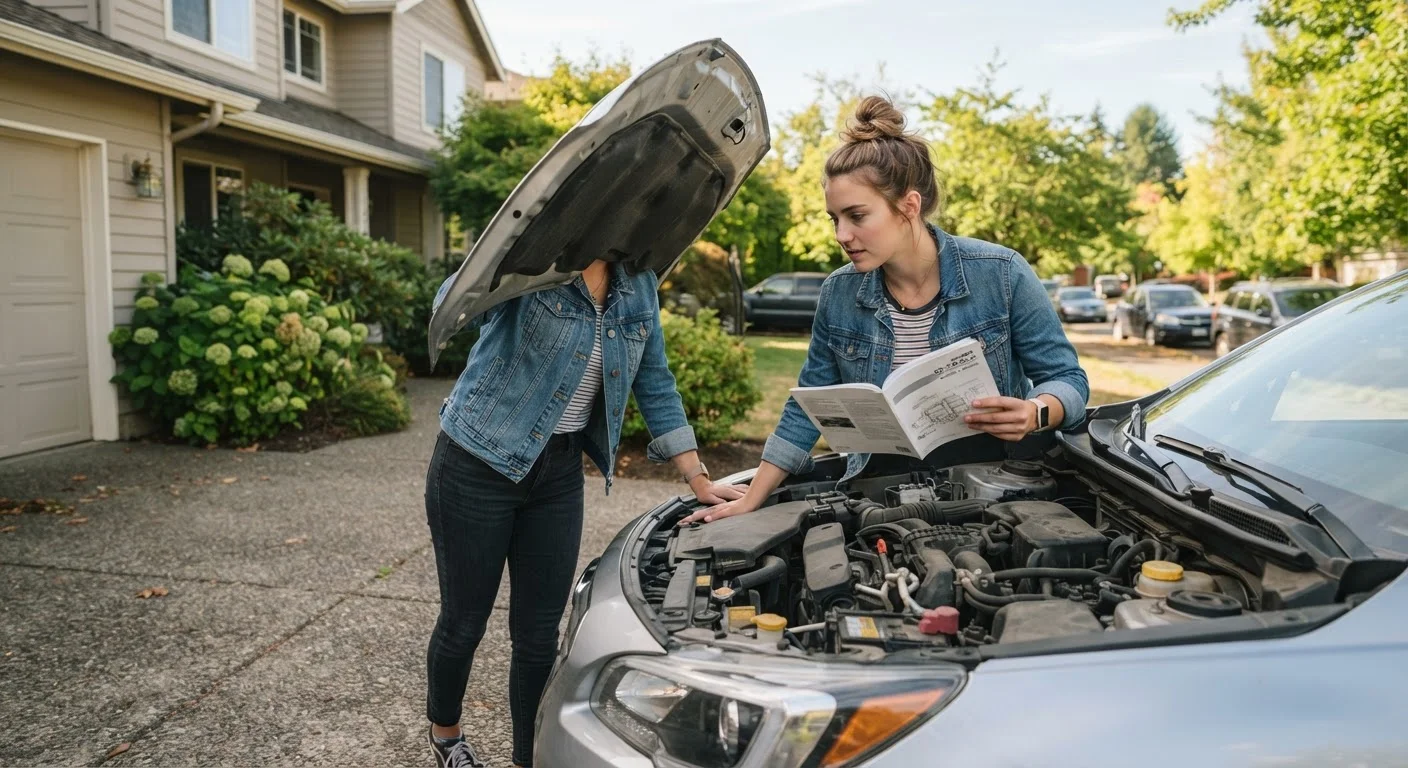
The single most underused resource in any new car owner's possession is the owner's manual sitting in the glove box. Most drivers never open it. That's a missed opportunity - because no generic car advice, however well-intentioned, can fully substitute for the manufacturer-specific guidance inside that document.
Your manual tells you which grade of engine oil your car requires, what the correct tire pressure is for your specific load, what each dashboard warning light actually means, and when your vehicle's manufacturer recommends each service. These details vary meaningfully between makes and models. Relying on a neighbor's advice or a general internet rule instead of your manual is one of the most common mistakes new owners make.
Learn what your owner's manual is actually trying to tell you - including which sections are most useful to read first. If you've misplaced the physical copy, most manufacturers make digital versions available through their official websites.
Owner's manual
The manufacturer-produced booklet specific to your vehicle that covers recommended fluids, service schedules, warning lights, and operating guidelines.
Service interval
The mileage or time period recommended by your vehicle's manufacturer between specific maintenance tasks, such as oil changes or tire rotations.
Dipstick
A long, slender rod inserted into the engine that lets you check the level and condition of your engine oil without opening the oil system.
Tire pressure (PSI)
The amount of air inside your tires, measured in pounds per square inch. Correct pressure improves safety, fuel efficiency, and tire lifespan.
Coolant
A fluid that circulates through your engine to regulate temperature and prevent overheating or freezing. Also called antifreeze.
ASE Certification
A credential issued by the National Institute for Automotive Service Excellence that indicates a mechanic has passed standardized competency tests in specific repair areas.
The Basic Checks Every Driver Should Know
You don't need mechanical expertise to keep an eye on your car's fundamental health indicators. A short list of visual and hands-on checks, done regularly, is enough to catch most developing problems before they become expensive ones.
- Engine oil: Pull the dipstick with the engine cold or after it's been off for a few minutes. Oil should read between the two markers and appear amber to dark brown - not milky, gritty, or absent.
- Tire pressure: Use an inexpensive gauge to check all four tires (plus the spare, if accessible) monthly and before long trips. The correct pressure for your vehicle is listed in the owner's manual and on a sticker inside the driver's door jamb - not on the tire's sidewall.
- Coolant level: Check the translucent reservoir in the engine bay when the engine is cold. Low coolant is a warning sign worth investigating promptly.
- Lights: Walk around your car periodically to confirm all headlights, brake lights, and turn signals are working. A burned-out brake light is both a safety hazard and a ticketable offense in most states.
- Windshield wipers: Streaking or skipping wipers reduce visibility in rain. Wiper blades are typically replaced every six to twelve months and are among the simplest DIY tasks a new owner can handle.
Understand which checks you can safely do yourself and which belong to a mechanic - the line matters more than many new owners realize.
Understanding Service Intervals
Car maintenance operates on a schedule, not just on visible symptoms. Waiting until something feels or sounds wrong is a reactive approach - and often a costly one. Manufacturers publish recommended service intervals for good reason: certain components degrade predictably over time or mileage, even when the car seems to run fine.
Common interval-based services include oil and filter changes, tire rotations, air filter replacements, brake fluid flushes, and spark plug changes. The timing for each varies by vehicle. A car using full synthetic oil might go 10,000 miles between oil changes; one using conventional oil may need service at 5,000. Treating every car identically is a mistake.
Many modern vehicles include an onboard maintenance reminder system that monitors driving conditions and alerts you when service is due - but these systems supplement the manual, not replace it. Get the full picture on maintenance costs, schedules, and trade-offs to understand what each service actually involves and roughly what to budget for it.
Track Mileage, Not Just Months
Many service intervals are mileage-based, not calendar-based - so a car that sits mostly unused may not need an oil change by the six-month mark, while a high-mileage commuter might need one sooner. Check both the mileage and the time-based recommendations in your manual and use whichever threshold comes first.
When to Call a Mechanic
Part of responsible car ownership is knowing where your competence ends. Some tasks are genuinely accessible to beginners - checking fluid levels, swapping wiper blades, replacing a cabin air filter. Others carry real risks if performed incorrectly.
Brake system work, suspension components, electrical diagnostics, and anything involving fuel lines or high-voltage hybrid systems should be handled by a qualified mechanic. Attempting these without the right tools, training, and safety equipment can cause injury or make a problem significantly worse.
Don't Delay Warning Light Investigations
A dashboard warning light - especially the check engine, oil pressure, or temperature light - should never be ignored for more than a short trip to a diagnostic appointment. Some warning conditions can cause rapid engine damage if driving continues. If a red warning light appears, treat it as urgent and consult a mechanic promptly.
When you do visit a mechanic, a few habits protect you as a customer: request a written estimate before authorizing any work, ask what will happen if a suggested repair is deferred, and don't be shy about asking for an explanation of any unfamiliar term. A good shop will welcome the questions. If you're unsure about a diagnosis, a second opinion is always reasonable on significant repairs.
Building Good Habits From Day One
The owners who avoid the most costly surprises tend to share one habit: they keep records. A simple maintenance log - even a notebook in the glove box or a notes app on your phone - tracking dates, mileage, and services performed gives you a clear picture of your car's history. It also makes conversations with mechanics more productive and supports warranty claims if issues arise.
See why keeping a vehicle maintenance log is worth starting today, and how simple it is to maintain one consistently.
Beyond record-keeping, treat your first year of ownership as a learning period. Pay attention to how your car sounds, handles, and feels under normal conditions - that baseline makes it far easier to notice when something has changed. Seasons affect your car meaningfully, too. A seasonal car maintenance checklist can help you stay ahead of weather-related wear on tires, batteries, and fluids.
Car maintenance isn't complicated - but it does reward consistency. Start with the manual, establish your monthly checks, follow your service schedule, and build from there.
Frequently Asked Questions
It depends on your specific vehicle and the type of oil it uses. Conventional oil typically calls for changes every 5,000-7,500 miles, while full synthetic oil can often go 10,000-15,000 miles between changes. Always follow the interval listed in your owner's manual rather than relying on generic rules of thumb.
Monthly checks worth doing include tire pressure, engine oil level, coolant level, windshield washer fluid, and all exterior lights. These take less than ten minutes and can flag developing issues early. Your owner's manual will confirm the correct fluid specifications and tire pressure range for your model.
Some tasks - checking fluid levels, replacing wiper blades, checking tire pressure - are straightforward and low-risk. Others, like brake work, suspension repairs, or anything involving fuel or high-voltage systems, carry real safety risks and should be handled by a qualified mechanic.
Skipping scheduled services can allow small issues to compound into major mechanical failures. It may also void portions of your warranty and reduce your vehicle's resale value. Consistent maintenance is generally far less costly than reactive repairs.
Yes - no generic car advice fully replaces the manufacturer-specific guidance in your manual. It covers recommended fluids, service intervals, warning light meanings, and load limits that are specific to your vehicle. Even skimming the maintenance section pays dividends.
Look for shops certified by the National Institute for Automotive Service Excellence (ASE). Ask for written estimates before work begins, request your old parts back when components are replaced, and don't hesitate to get a second opinion on major repairs. Word-of-mouth referrals from people you trust are also a reliable starting point.
The content on this site is provided for informational purposes only and should not be considered a substitute for professional advice. While we strive to provide accurate and up-to-date information, we make no guarantees regarding its completeness or accuracy. Always consult a qualified professional for advice specific to your circumstances before making any decisions.