

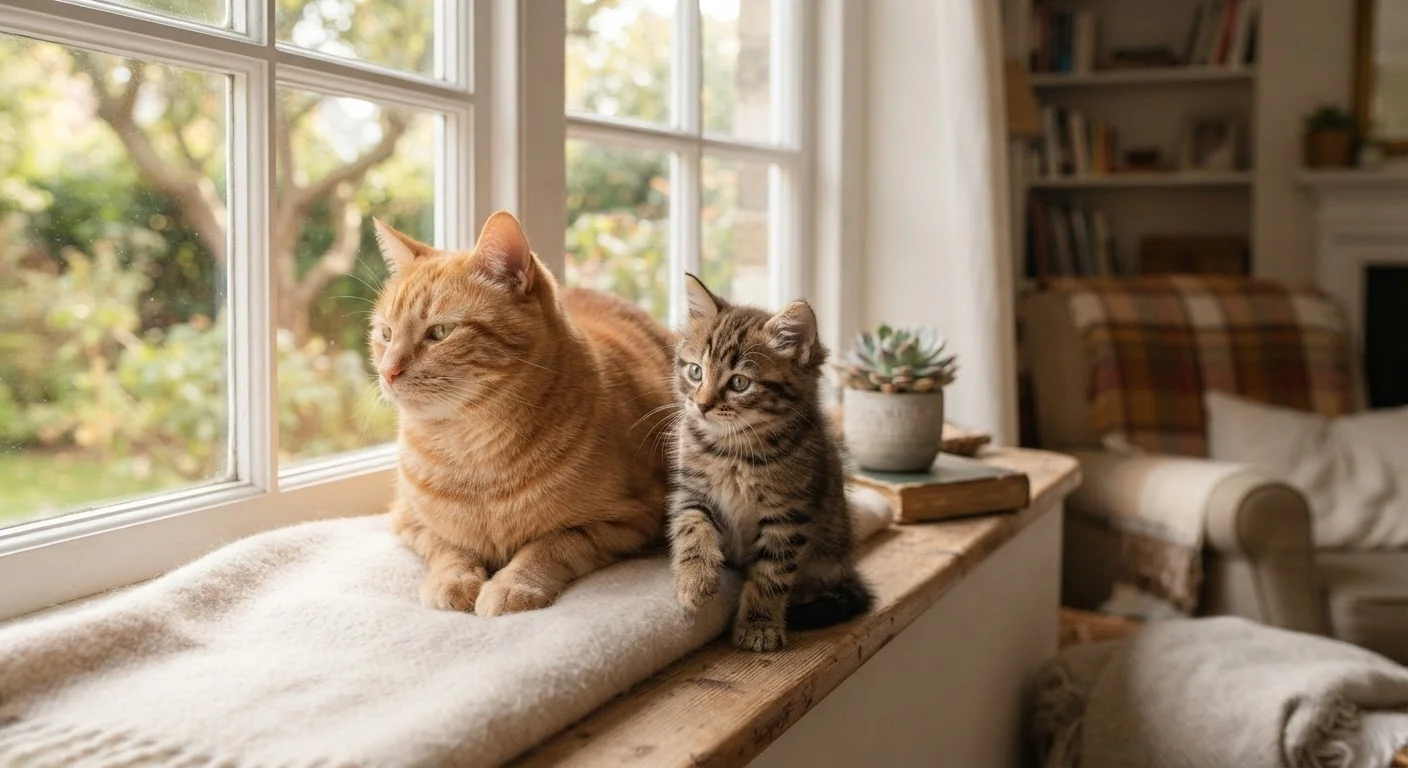
Our Verdict
Neither kittens nor adult cats are universally the better choice - the right fit depends on your daily schedule, household composition, and what you're genuinely prepared to offer. Kittens suit patient owners with time to invest in early development, while adult cats reward those who want a calmer, more immediately readable companion.
| Best for | Recommended |
|---|---|
| Experienced owners with flexible schedules and high energy tolerance | Kitten |
| Busy households, first-time cat owners, or those seeking a calmer companion | Adult Cat |
| Households with existing pets needing a predictable introduction | Adult Cat |
| Families planning for a long-term companion from an early age | Kitten |
Why Life Stage Matters More Than You Might Think
Choosing between a kitten and an adult cat is one of the most consequential decisions a prospective owner makes - yet it's often treated as a matter of preference rather than practical fit. In reality, a cat's life stage determines energy output, behavioral predictability, medical needs, and how quickly a genuine bond forms. Before you visit a shelter or breeder, it's worth examining what each stage actually requires day-to-day.
If you're new to cat ownership altogether, our complete guide for first-time cat owners covers the foundational setup every household needs regardless of which life stage you choose.
What Kittens Actually Demand From You
Kittens - generally defined as cats under one year of age - are in a critical socialization window. Between two and seven weeks, kittens develop their core responses to humans, other animals, and environmental stimuli. By the time a kitten is ready for adoption (typically eight weeks or older), that window is narrowing, and the experiences you provide in the following months shape adult temperament significantly.
The practical demands are real. Kittens require multiple feedings per day, frequent litter box monitoring, and near-constant supervision to prevent household hazards. They chew cords, fall from heights, and squeeze into dangerous spaces. Scratching behaviors emerge early and must be redirected through consistent training rather than punishment. Veterinary visits during year one include multiple vaccination boosters, parasite prevention, and spay or neuter procedures.
Behaviorally, kittens are unpredictable - not because they are difficult, but because their personalities are still forming. You are, in a meaningful sense, participating in who they become. That's a rewarding responsibility, but it requires time and patience that not every lifestyle accommodates.
Pair Kittens When Your Schedule Allows
If your heart is set on a kitten but your work schedule is demanding, many shelter professionals suggest adopting two kittens from the same litter or close in age. Littermates or compatible pairs engage each other during the day, which can reduce destructive behavior caused by boredom and loneliness. This approach does double the commitment - but often results in calmer, better-socialized adults.
The Case for Adopting an Adult Cat
Adult cats - roughly one year and older - arrive with established personalities. Shelter staff and foster families can often describe with accuracy whether a cat is sociable or reserved, playful or relaxed, comfortable with children or better suited to quiet adults. This transparency reduces adoption mismatch significantly.
Energy levels in adult cats are generally lower and more consistent than in kittens. While individual variation is wide, most adult cats settle into predictable daily rhythms: active play periods, rest, and social engagement on their own terms. This suits households where extended supervision isn't possible or where calmer coexistence is the goal.
Adult cats also tend to transition into multi-pet households with clearer signals. A cat that has lived with other cats before will often communicate that history through behavior during introductions. Our guide to introducing a new cat to existing pets outlines how to manage this process regardless of life stage.
| Kitten (Under 1 Year) | Adult Cat (1-10 Years) | |
|---|---|---|
| Energy Level | Very high; bursts of intense activity | Moderate; predictable daily rhythm |
| Personality Predictability | Low; still developing | High; established and observable |
| Year-One Vet Visits | Frequent; vaccines, neuter, check-ups | Lower; often already vaccinated/altered |
| Training Demand | High; redirection of biting and scratching needed | Moderate; habits already formed |
| Supervision Required | Constant early on | Minimal once settled |
| Multi-Pet Integration | Adaptable but unpredictable | More readable behavior and history |
| Bond Formation | Gradual; shaped by your care | Often quicker initial trust in calm homes |
Health and Veterinary Considerations by Life Stage
Veterinary costs and frequency differ meaningfully between kittens and adults. Kittens need a series of core vaccinations - typically at eight, twelve, and sixteen weeks - plus feline leukemia virus testing, deworming, and reproductive surgery. These visits add up in both cost and scheduling demands during year one.
Adult cats adopted from reputable shelters are usually already vaccinated, microchipped, and spayed or neutered - reducing initial medical overhead. That said, adult cats may arrive with undisclosed health history, and a comprehensive veterinary intake exam is strongly recommended within the first week of adoption. Cats between ages seven and ten may also be approaching the beginning of senior-range monitoring needs; for a detailed look at what changes after age ten, see our overview of senior cat care.
Diet is equally stage-dependent. Kittens require calorie-dense food formulated for growth, while adults need maintenance nutrition. Understanding those differences helps avoid inadvertent overfeeding or undernutrition - factors covered thoroughly in our comparison of wet and dry cat food.
Enrichment, Environment, and Long-Term Compatibility
Both kittens and adult cats benefit from structured environmental enrichment, though the form it takes differs. Kittens need outlets for explosive energy: climbing structures, interactive wand toys, and frequent short play sessions that mirror prey-chasing behavior. Adult cats often engage more deliberately - puzzle feeders, perches with outdoor views, and lower-intensity play tend to satisfy them well. Our guide to environmental enrichment for indoor cats outlines strategies applicable to both age groups.
Long-term compatibility also involves your housing situation and whether the cat will spend time indoors, outdoors, or both. Kittens raised entirely indoors typically adapt without difficulty; adult cats with prior outdoor access may find strict indoor living harder to adjust to. These trade-offs are explored in depth in our overview of indoor vs. outdoor cat considerations.
Ultimately, a well-matched adoption - regardless of the cat's age - is built on honest self-assessment. Consider your actual daily schedule, your tolerance for unpredictability, and the needs of others in your household before making a commitment that can span fifteen years or more.
Avoid Impulse Decisions at the Shelter
Shelter environments can make cats appear either unusually shy or unusually outgoing compared to their true temperament at home. Ask shelter staff about the cat's observed daily behavior, not just what you see in a brief interaction. For adult cats especially, a two-week adjustment period at home is normal - behavior during this window is not necessarily representative of the cat's settled personality.
The content on this site is provided for informational purposes only and should not be considered a substitute for professional advice. While we strive to provide accurate and up-to-date information, we make no guarantees regarding its completeness or accuracy. Always consult a qualified professional for advice specific to your circumstances before making any decisions.