

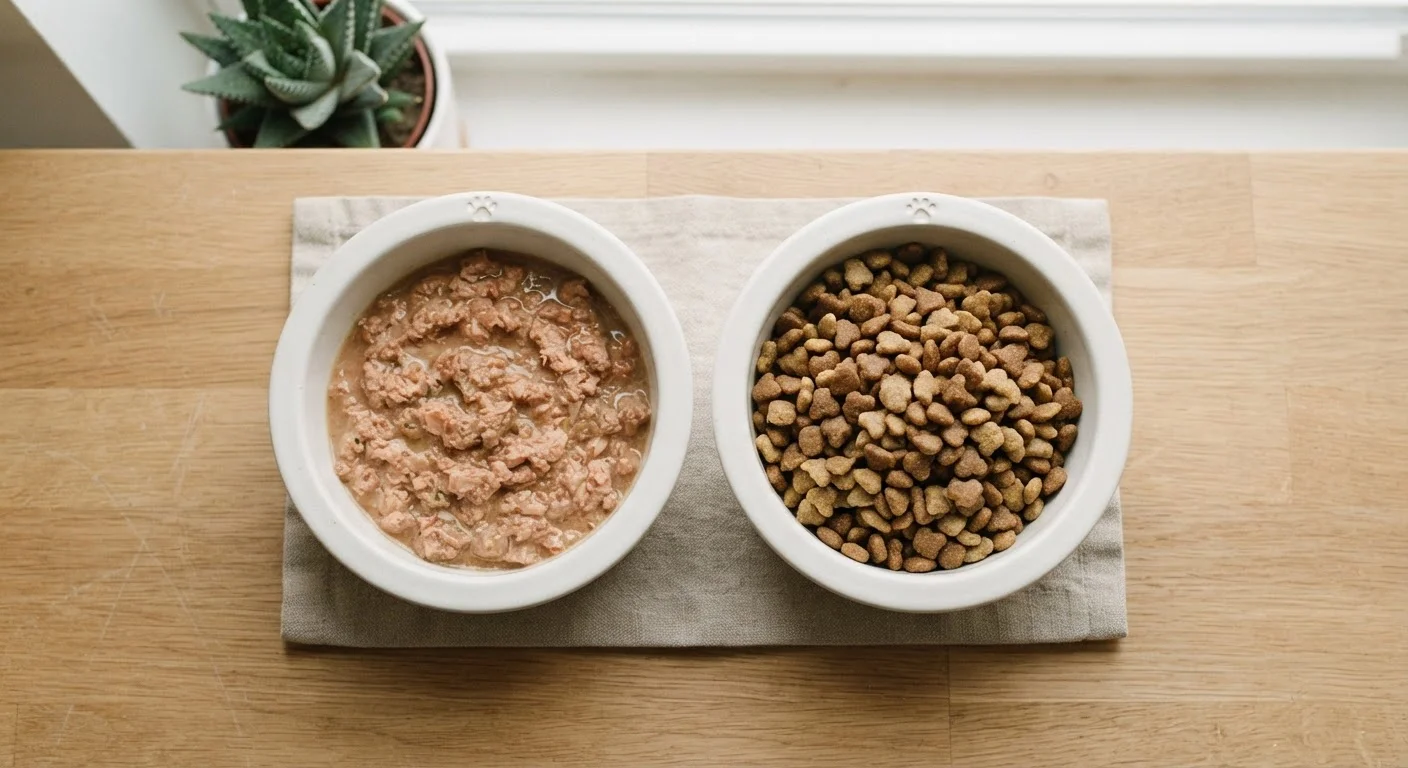
Option A
Wet Cat Food
The high-moisture, protein-forward option.
Best for: Cats who need extra hydration, have urinary tract concerns, are picky eaters, or are seniors with reduced thirst drive.
Option B
Dry Cat Food (Kibble)
The convenient, calorie-dense everyday staple.
Best for: Owners seeking convenience and longer shelf life, and cats with no urinary issues who drink water freely.
The Core Nutritional Difference: It Starts with Water
The most fundamental difference between wet and dry cat food is moisture content. Wet food typically contains 70-80% water, while dry kibble sits at roughly 8-12%. This gap has cascading effects on how your cat absorbs nutrients, manages weight, and supports kidney function.
Cats evolved as desert predators and historically obtained most of their water from prey. As a result, their thirst drive is naturally low - they don't instinctively drink enough water to compensate for a dry-food-only diet. Wet food helps bridge this gap passively, which is why many veterinarians consider it particularly important for cats prone to urinary or kidney issues. For a deeper look at how water interacts with overall nutrition, see how water fits into nutrition.
On a dry-matter basis (the nutritional content after water is removed), both formats can deliver comparable protein levels. The real divergence is in carbohydrates: kibble requires a binding agent to hold its shape, which typically means starch - making dry food notably higher in carbohydrates than wet food. Cats have limited ability to digest large quantities of carbohydrates efficiently, since their metabolic pathways are tuned for protein and fat as primary fuel sources.
| Criterion | Wet Cat Food | Dry Cat Food (Kibble) |
|---|---|---|
| Moisture content | 70-80% | 8-12% |
| Carbohydrate level | Generally lower | Generally higher |
| Caloric density (per gram) | Lower | Higher |
| Shelf life after opening | Hours (refrigerate) | Weeks to months |
| Cost per serving | Generally higher | Generally lower |
| Hydration support | Strong | Minimal |
| Palatability for picky eaters | Often higher | Variable |
| Ease of portion control | Moderate | Easy |
Protein, Fat, and the Obligate Carnivore Standard
Cats are obligate carnivores, meaning they require specific nutrients found only in animal tissue - including taurine (an amino acid essential for heart and eye health), arachidonic acid, and preformed vitamin A. Unlike dogs or humans, cats cannot synthesize these from plant precursors in adequate amounts.
Both wet and dry foods can meet these requirements when formulated to AAFCO (Association of American Feed Control Officials) standards, but the source and proportion of ingredients vary considerably between products and formats. Wet food typically derives more of its calories from protein and fat, more closely mimicking the macronutrient profile of whole prey. Dry food, by contrast, leans more heavily on carbohydrate-based fillers to achieve shelf stability.
70-80%
Moisture content in wet cat food
Compared to roughly 8-12% in dry kibble - a gap that significantly affects daily fluid intake for cats.
~50%
Calories from protein in typical wet food
Wet food generally derives a larger share of calories from animal protein, more closely mirroring a cat's ancestral prey-based diet.
1 in 3
Cats affected by kidney disease in their lifetime
According to veterinary estimates, chronic kidney disease is among the most common conditions in older cats - making lifelong hydration a meaningful preventive consideration.
This distinction matters less when a cat is young and healthy, but becomes more clinically relevant in cats managing diabetes, obesity, or inflammatory bowel conditions - situations where your veterinarian may specifically recommend a lower-carbohydrate diet.
Age is also a key variable. Kittens need higher protein and fat ratios than adult cats, and senior cats may require modified phosphorus levels to support aging kidneys. For a broader look at how life stage affects care decisions, see our article on senior cat nutritional needs and our comparison of kitten vs. adult adoption.
Dental Health, Weight, and Practical Feeding Realities
One frequently cited advantage of dry kibble is dental health - the idea being that the crunch of kibble mechanically removes plaque. This claim has some support but is often overstated. Most cats swallow kibble with minimal chewing, and veterinary dental organizations generally emphasize that tooth brushing and professional cleanings are far more effective than food texture alone.
Weight management is where format makes a more meaningful difference. Wet food's high water content means lower caloric density per gram - a cat eating wet food may feel fuller on fewer calories. Overweight and indoor cats, who often lead less active lives, may benefit from this. For context on how environment shapes a cat's daily needs, see indoor vs. outdoor cat trade-offs.
On the practical side, dry food wins on convenience: it doesn't spoil quickly after serving, is easier to measure for portion control, and is generally less expensive. Wet food must be refrigerated after opening and should not sit out for more than a few hours. Many households find that a combination feeding approach - dry food available during the day, wet food served at a set mealtime - offers a workable balance between cost, convenience, and hydration.
Ultimately, no single format is right for every cat. The most defensible approach is to choose a food that meets AAFCO nutritional adequacy standards for your cat's life stage, suits your cat's health profile, and is one your veterinarian is comfortable with.
This article is for general informational purposes only and does not constitute veterinary or medical advice. Always consult a licensed veterinarian before making significant changes to your cat's diet, especially if your cat has an existing health condition.
The content on this site is provided for informational purposes only and should not be considered a substitute for professional advice. While we strive to provide accurate and up-to-date information, we make no guarantees regarding its completeness or accuracy. Always consult a qualified professional for advice specific to your circumstances before making any decisions.