

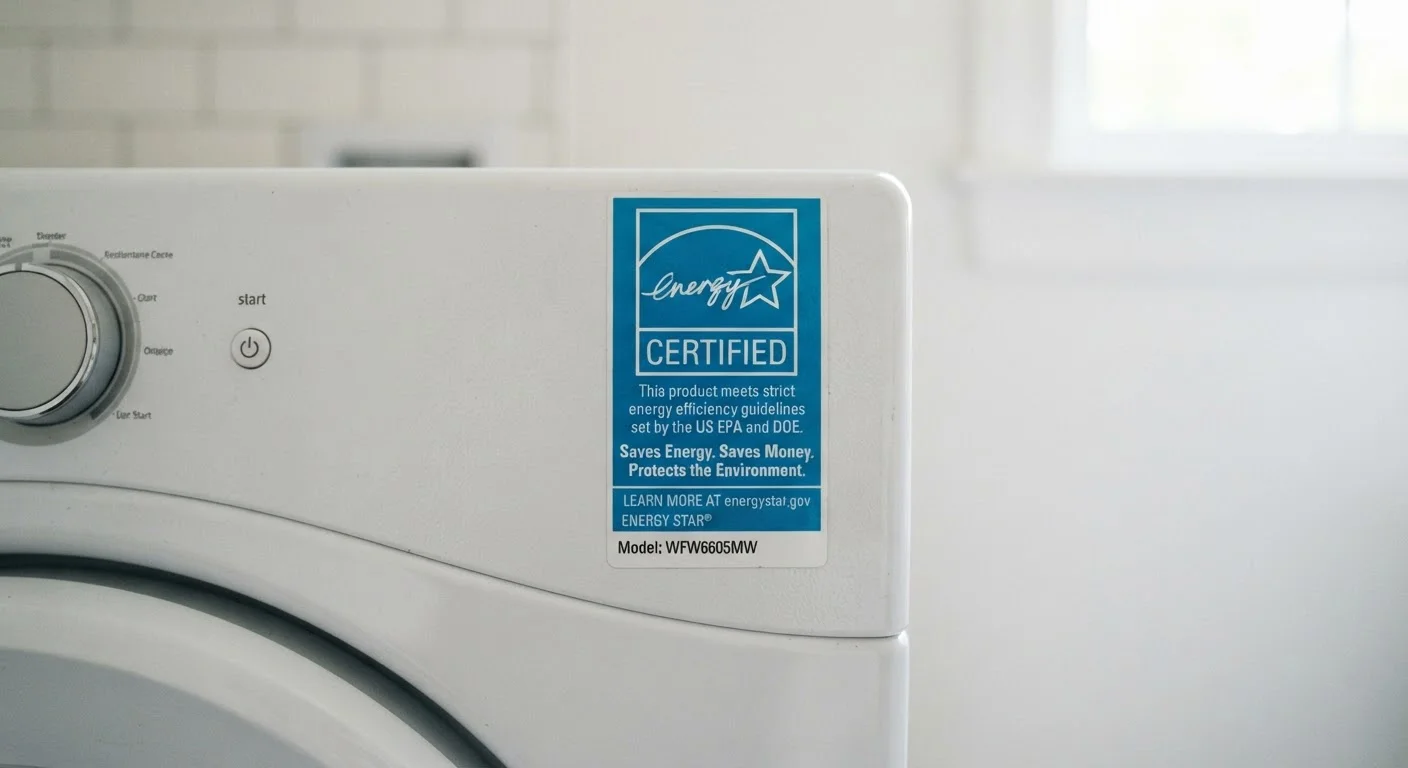
Where the Label Comes From
The Energy Star program was established by the EPA in 1992, originally focused on computers and monitors. Over time it expanded to cover more than 75 product categories, including major appliances, HVAC systems, lighting, windows, and even new homes. Today, the certification is one of the most recognized energy labels in the United States.
What sets it apart from a manufacturer's marketing claim is government oversight. Products must be tested in EPA-recognized laboratories before earning the mark, and the EPA conducts periodic market verification to confirm that certified products continue to perform as labeled. If a product fails post-market testing, it can be removed from the program.
Think of it alongside other label-reading exercises you already do - similar to how reading a nutrition label requires understanding what each section actually measures, interpreting the Energy Star logo means knowing what standard it's held to.
75+
Product categories covered by Energy Star
According to the EPA, the program now spans more than 75 distinct product categories, from appliances to commercial buildings.
~10-50%
Typical energy savings above federal minimums
Energy Star efficiency thresholds generally require products to use 10% to 50% less energy than the federal minimum, depending on the product category.
1992
Year the Energy Star program was established
The EPA launched Energy Star in 1992, initially focusing on office electronics before expanding to cover home appliances and buildings.
Why the Threshold Differs by Category
This is the part most consumers don't realize: being Energy Star certified doesn't mean the same thing for a refrigerator as it does for a washing machine or a smart thermostat. Each product category has its own efficiency specification, developed in consultation with manufacturers, utilities, and efficiency advocates.
For example, certified clothes washers are required to use significantly less water as well as less energy compared with federal minimums - because washing machine efficiency is measured using a combined energy factor that accounts for both. A certified central air conditioner, on the other hand, must meet a minimum SEER rating above what federal law requires. The EPA publishes the specific criteria for each category on its website, and those criteria are periodically tightened as technology improves.
This category-specific approach matters when you're comparing appliances. If you're evaluating built-in versus freestanding kitchen appliances, for instance, the efficiency certification applies to each unit independently - a useful lens explored in our look at built-in appliances in a standard kitchen.
Check the EPA's Product Finder Before You Shop
The EPA maintains a searchable database of all currently certified Energy Star products at energystar.gov. You can filter by category, product type, and - for some categories - efficiency level. Cross-referencing a specific model against this list confirms the certification is current, since products can be removed if they fail post-market testing.
Reading Energy Star Alongside the EnergyGuide Label
The blue Energy Star logo tells you a product clears a specific efficiency bar. The yellow EnergyGuide label - required by the Federal Trade Commission on refrigerators, dishwashers, washers, dryers, water heaters, and certain other appliances - gives you estimated annual energy consumption and an estimated annual operating cost based on a national average electricity rate.
These two labels work together. Energy Star tells you the appliance is among the more efficient options in its class; EnergyGuide gives you a rough sense of what running it will cost per year. Neither label accounts for your personal usage habits, local utility rates, or whether you're replacing an older, much less efficient unit. But used together, they offer a reasonably grounded starting point for comparison.
A similar principle applies to reading light bulb packaging, where multiple numbers - watts, lumens, and color temperature - each tell a different part of the efficiency story. Our explainer on reading a light bulb label correctly covers that in detail.
What the Certification Doesn't Tell You
Energy Star certification is an efficiency indicator, not a comprehensive quality or reliability score. A certified product uses less energy in standardized testing conditions; it does not necessarily last longer, perform better on every measure, or cost less to repair. Two certified dishwashers in the same category can differ substantially in wash performance, noise level, cycle duration, and long-term durability.
The label also doesn't automatically mean an appliance is the most efficient option available in its category - only that it meets the program's current threshold. Some products exceed that threshold by a wide margin; others just barely clear it. For categories where the EPA designates a further tier - called Energy Star Most Efficient - those products represent the leading edge of performance in a given year.
Understanding what a certification does and doesn't cover is a useful habit across many consumer decisions. Whether you're evaluating vehicle certifications or appliance labels, the key question is always: what specifically was tested, and against what standard? For a parallel illustration outside the home context, see our article on what certified pre-owned status actually means for vehicles.
Frequently Asked Questions
Energy Star is jointly administered by the U.S. Environmental Protection Agency and the U.S. Department of Energy. It is a government-backed voluntary program, not a private certification body.
No - these are two different labels. The yellow EnergyGuide label, required by the FTC on many appliances, shows estimated annual energy use and operating costs. The Energy Star logo indicates the product meets an above-baseline efficiency threshold set by the EPA for its category.
No. Each product category has its own efficiency threshold. A certified dishwasher may use around 12% less energy than the federal minimum, while a certified refrigerator must exceed federal standards by a different margin. The percentage varies by category.
Manufacturers must submit products to EPA-recognized laboratories for testing. The EPA also conducts verification testing on products already in the market. Self-reporting without independent verification is not sufficient to earn or keep the label.
The label means the product uses less energy than comparable non-certified models, but actual utility savings depend on how often you use the appliance, your local electricity rates, and the efficiency of whatever you're replacing. Think of it as a relative indicator, not a guaranteed dollar amount.
Yes. The EPA periodically revises efficiency criteria as technology improves. A product certified under older criteria may not meet current thresholds, so it's worth checking the program's product lists if recency matters to you.
The content on this site is provided for informational purposes only and should not be considered a substitute for professional advice. While we strive to provide accurate and up-to-date information, we make no guarantees regarding its completeness or accuracy. Always consult a qualified professional for advice specific to your circumstances before making any decisions.