

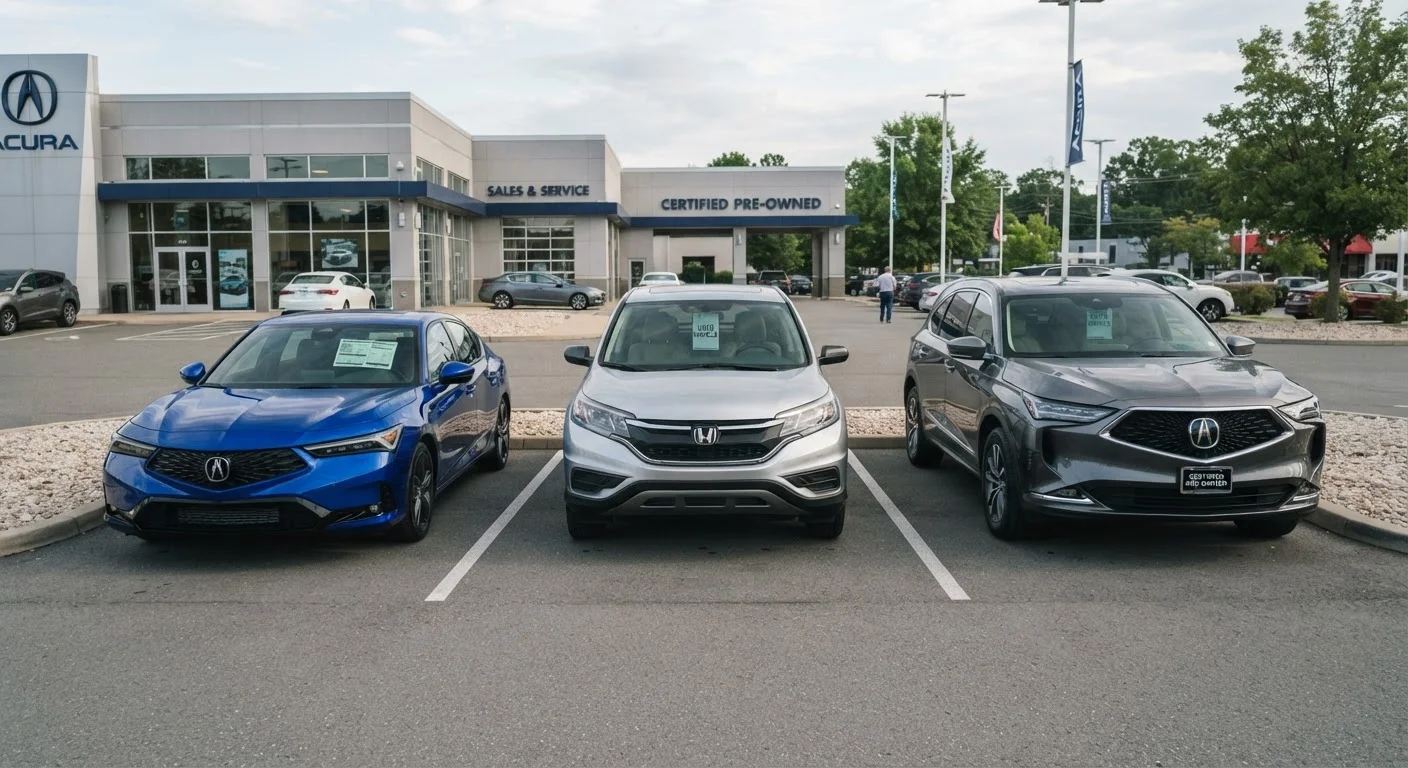
What 'New' Actually Means at the Point of Sale
A new car is one that has never been titled to a private owner. That distinction matters because it unlocks the full factory warranty - typically covering the powertrain for a defined period and mileage - and means you are the first person responsible for its service history. You also have the widest choice of trim levels, colors, and factory options.
The trade-off is well-documented: new vehicles lose value quickly in the early years, a reality driven by supply, demand, and consumer psychology rather than any deterioration in the car itself. A vehicle driven off the lot today is worth less tomorrow not because anything changed mechanically, but because it is no longer 'new.' For buyers who plan to keep a vehicle long-term, this depreciation curve matters less. For those who might sell or trade within a few years, it's a meaningful financial consideration worth working through - see the full cost of ownership breakdown for how depreciation fits into the bigger picture.
~20%
Typical first-year new car depreciation
Industry estimates consistently place new vehicle depreciation in the range of 15-20% within the first year, with continued decline over the following two to three years.
172+
Inspection points in leading manufacturer CPO programs
Several major automakers publish inspection checklists exceeding 150 individual points for their manufacturer-backed CPO programs, though dealer programs often use significantly shorter lists.
What You're Actually Getting With a Used Car
A used vehicle is any car that has been previously titled - it could be two years old with low mileage or a decade old with heavy wear. The category is broad by definition, which is both its strength and its challenge. The lower entry price is real, but so is the wider variance in condition and history.
Because used cars are sold as-is in most private transactions and many dealer sales, the burden of due diligence shifts significantly to the buyer. A vehicle history report using the car's VIN is a starting point, but it won't reveal everything - some damage and mechanical issues don't appear in reported records. An independent pre-purchase inspection by a qualified mechanic is one of the most practical steps a buyer can take before committing. What to evaluate beyond the test drive is worth understanding before you reach that stage.
Used cars also carry no remaining factory warranty in many cases, though some vehicles are still within their original coverage window depending on age and mileage. Verifying whether any manufacturer warranty transfers to a new owner is a specific question worth asking for any used vehicle under consideration.
What Certified Pre-Owned Status Does - and Doesn't - Guarantee
CPO is the middle category, and it's also the one most prone to misunderstanding. The term 'certified' implies a standard has been met, but there is no single universal CPO standard. What the certification covers depends entirely on who is running the program.
Manufacturer-backed CPO programs - run directly by automakers - generally require vehicles to meet specific age and mileage limits, pass a multi-point inspection, and come with a warranty backed by the manufacturer. These programs tend to be more transparent and consistent. Dealer-certified programs, by contrast, are created and administered by the selling dealer. Inspection criteria and warranty terms can vary considerably, and the backing entity may not have the same resources or accountability as an automaker.
Ask for the Full Inspection Report
When considering any CPO vehicle, request the complete written inspection report - not a summary badge or sticker. Compare the number of points inspected and confirm who backs the warranty: the manufacturer or a third-party provider. This single step clarifies how much the 'certified' label is actually worth in a given transaction.
In either case, 'certified' doesn't mean the vehicle is problem-free - it means it passed a specific checklist at a specific point in time. Asking for the actual inspection report, not just a summary, helps you understand what was checked and what was not. Similarly, understanding what the accompanying warranty covers - and what it excludes - is as important as knowing it exists. Common vehicle ad terms worth scrutinizing explores how similar language can obscure meaningful differences in what's actually being offered.
Choosing the Right Category for Your Situation
None of these three categories is inherently superior - the right choice depends on your priorities, budget, and how long you plan to keep the vehicle. A buyer who values predictability and full warranty coverage may find new makes sense despite the higher upfront cost. A buyer who is comfortable doing research and wants the lowest possible price may find a well-documented used vehicle fits their situation. A buyer who wants some warranty protection without paying new-car prices may find a manufacturer CPO program worth the premium over a standard used car.
What matters most is understanding what each label actually means before you treat it as a shorthand for quality or value. The label 'certified' can mean rigorous oversight or minimal screening depending on the program. 'Used' can mean a fleet vehicle returned in excellent condition or a vehicle with undisclosed mechanical history. Even 'new' has nuances - dealer demo vehicles and vehicles with prior test-drive mileage are technically new until titled but may carry some wear.
If you're also weighing whether to buy outright or lease, the buying vs. leasing comparison breaks down how ownership structure interacts with the decision you're making here.
A buyer purchases a two-year-old vehicle sold as 'dealer certified' at a significant discount compared to a manufacturer CPO equivalent.
A driver buys a new vehicle planning to keep it for ten or more years.
A buyer finds a three-year-old vehicle with low mileage still within its original powertrain warranty window.
Frequently Asked Questions
A CPO vehicle has undergone an inspection process and typically includes some warranty coverage, which reduces certain buyer risks. However, CPO programs vary considerably, so the added value depends entirely on which program is backing the vehicle. Always read the specific inspection checklist and warranty terms before assuming CPO status guarantees quality.
New vehicles depreciate quickly - often losing a significant portion of their value within the first few years. This depreciation curve means buyers who resell or trade in relatively soon may get less back than they expect. That said, new cars carry full factory warranties and the certainty of zero prior ownership.
A vehicle history report (using the car's VIN) is the standard starting point and can reveal prior accidents, title issues, and odometer discrepancies. Pairing that with an independent pre-purchase inspection by a qualified mechanic gives a much clearer picture of the vehicle's actual condition.
Most major automakers offer manufacturer-backed CPO programs, but not every vehicle qualifies - age and mileage thresholds typically apply. Independent dealers may also offer their own certification programs, which operate under different and often less transparent standards.
CPO vehicles are typically priced higher than equivalent non-certified used cars, which can influence insured value. However, insurance pricing depends on many factors beyond purchase price. It's worth getting insurance quotes on any specific vehicle you're considering before committing.
The content on this site is provided for informational purposes only and should not be considered a substitute for professional advice. While we strive to provide accurate and up-to-date information, we make no guarantees regarding its completeness or accuracy. Always consult a qualified professional for advice specific to your circumstances before making any decisions.