

Our Verdict
Built-in appliances make the most sense for homeowners undertaking a full kitchen renovation with a long-term horizon and a budget that accounts for both installation and future servicing. They deliver genuine aesthetic and spatial advantages, but those gains come tied to higher upfront costs, reduced flexibility, and more complex repairs. For renters, frequent movers, or anyone working within tight margins, freestanding appliances almost always offer a more practical path.
Homeowners planning a long-term kitchen renovation who prioritize seamless design and are prepared for the associated installation and maintenance costs.
What 'Built-In' Actually Means
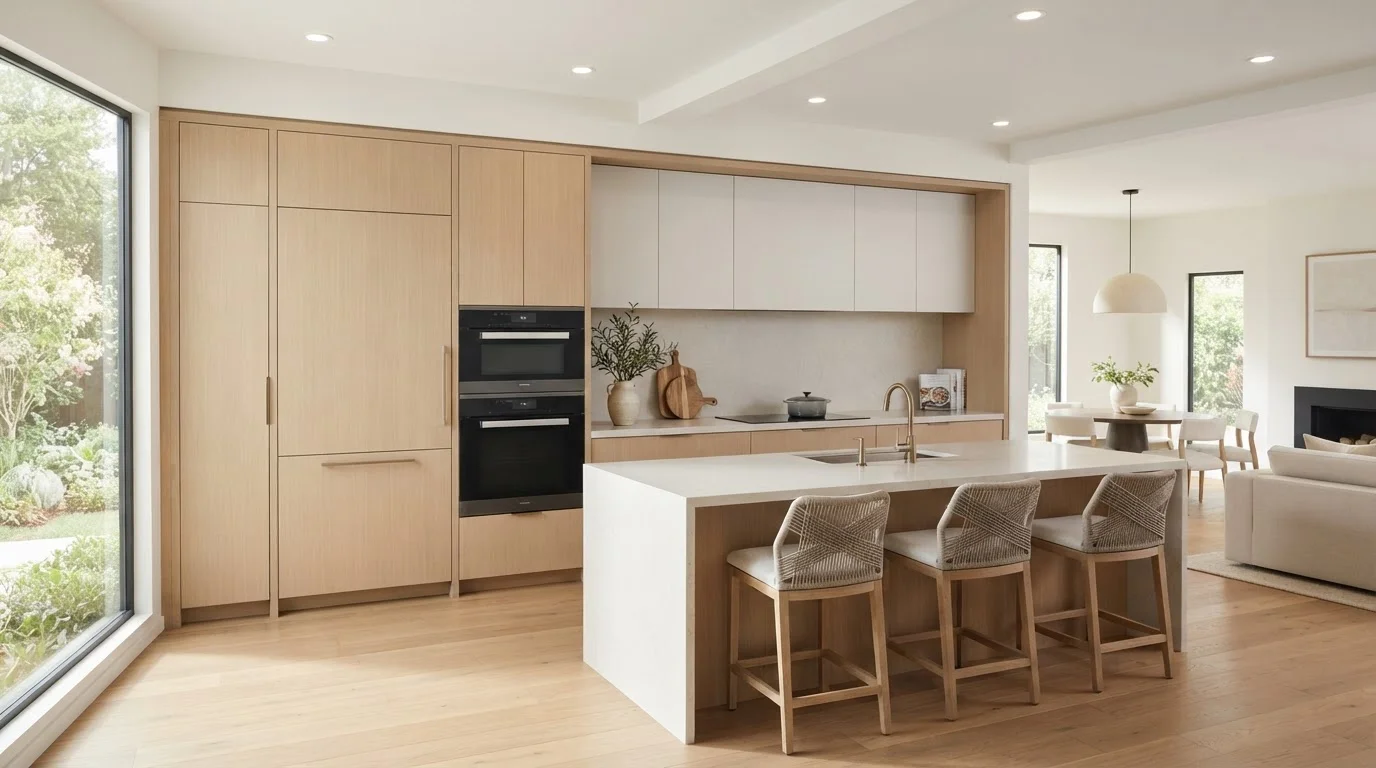
The term built-in appliance refers to units designed to integrate directly into cabinetry or wall cavities - think wall ovens flush with surrounding cabinets, panel-ready refrigerators that accept custom door fronts, or undercounter dishwashers with no visible gap at the sides. Unlike freestanding models, built-ins are not meant to be moved once installed.
This is a meaningful distinction when you're planning a kitchen. Built-ins are typically specified during a renovation or new build, and their dimensions must align precisely with cabinetry. Some appliances - like drawer-style microwaves or column refrigerators - exist only in built-in form, while others (dishwashers, wall ovens) come in both formats. Understanding which category an appliance falls into helps set realistic expectations before any purchasing decision.
If you're still evaluating what your kitchen genuinely needs, the kitchen equipment audit is a useful starting point before committing to any fixed installation.
The Case For Built-In Appliances
The strongest argument for built-ins is visual coherence. When appliances disappear into cabinetry, the kitchen reads as a unified space rather than a collection of separate objects. This matters most in open-plan layouts where the kitchen is visible from living areas - a consideration explored further in our look at the trade-offs of open floor plans.
Creates a seamless, custom-kitchen aesthetic
Panel-ready and flush-fit designs make appliances visually disappear into cabinetry, giving even mid-range kitchens a higher-end appearance.
Optimizes use of vertical and cabinetry space
Wall ovens and column refrigerators allow storage to be distributed more intentionally, freeing up counter and floor space that freestanding units occupy.
Can increase resale appeal in competitive markets
Integrated kitchen designs are often associated with higher-value renovations, which may be reflected in buyer perception - though this varies by market and should not be taken as guaranteed.
Reduces visual clutter in open-plan living spaces
When a kitchen is directly visible from a living or dining area, built-in appliances help the space feel more intentional and less utilitarian.
Ergonomic placement options for certain appliances
Installing a wall oven at a comfortable working height, for instance, reduces strain compared to a range-style oven that requires bending to access.
Beyond aesthetics, built-ins can make better use of vertical space. A wall oven installed at eye level, for instance, eliminates the need to crouch to check food and keeps the floor plan open below. Column refrigerators and freezers placed side by side offer more flexible storage configurations than a single combined unit.
The Case Against Built-In Appliances
The trade-offs start with cost. Built-in versions of comparable appliances typically carry a price premium over freestanding models, and that's before accounting for the cabinetry work required to accommodate them. A wall oven installation, for example, generally requires a dedicated cabinet cutout built to precise specifications - work that needs a qualified carpenter and, in many cases, an electrician.
Significantly higher upfront purchase and installation cost
Built-in models typically cost more than comparable freestanding units, and installation involves cabinetry modifications, electrical work, or both - often requiring licensed tradespeople.
Complex and costly to repair or replace
Servicing a built-in often means working in tight, fixed spaces. If a discontinued model needs replacing, finding a unit that fits the existing cutout without further cabinet work can be difficult.
Very little flexibility if your needs change
Unlike freestanding appliances, built-ins cannot be relocated within the kitchen or taken to a new home without significant renovation work at both ends.
Not practical for renters or short-term occupants
Built-in appliances are fixed to the structure of the kitchen, making them unsuitable for anyone who expects to move within a few years or who doesn't own the property.
Requires precise planning during the renovation phase
Dimensions must be specified before cabinetry is built, leaving little room for error. Changes after installation can be expensive and disruptive.
Repair complexity is another practical concern. Freestanding appliances can be pulled out, serviced on-site, or swapped out with a same-size replacement. Built-ins are often harder to access, and if a model is discontinued, finding a replacement that fits the existing cutout without additional cabinetry work can be difficult. For renters, built-ins are rarely a realistic option at all - these units are almost always the landlord's domain, and taking them with you when you move isn't practical.
For households weighing countertop versus integrated appliance decisions, the countertop vs. full-size dishwasher comparison lays out how format affects function, not just appearance.
How to Decide What Makes Sense for Your Kitchen
A few practical questions help clarify the decision:
- How long will you stay? Built-ins add resale appeal in many markets, but that benefit only materializes if you remain in the home long enough to see it reflected in value.
- Are you doing a full renovation or a targeted upgrade? Built-ins are most cost-effective when cabinetry is already being replaced. Retrofitting a built-in into an existing kitchen adds significant expense.
- What's your flexibility tolerance? If your household's needs are likely to shift - more people, different cooking habits, potential relocation - freestanding appliances make changing course easier.
Permits and Professional Installation
In most US jurisdictions, built-in appliance installations that involve new electrical circuits, gas lines, or structural cabinetry changes will require permits and licensed tradespeople. Requirements vary by municipality, so always check with your local building department before beginning work. Unpermitted work can create complications during a home sale and may affect homeowner's insurance coverage.
For anyone setting up a kitchen from scratch, the guide to prioritizing new home appliances walks through which purchases tend to matter most in the early stages, helping you avoid over-committing to fixed installations before you understand how you actually use the space.
Small appliances that remain freestanding - and genuinely expand what you can cook - are covered in our guide to compact appliances for those who want capability without the permanence.
The content on this site is provided for informational purposes only and should not be considered a substitute for professional advice. While we strive to provide accurate and up-to-date information, we make no guarantees regarding its completeness or accuracy. Always consult a qualified professional for advice specific to your circumstances before making any decisions.