

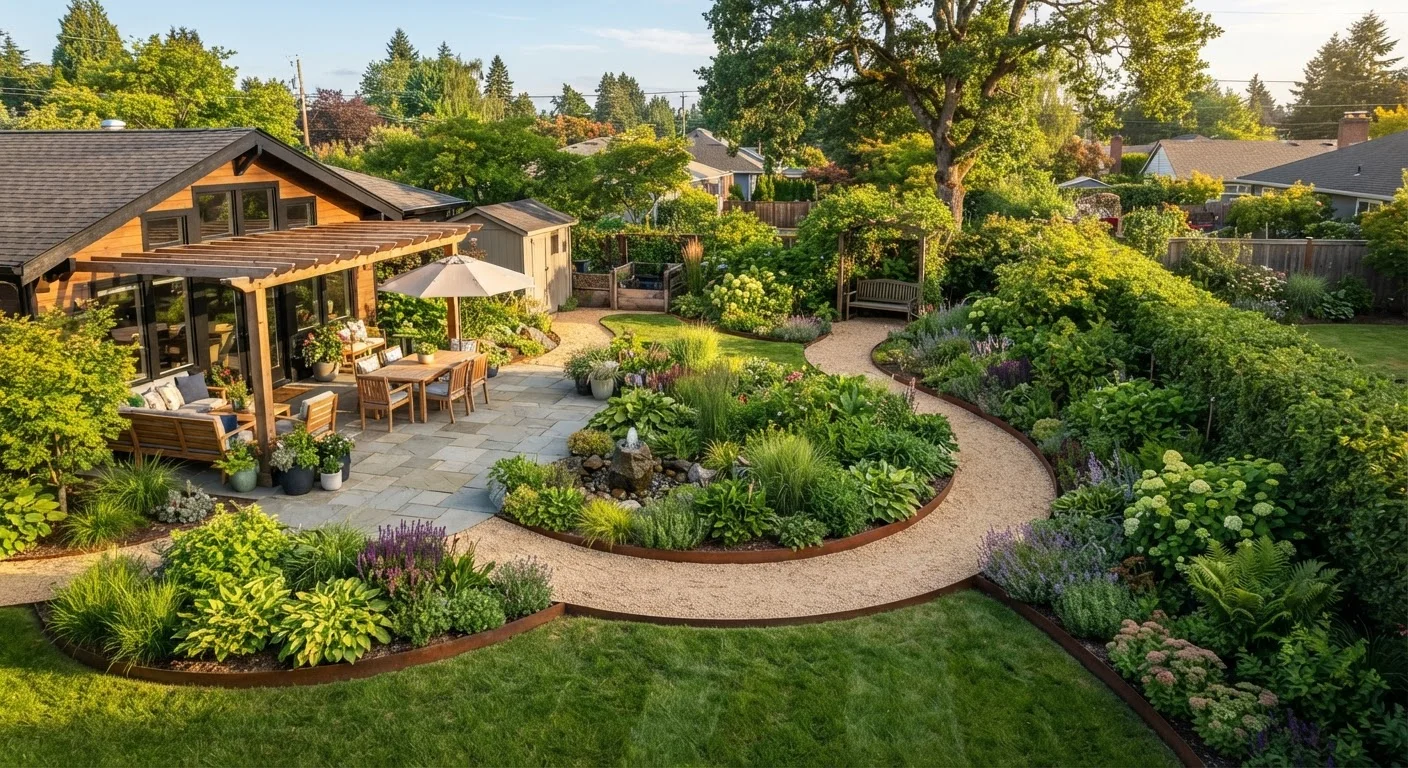
What Hardscaping Actually Does in a Garden
A garden without structure can quickly become difficult to navigate and harder to maintain. Hardscaping solves this by giving outdoor spaces a durable skeleton - defining where you walk, where you sit, and where plants are contained. Far from competing with your plantings, well-chosen hardscape elements make your softscape easier to manage and more enjoyable to spend time in.
The three most common residential hardscape elements are paths, patios, and edging. Each serves a distinct function, and understanding how they work together is the starting point for any thoughtful garden design. If you're also thinking about how planting zones integrate with these structures, our guide on raised beds vs. in-ground planting explores how growing method affects layout decisions.
~60%
Of US homeowners prioritize outdoor living areas
According to the American Society of Landscape Architects, outdoor living spaces have consistently ranked among the most requested residential design features in annual surveys.
1-2%
Recommended surface slope for drainage
Landscape professionals generally recommend a minimum 1% grade (1 inch of drop per 8 feet) on hardscape surfaces to prevent water pooling near structures.
811
US Dig Safe call number before any digging
Calling 811 before digging is required by law in all US states; the service locates underground utilities at no cost to homeowners.
Paths: Directing Movement and Protecting Plantings
A garden path does more than connect two points. It prevents soil compaction in planting beds by giving foot traffic a designated route, and it communicates the intended flow of a space to visitors. Paths also influence the visual scale of a garden - a curved path makes a compact yard feel more expansive, while a straight one adds a formal, structured feel.
Common path materials include:
- Gravel or crushed stone - affordable, permeable, and easy to install; requires edging to stay contained
- Flagstone or stepping stones - natural appearance that integrates well with informal plantings
- Brick or concrete pavers - durable and consistent underfoot; suits formal designs
- Decomposed granite - compacts to a firm surface; drains well; popular in dry-climate gardens
Width matters practically: a path intended for single-file foot traffic should be at least 18-24 inches wide; a path meant for two people walking side by side needs closer to 48-60 inches. Consider the path's relationship to surrounding plantings - some species spread over time and will gradually encroach on narrower paths.
Mark Your Path Before You Dig
Before laying any path material, use a garden hose or marking paint to lay out the route on the ground and live with it for a day or two. Walking the proposed line reveals whether turns feel natural and whether the width is adequate. Adjustments at this stage cost nothing; adjustments after laying pavers cost significantly more.
Patios: Creating Functional Outdoor Living Space
A patio is the primary outdoor living area in most residential gardens - the place where seating, dining, and gathering happen. Its placement, size, and material all affect how usable it is across the seasons. A patio that faces the afternoon sun without shade may be unusable in summer; one that sits in a frost pocket will be damp and cold much of the year. Our article on light, shade, and airflow in outdoor spaces goes deeper on these siting decisions.
Material selection carries real trade-offs. Concrete is durable and cost-effective but can crack in freeze-thaw climates if not properly reinforced and finished. Natural stone is attractive and long-lived but expensive. Pavers offer flexibility - individual units can be replaced if damaged - and many paver systems are designed to be permeable, which helps manage stormwater. Consider how much shade your patio receives, as this affects moss and algae growth on certain surfaces.
Larger patio projects - particularly those with footings, load-bearing walls, or significant changes to site drainage - may require a building permit. Always verify requirements with your local municipality before breaking ground.
Edging: The Detail That Holds Everything Together
Garden edging is often overlooked, but it may be the single most impactful hardscape investment for a tidy, lower-maintenance garden. Edging defines the boundary between lawn and planting beds, between gravel paths and soil, and between different surface materials. Without it, grass creeps into borders, mulch migrates onto lawns, and planting beds gradually lose their shape.
Edging materials vary widely in cost, appearance, and longevity:
- Steel or aluminum edging - sleek, durable, and nearly invisible once installed; holds clean curves well
- Plastic edging - inexpensive and widely available; tends to heave and warp over time in temperature extremes
- Brick or stone edging - decorative and sturdy; labor-intensive to install but very long-lasting
- Concrete mow strips - a poured concrete border that creates a hard edge between lawn and bed; reduces hand-trimming significantly
Edging also interacts with your mulching strategy. A contained bed edge makes it far easier to apply and maintain mulch at the right depth. For a closer look at how mulch and ground covers complement hardscape structure, see our guide on garden mulch types and their trade-offs.
Planning Your Hardscape: Practical Considerations
Before purchasing materials or renting equipment, a few planning steps will save time and prevent costly corrections:
- Call 811 before digging. In the US, this free service locates underground utilities so you don't accidentally strike a gas line or irrigation pipe.
- Account for drainage. Every hardscape surface should slope slightly away from structures - typically a 1-2% grade - to prevent water pooling. Impermeable surfaces redirect stormwater, so consider where it will go.
- Think about scale and proportion. A patio should be large enough to accommodate furniture with room to move; a path should be wide enough for its intended use. Undersizing is a common mistake that makes spaces feel cramped.
- Consider long-term maintenance. Some materials look beautiful initially but require annual sealing, weeding between joints, or periodic releveling. Match material choice to the effort you're willing to invest.
Hardscaping decisions also affect how you garden across the year. A well-placed path keeps vegetable beds accessible in wet weather, and a patio near the house extends outdoor living into cooler months. For a seasonal perspective on how structure supports year-round enjoyment, see our guide to year-round outdoor living.
Permits and Local Codes Vary Widely
Hardscape rules differ significantly by municipality. Retaining walls above 30 inches, patios with footings, and projects that alter stormwater drainage patterns commonly require permits and inspections in many US jurisdictions. Work done without required permits can complicate home sales and insurance claims. Always verify requirements with your local building or planning department before starting any significant project.
Frequently Asked Questions
Hardscaping covers the built, non-living elements of a garden - paths, patios, walls, and edging. Softscaping refers to the living components: plants, turf, soil, and mulch. A well-designed garden balances both so the structures support the plantings and vice versa.
It depends on the project and your local jurisdiction. Small patios and garden paths typically don't require permits, but retaining walls above a certain height and projects that alter drainage patterns often do. Always check with your local building department before starting any significant hardscape work.
Concrete and natural stone tend to be the most durable and low-maintenance over the long term, though they have higher upfront costs. Gravel is very low-maintenance for paths but can migrate and may need periodic top-ups. Material choice should weigh appearance, budget, and climate.
Impermeable surfaces like solid concrete redirect water runoff rather than letting it absorb into the ground. Poorly planned hardscaping can direct water toward your home's foundation or cause waterlogging in planting beds. Permeable options - such as gravel, flagstone with open joints, or permeable pavers - help manage this.
Most garden edging - metal, plastic, and brick - is considered a DIY-friendly project that requires basic tools and moderate physical effort. More complex edging work involving cutting concrete or installing deep steel borders may benefit from professional help. Always call 811 (US Dig Safe) before digging to check for underground utilities.
The content on this site is provided for informational purposes only and should not be considered a substitute for professional advice. While we strive to provide accurate and up-to-date information, we make no guarantees regarding its completeness or accuracy. Always consult a qualified professional for advice specific to your circumstances before making any decisions.