

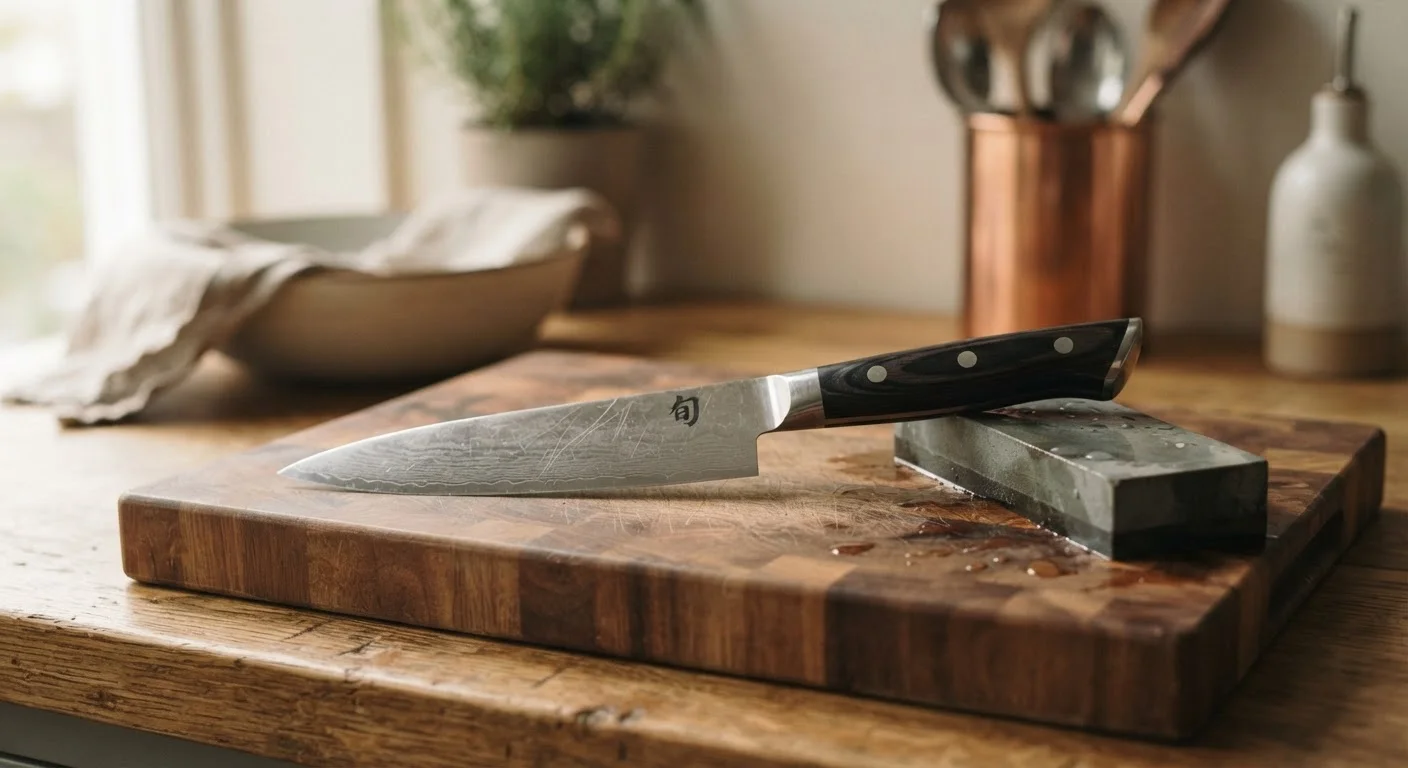
Why Knife Maintenance Matters More Than the Knife Itself
A moderately priced knife that's properly maintained will consistently outperform an expensive one that's been neglected. Edge retention is less about the steel's prestige and more about the habits surrounding it. Sharp knives are also meaningfully safer - a dull blade requires more force, which increases the chance of slipping. If you're building better technique, start here. Knife skills every home cook should know become far easier to execute when your blade is actually doing the cutting work.
Most cooks conflate honing and sharpening - they're related but distinct. Honing realigns the microscopic edge that folds over with normal use. Sharpening removes metal to create a new edge entirely. Understanding that difference is the foundation of everything else.
Hone your knife before or after each use, not just when it feels dull.
The cutting edge folds microscopically during normal use long before it feels noticeably dull. Regular honing realigns that edge and dramatically extends the time between sharpenings. Skipping it means the edge degrades faster and requires more aggressive correction later.
Use only wood or plastic cutting surfaces - never glass, ceramic, or stone.
Hard surfaces do not give under the blade, which means the edge absorbs the full impact of every cut. Even a few sessions on a glass board can noticeably roll or chip an otherwise well-maintained edge.
Hand wash and immediately dry knives - never run them through the dishwasher.
Dishwasher cycles subject blades to prolonged heat, caustic detergent, and vibration against other items. Over time this degrades both the edge and the handle material, whether it's wood, composite, or plastic.
Store knives on a magnetic strip or in a dedicated block - never loose in a drawer.
Loose drawer storage allows blades to contact metal utensils and hard surfaces with every open and close. That repeated contact dulls the edge and risks chipping it, especially on harder steel.
Sharpen on a schedule based on use, not just feel.
Most home cooks wait until a knife is noticeably struggling before sharpening - by that point, more metal removal is needed and the blade has been performing poorly for some time. Proactive sharpening is faster, removes less metal, and keeps the knife safer to use.
The Habits That Protect Your Edge Between Sessions
What you do before and after cutting matters as much as what you do with the blade. The cutting surface is one of the biggest variables most cooks underestimate. Hard surfaces - glass, ceramic, stone countertops - actively destroy an edge with every pass. Cutting board materials compared covers the real trade-offs in depth, but the short answer is that wood and plastic boards are far gentler on edges than rigid alternatives.
Dishwashers are the other silent culprit. The combination of high heat, harsh detergents, and metal-on-metal rattling degrades both the edge and the handle over time. Hand washing with warm soapy water and drying immediately is a small habit with a compounding benefit.
Storage, Sharpening Timing, and When to Call In Help
How you store a knife is often overlooked. Tossing blades loose into a drawer lets them knock against other utensils and dulls them faster than use. A magnetic strip, blade guard, or in-drawer knife block each offer protection without requiring extra space. If you're doing a broader reassessment of what belongs in your kitchen, a kitchen equipment audit is a useful starting point for rethinking how gear is stored overall.
As for sharpening frequency, there's no universal schedule - it depends on how often you cook, what you cut, and your surface. A reliable test: hold the blade under good light and look along the edge. Reflected light along the edge line signals a rolled or dull spot. Another quick check is the paper test - a sharp blade slices cleanly through a sheet of printer paper; a dull one snags or tears.
“A sharp knife is a safe knife. The dull knife requires more pressure, which means less control - and less control is where accidents happen.”
— Jacques Pépin, Culinary educator and author of numerous foundational cooking texts
When a knife has gone significantly dull or has visible nicks, home sharpening tools may not be sufficient to restore it properly. A professional sharpening service - often available at kitchen supply stores or through local culinary shops - can resurface a blade that home tools can't fully correct. Think of it as periodic maintenance rather than an admission of failure. Understanding what a chef's knife actually does also helps set realistic expectations about wear and appropriate use.
The content on this site is provided for informational purposes only and should not be considered a substitute for professional advice. While we strive to provide accurate and up-to-date information, we make no guarantees regarding its completeness or accuracy. Always consult a qualified professional for advice specific to your circumstances before making any decisions.