

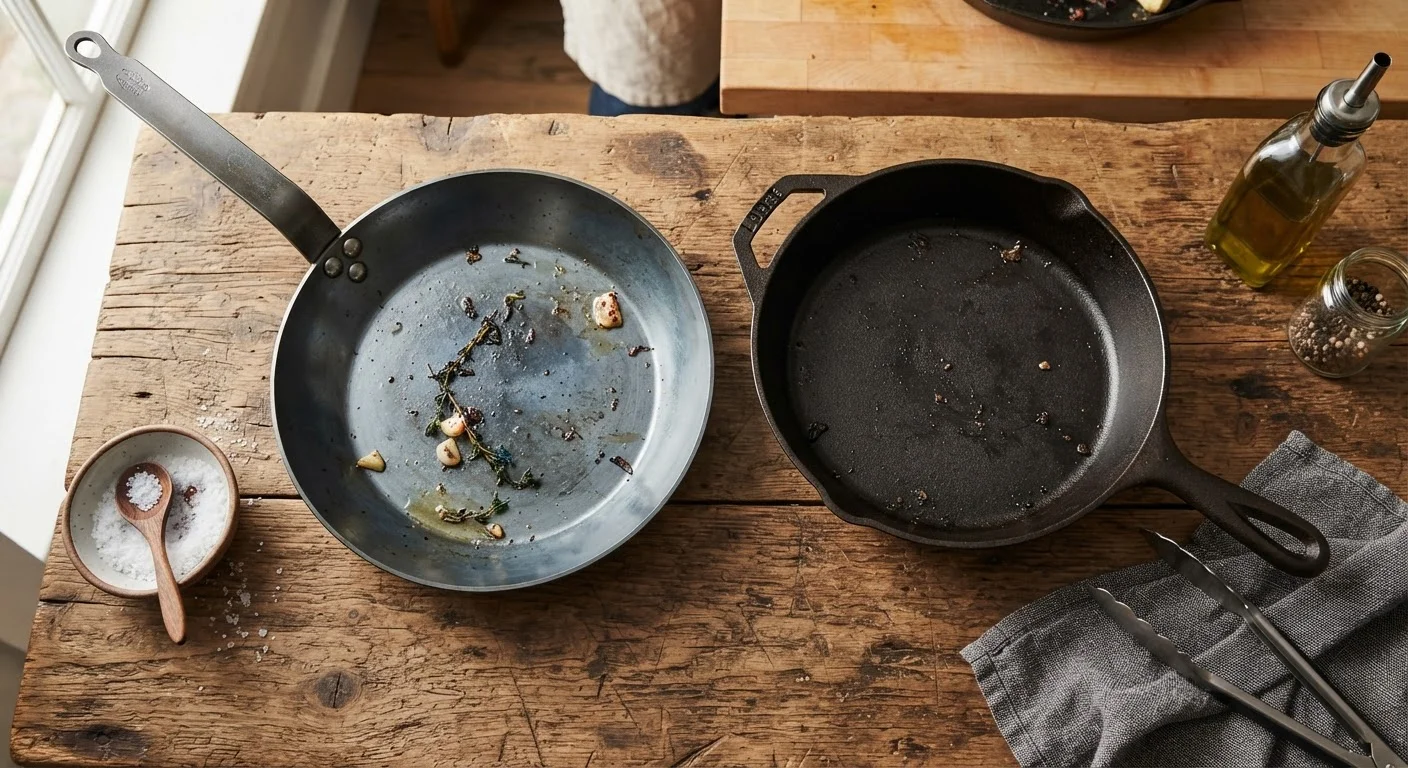
Option A
Carbon Steel
The nimble, professional-kitchen workhorse.
Best for: Cooks who want fast heat response, lighter weight, and versatility across stovetop and oven tasks.
Option B
Cast Iron
The slow, steady heat-retention champion.
Best for: Cooks who prioritize even, sustained heat for searing, baking, and low-and-slow cooking.
Two Pans, One Family - But Different Personalities
Carbon steel and cast iron are made from similar raw materials - both are iron-based alloys - but their compositions produce markedly different cooking tools. Cast iron contains roughly 2-4% carbon, which makes it brittle but excellent at absorbing and holding heat. Carbon steel contains less than 2% carbon, giving it a denser, smoother surface that heats more rapidly and responds to temperature adjustments faster.
Professional kitchens have long favored carbon steel for exactly that responsiveness. Home kitchens, meanwhile, have historically defaulted to cast iron for its durability and the emotional weight of a hand-me-down skillet. Neither reputation is wrong - but understanding the mechanical differences helps you choose based on function, not tradition.
Both pans require seasoning (layers of polymerized oil baked into the surface) to build a naturally non-stick finish and prevent rust. If you're new to that process, our guide on seasoning a cast iron pan correctly the first time offers a clear walkthrough - and the same principles apply broadly to carbon steel.
| Criterion | Carbon Steel | Cast Iron |
|---|---|---|
| Heat-up speed | Fast | Slow |
| Heat retention | Moderate | Excellent |
| Temperature responsiveness | High | Low |
| Typical weight (12-inch) | ~3.5-4.5 lbs | ~7-8 lbs |
| Seasoning required | Yes | Yes |
| Oven-safe | Yes | Yes |
| Best for baking | Adequate | Excellent |
| Handles acidic foods | Poorly | Poorly |
| Induction compatible | Yes | Yes |
| Surface texture | Smoother | Slightly rougher |
Heat Behavior: Where the Real Difference Lives
The single most important practical distinction between these two pans is how they handle heat. Cast iron is slow to heat and slow to cool - which is a feature, not a flaw, when you need sustained, even heat for a thick steak or a deep-dish skillet cookie. The thermal mass holds temperature even when cold food hits the surface, reducing the temperature drop that can prevent a good sear.
Carbon steel heats faster and loses heat faster. That means you can make quicker temperature adjustments mid-cook, which is genuinely useful when sautéing or finishing a sauce. It also means you need to be more attentive - carbon steel can overshoot your target temperature before you realize it.
~50%
Weight difference between comparable pan sizes
A 12-inch carbon steel pan typically weighs roughly half as much as a 12-inch cast iron skillet of similar diameter.
2-4%
Carbon content in cast iron alloy
Cast iron's higher carbon content compared to carbon steel (under 2%) is what gives it greater thermal mass and brittleness.
500°F+
Common oven-safe temperature for both materials
Both carbon steel and cast iron are generally oven-safe well beyond typical cooking temperatures, though specific tolerances vary by product.
For techniques that involve dry heat - searing, roasting, grilling on the stovetop - both pans perform well. The decision often comes down to how much heat control you want versus how much thermal inertia you need. Our breakdown of dry heat vs. moist heat cooking methods can help you think through which approach suits each dish.
Weight, Maintenance, and Daily Practicality
A 12-inch cast iron skillet typically weighs between 7 and 8 pounds. A comparable carbon steel pan often comes in around 3.5 to 4.5 pounds. That gap is consequential over the course of a meal prep session, particularly for cooks who toss ingredients in the pan or transfer it frequently between burners and oven.
Maintenance requirements are similar for both: hand wash only, dry thoroughly, and apply a light coat of oil after each use. Neither tolerates prolonged exposure to moisture or highly acidic ingredients like tomatoes or citrus - acids can strip seasoning and impart a metallic taste. For practical guidance on care, our article on what actually works for cast iron seasoning addresses the most common mistakes. Carbon steel responds to those same principles.
One area where cast iron holds a clear advantage: it doubles as a baking vessel. Cornbread, cobblers, and focaccia baked in a preheated cast iron skillet develop a crust that's difficult to replicate in a standard baking pan. Carbon steel can handle oven work too, but the heavier, wider base of a cast iron skillet is particularly suited to baking applications.
Acidic Foods and Seasoning Damage
Extended cooking of acidic ingredients - tomatoes, wine reductions, citrus-based sauces - can break down the seasoning on both carbon steel and cast iron. Short contact is generally fine, but long braises with acidic liquids are best left to stainless steel or enameled cookware. If you do cook something acidic, re-season the pan afterward as a precaution.
Both pans develop excellent fond - the browned residue that forms on the pan's surface during cooking and forms the base of a pan sauce. If you want to make the most of what's left in the pan after cooking, our guide on building a pan sauce from whatever you just cooked covers the method that works across almost any protein.
The content on this site is provided for informational purposes only and should not be considered a substitute for professional advice. While we strive to provide accurate and up-to-date information, we make no guarantees regarding its completeness or accuracy. Always consult a qualified professional for advice specific to your circumstances before making any decisions.