

Why Seasoning Works - and Why Most Advice Gets It Wrong
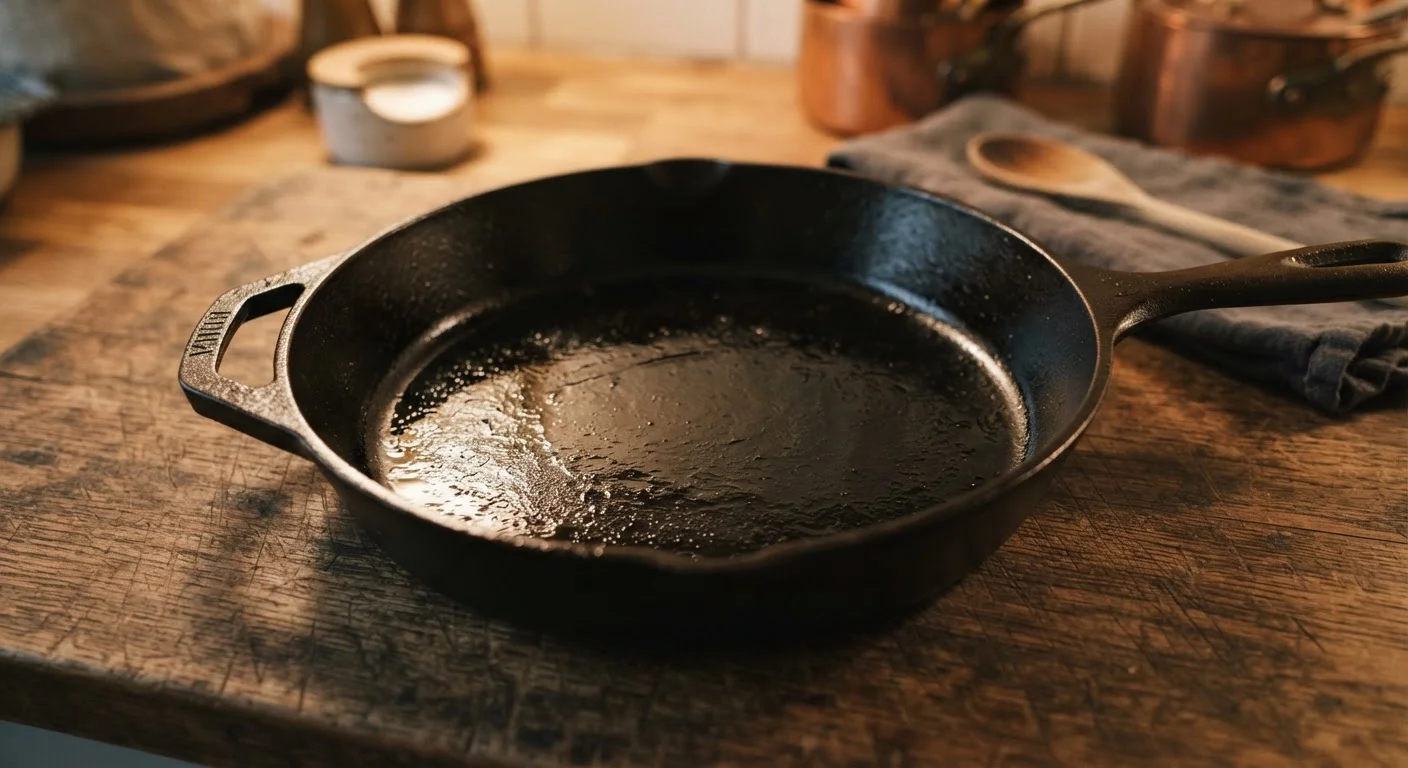
Cast iron seasoning is misunderstood at almost every level. It's not a coating you apply once and forget. It's a layer of polymerized fat - oil that has chemically bonded to the iron surface through heat - and it builds gradually with correct use. The confusion comes from conflating the initial seasoning process with ongoing maintenance, which follow different logic.
When oil is heated past its smoke point on iron, it undergoes polymerization: the fat molecules link into a hard, slick polymer that adheres to the metal. Repeat this process with thin layers over time and you get the legendary non-stick surface cast iron is known for. Apply oil too thickly, skip sufficient heat, or use the wrong oil, and you get a sticky, gummy mess that's harder to fix than starting over.
For a complete walkthrough of the initial process, see our step-by-step seasoning guide. This article focuses on the practices that sustain - and the habits that destroy - that surface over time.
Apply oil in the thinnest possible layer before each oven seasoning session
Thick oil layers don't polymerize evenly - they form a tacky, uneven film that peels over time. A thin application ensures complete polymerization and a harder, more uniform surface with each session.
Dry the pan completely on a burner after every wash
Residual moisture is the primary cause of rust on raw cast iron. Air-drying is unreliable - surface water left even briefly in crevices can begin oxidizing the iron. Heat removes moisture completely and prepares the surface for a light oil coat.
Cook fatty, non-acidic foods regularly to passively build seasoning
Every cooking session with fat contributes to the seasoning layer. Foods like bacon, sautéed vegetables in butter, or pan-seared chicken thighs deposit fats that polymerize with each use, building the surface without any extra effort.
Use a brief rinse and stiff brush - not prolonged scrubbing - to clean the pan
Aggressive scrubbing removes seasoning along with food residue. A quick rinse under warm water with a stiff-bristled brush handles most stuck food without damaging the polymer layer beneath.
Store the pan in a dry environment with airflow - not sealed in a cabinet
Trapped humidity in enclosed storage accelerates oxidation even on a well-seasoned pan. Storing cast iron in a ventilated space, or with a paper towel inside a drawer to absorb moisture, prevents surface rust between uses.
Habits That Strip Seasoning Faster Than You'd Expect
Damage to seasoning accumulates quietly. Most home cooks don't realize they're stripping their pan until food starts sticking or rust appears. These are the most common culprits.
Acidic cooking: Tomato-based sauces, citrus, and vinegar don't just interact with seasoning - they actively dissolve it. A quick deglaze with wine is fine; simmering a tomato braise for 45 minutes in cast iron is not. Reserve your enameled or stainless cookware for acidic dishes. For a broader look at how pan material affects cooking decisions, our comparison of stainless steel vs. nonstick cookware covers the tradeoffs in detail.
Soaking in water: Even ten minutes of soaking can initiate rust in raw iron and lift seasoning at the edges. Wash quickly, by hand, and dry immediately - every time without exception.
Dishwasher use: High-heat water jets plus alkaline detergent will strip a pan to bare metal in a single cycle. Cast iron and dishwashers are categorically incompatible.
Steel wool and abrasive scrubbers: These remove rust effectively, but they also take seasoning with them. Use a stiff-bristled brush, a chainmail scrubber, or coarse salt as an abrasive instead.
A Word on Soap: Less Controversial Than You Think
Modern dish soap is far milder than the lye-based soaps that gave cast iron its no-soap reputation. A small amount of gentle dish soap used briefly during cleaning won't strip a well-built seasoning layer. What damages seasoning is prolonged exposure to water and detergent - not a quick scrub. That said, soap isn't necessary if warm water and a brush get the job done.
What Actually Works: Practices That Build Durable Seasoning
Maintaining cast iron well isn't laborious - it just requires consistent, correct habits. The pan rewards regular cooking more than any treatment you do to it between uses.
Cast iron's heat retention is a meaningful asset here. Understanding how your pan holds and distributes heat helps you use it more effectively - our piece on how heat retention works explains why cast iron behaves so differently from thinner pans on the same burner.
If you're weighing whether cast iron is the right choice at all, carbon steel vs. cast iron is worth reading - carbon steel seasons similarly but responds to heat faster and suits different cooking styles.
450-500°F
Ideal oven temperature for polymerizing seasoning oil
Most culinary sources and cast iron manufacturers cite this range as optimal for bonding thin oil layers to the iron surface.
3-4 layers
Recommended initial seasoning sessions before first use
Starting with multiple thin baked-on layers provides a more stable base than relying on cooking alone to build seasoning from raw iron.
When Seasoning Breaks Down: Recognizing and Fixing It
A well-maintained cast iron pan rarely needs full reseasoning. But if you see reddish-orange rust spots, persistent sticking, or a patchy, flaking surface, the seasoning has broken down and needs attention.
For surface rust, scrub with a stiff brush or chainmail scrubber and warm water until the rust is gone. Dry completely on a burner over low heat, then apply a thin layer of neutral oil and bake the pan upside-down in an oven at around 450-500°F for an hour. That single oven session won't rebuild deep seasoning, but it reestablishes the base. Repeated use builds on it.
For widespread flaking - usually caused by oil applied too thickly - strip the pan to bare metal using coarse salt and heat, re-dry, and season from scratch with thin layers. It's more work, but a pan treated this way is often more durable afterward than one that's never been stripped and rebuilt.
The broader principle: cast iron is nearly indestructible, but its non-stick performance is entirely dependent on how it's used and cared for. The pan doesn't maintain itself - consistent correct habits do the work.
The content on this site is provided for informational purposes only and should not be considered a substitute for professional advice. While we strive to provide accurate and up-to-date information, we make no guarantees regarding its completeness or accuracy. Always consult a qualified professional for advice specific to your circumstances before making any decisions.