

Why the Pan Is the Star
A pan sauce is built on fond - the French culinary term for the caramelized proteins and sugars that bond to the pan surface during high-heat cooking. When you sear a chicken thigh or a pork chop, the Maillard reaction is responsible for both the crust on the meat and those browned deposits left behind. Those deposits aren't stuck-on failures - they're some of the most concentrated savory flavor in your kitchen.
The technique works best in pans that build fond readily. Stainless steel and carbon steel are ideal; cast iron also works well. If you're cooking in cast iron and want to get the most out of your pan's surface, our guide to what actually works for cast iron seasoning covers how to keep it in prime condition. Understanding how heat retention affects your pan's performance also helps you sear more effectively - which directly improves the fond you're starting with.
Stainless steel or carbon steel skillet
Builds the most usable fond; nonstick pans produce very little browning and are not ideal for pan sauces.
Wooden spoon or flat-edged spatula
Used to scrape the fond off the pan bottom during deglazing without scratching the surface.
Liquid for deglazing (wine, stock, cider, or water)
Dissolves the fond and forms the liquid base of the sauce.
Cold butter
Whisked in at the end to emulsify the sauce and give it body and sheen.
Fine-mesh strainer
Strains out solids if a smooth, refined sauce is preferred.
The Method, Step by Step
Before you start, gather what you need. The sauce comes together quickly once you begin, so having everything within reach - liquid, aromatics, butter - prevents losing momentum at a critical moment.
What you will need
Remove the protein and assess the pan
Transfer your cooked protein to a plate or cutting board to rest. Look at the pan: you want to see a layer of browned, nutty-smelling deposits - this is the fond. If those bits are pale or barely visible, the sauce will lack depth. If they look black and acrid rather than golden-brown, the pan may be too burnt to use.
Pour off excess fat (if needed)
If significant fat has pooled in the pan - especially common with duck, lamb, or heavily marbled beef - tilt the pan and spoon out the excess, leaving roughly one to two teaspoons behind. That small amount of residual fat helps the aromatics cook without sticking and contributes flavor.
Cook aromatics briefly
With the pan over medium heat, add any aromatics you want to use: a finely diced shallot, a smashed garlic clove, or fresh thyme sprigs. Stir for 30 to 60 seconds until softened and fragrant. This step is optional but adds a worthwhile layer of flavor.
Deglaze with your liquid
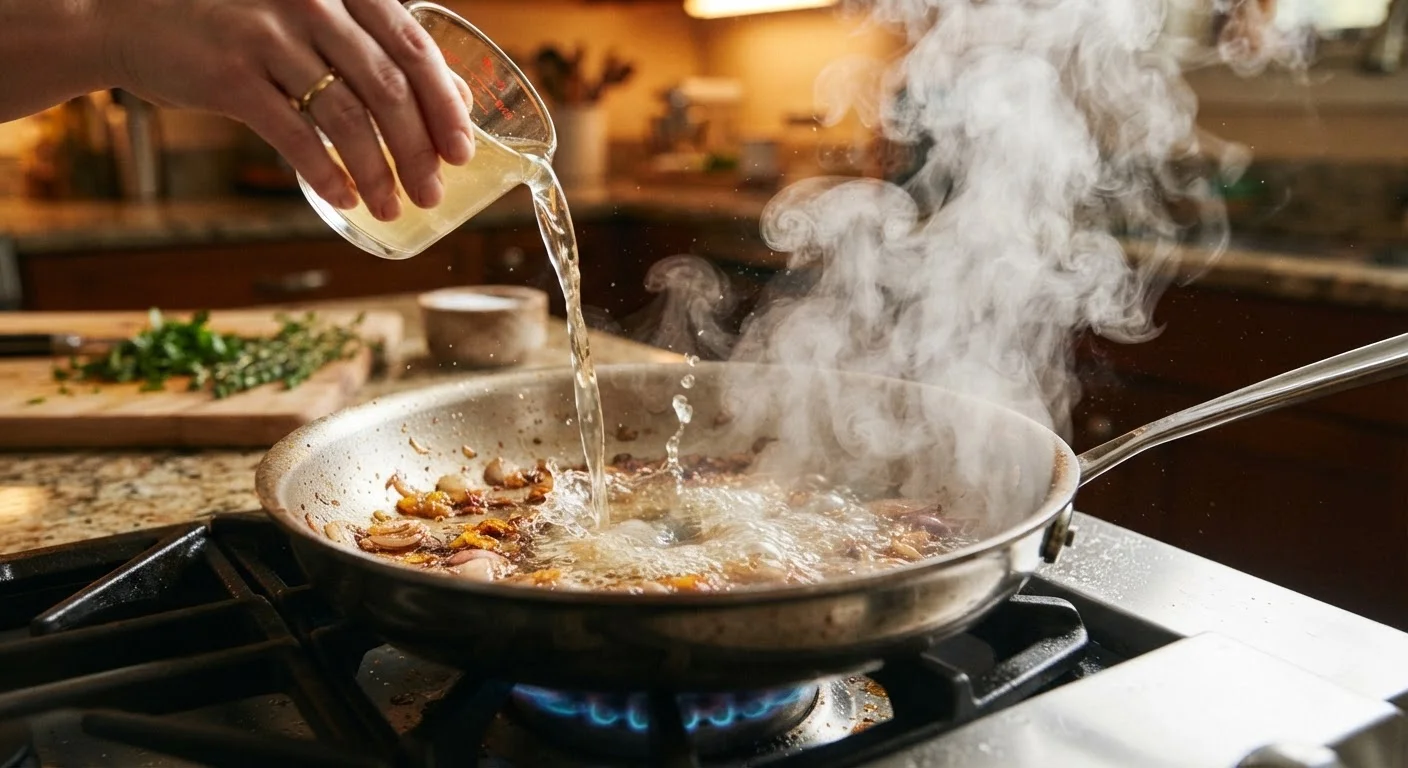
Pour in roughly ½ cup of your chosen liquid - wine, chicken or beef stock, apple cider, or even water will work. The pan will hiss and steam immediately. Using a wooden spoon or flat spatula, scrape the bottom of the pan firmly to dissolve all the fond into the liquid. This step is the heart of the technique: every bit you lift off the pan is concentrated flavor going into the sauce.
Reduce the liquid
Raise the heat to medium-high and let the liquid reduce by about half, stirring occasionally. As water evaporates, the flavors concentrate. Watch for the liquid to shift from thin and watery to slightly syrupy around the edges of the pan - this usually takes two to four minutes depending on the amount of liquid and your stove's output.
Finish with fat and season
Remove the pan from the heat or reduce to the lowest setting. Add one to two tablespoons of cold, cubed butter and swirl the pan continuously until it melts fully into the sauce, creating a glossy, cohesive texture. This process - called monter au beurre - is what separates a pan sauce from thin deglazing liquid. Taste, then season with salt and pepper. Strain out any solids if you want a refined, smooth result.
Match Your Liquid to the Protein
Dry white wine pairs naturally with chicken and fish; red wine or beef stock works with red meat; apple cider or calvados suits pork. Stock-only sauces are more neutral and work across all proteins. Mixing stock with a small amount of wine gives depth without overpowering the dish.
Nonstick Pans Won't Build Fond
Nonstick cookware is designed to prevent the sticking that creates fond, so deglazing a nonstick pan produces very little sauce flavor. For pan sauces, a stainless steel, carbon steel, or cast iron pan is the right tool. If you want to explore which surface best suits your cooking style, see our comparison of carbon steel and cast iron.
Once the sauce is on the plate, you may notice it separates slightly as it cools. This is an emulsification issue - the fat and water-based components are dividing. For a deeper look at why sauces break and how to prevent it, see our piece on emulsification at home.
Don't Season Until the End
Salt added early - especially when using store-bought stock, which is often already salted - can make a reduced sauce unpleasantly salty. As liquid evaporates, salt concentrates. Always taste and adjust seasoning only after the sauce has fully reduced and been finished with butter.
Adapting the Technique to What You Have
The beauty of a pan sauce is its flexibility. No wine on hand? Stock alone produces a clean, savory result. No stock? Water works as a base - the flavor will be less complex, but the fond still contributes significantly. A splash of vinegar (sherry, red wine, or apple cider) stirred in near the end adds brightness and balances richness, particularly with fatty proteins.
If you want a cream-based variation, add a few tablespoons of heavy cream after the liquid has reduced, stir to combine, and let it thicken briefly before finishing with butter. Mustard, capers, or fresh herbs stirred in at the end can shift the flavor profile substantially without changing the core technique.
The method described here applies broadly - but small adjustments based on the protein you just cooked will consistently produce a better result. Pork and chicken benefit from acidic elements like white wine or vinegar. Beef and lamb carry stronger flavors that can handle bolder liquids and herbs like rosemary. Fish requires a lighter touch: less reduction time and a more delicate finishing element like lemon juice or dill.
The content on this site is provided for informational purposes only and should not be considered a substitute for professional advice. While we strive to provide accurate and up-to-date information, we make no guarantees regarding its completeness or accuracy. Always consult a qualified professional for advice specific to your circumstances before making any decisions.