

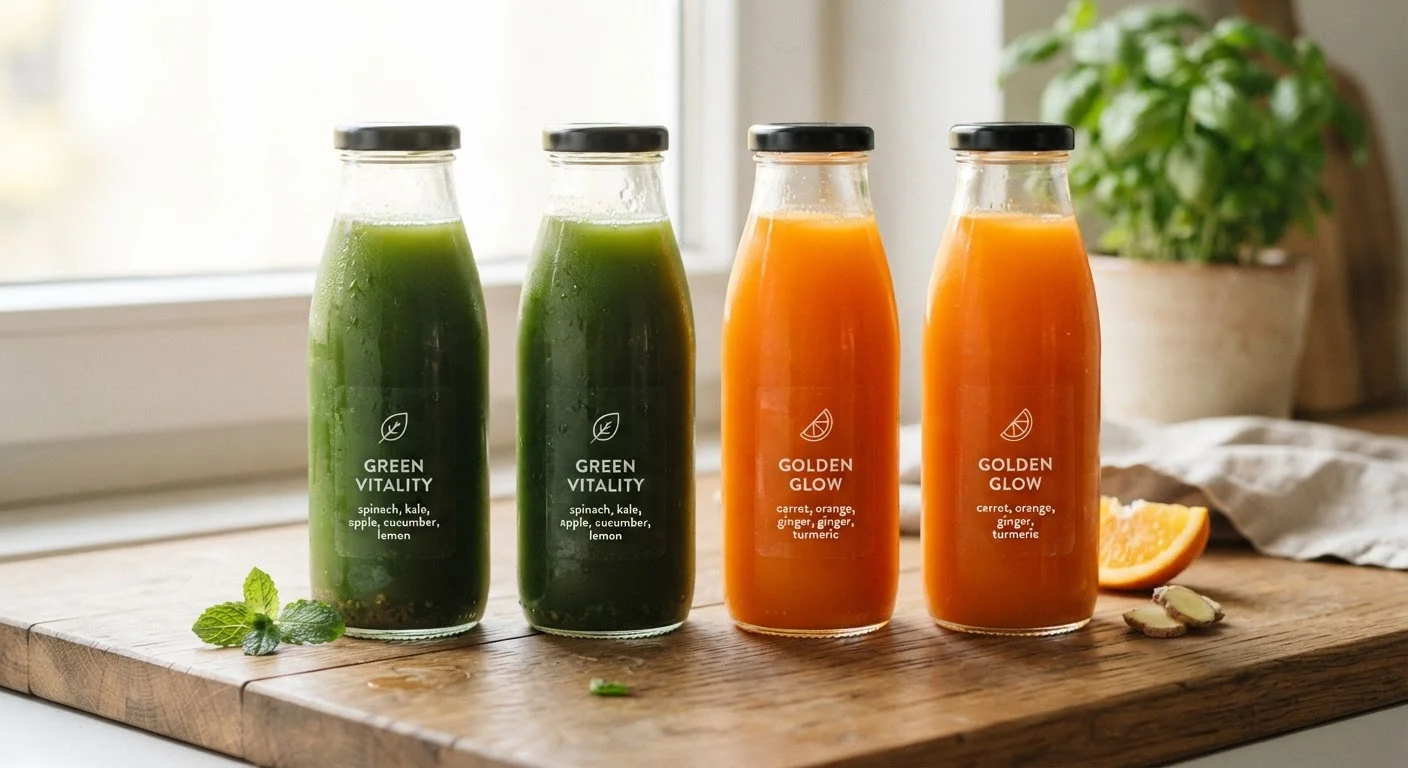
The Method Behind the Label
When a juice label says 'cold-pressed,' it's describing how the juice was made - specifically, a two-stage process that first grinds or shreds produce into a pulp, then applies thousands of pounds of hydraulic pressure to squeeze out the liquid. The defining feature is that this happens without the high-speed blade action of conventional centrifugal juicers, which spin fast enough to generate friction heat and introduce more air into the juice.
Heat and oxygen are both enemies of certain nutrients. Vitamin C degrades with heat exposure, and oxidation can diminish the vibrancy and enzymatic activity of fresh juice. The cold-press method is designed to limit both during extraction - but it's important to understand that 'cold-pressed' describes conditions during extraction, not a blanket preservation guarantee for everything that happens afterward.
For comparison, olive oil labeling uses similar extraction language, where 'cold-extracted' or 'cold-pressed' signals a mechanical process without heat - the logic is the same across both categories.
~$8-$14
Typical retail price per bottle of cold-pressed juice
Cold-press extraction yields less juice per pound of produce and requires refrigerated distribution, contributing to significantly higher retail prices than conventional juice.
3-5 days
Shelf life of raw cold-pressed juice
Without pasteurization or HPP treatment, cold-pressed juice is highly perishable and must be consumed quickly to remain safe and fresh.
Up to 87,000 psi
Pressure applied during HPP treatment
High-pressure processing uses intense water pressure - far exceeding the deepest ocean depths - to inactivate pathogens without heat, preserving more nutrients than thermal pasteurization.
What Happens After the Press
The cold-press step is only part of the story. Once juice leaves the press, manufacturers face a food safety and shelf-life challenge: raw juice spoils quickly and can harbor harmful pathogens like E. coli and Salmonella. How a brand handles this step significantly shapes the final product you're drinking.
Unpasteurized (raw): Sold refrigerated, usually with a shelf life of just three to five days. Retains the broadest nutrient and enzyme profile but carries a food safety risk, particularly for pregnant people, children, older adults, and anyone immunocompromised.
Heat pasteurized: The juice is briefly heated to kill pathogens. This extends shelf life but degrades some of the heat-sensitive compounds the cold-press step was designed to protect.
High-pressure processing (HPP): The bottled juice is subjected to intense water pressure - not heat - which disrupts microbial cell walls without cooking the juice. HPP is widely used by commercial cold-pressed brands and is generally considered a middle ground: longer shelf life than raw, with less nutrient loss than heat pasteurization.
Check the Shelf Life as a Processing Clue
A cold-pressed juice with a shelf life of three to five days under refrigeration is almost certainly raw and unpasteurized. One lasting several weeks refrigerated has likely been HPP-treated. A juice shelf-stable at room temperature has typically been heat pasteurized. Shelf life is one of the most practical indicators of how the juice was processed after pressing - no label decoding required.
None of these processing choices are reflected in the phrase 'cold-pressed' on the front of the label, which is why checking the fine print matters. The nutrition label and ingredient list will tell you far more than the marketing claim on the front.
What 'Cold-Pressed' Doesn't Tell You
Because the term carries no standardized legal definition in the United States, 'cold-pressed' functions more as a quality signal than a regulated category. That creates room for inconsistency. A juice can be genuinely cold-pressed and still contain added sugars, be predominantly fruit with minimal vegetables, or be heavily diluted with water. The pressing method says nothing about the ratio of produce used, the freshness of the ingredients, or the overall nutritional profile of the finished drink.
This mirrors a broader pattern in food labeling. As explored in our overview of 'natural' and 'organic' label claims, marketing language on packaging often implies more rigor than it delivers. 'Cold-pressed' sits in a similar space - meaningful as a process descriptor, but not a nutritional promise.
The ingredient list remains your most reliable tool. A juice leading with leafy greens and low-sugar vegetables followed by lemon or apple for palatability will differ substantially in nutritional value from one that is mostly apple, grape, or pineapple juice regardless of how it was pressed. Understanding how processing affects whole food nutrition provides useful context here - juice, even cold-pressed, removes fiber and concentrates sugars compared to eating whole produce.
A refrigerated cold-pressed green juice lists spinach, cucumber, celery, apple, lemon, and ginger with a five-day shelf life.
A bottled cold-pressed juice at a large grocery chain has a 30-day refrigerated shelf life, with apple listed first in the ingredients.
A juice bar advertises its drinks as 'cold-pressed daily' and sells them with no refrigeration.
How to Read a Cold-Pressed Juice Label Practically
Given all of this, 'cold-pressed' is a useful signal - not a definitive verdict. Here's what to look for beyond the front-of-pack claim:
- Ingredient order: Ingredients are listed by weight. Vegetables listed before fruits generally indicate lower sugar content and denser nutrient variety.
- Added sugars: Check the nutrition facts panel. A cold-pressed juice with significant added sugars undermines much of the nutritional rationale for choosing it.
- Shelf life and storage: A raw cold-pressed juice with a five-day refrigerated life tells a different story than one shelf-stable for months - processing method differences explain the gap.
- HPP notation: Many brands will note high-pressure processing somewhere on the label, often in small print. This indicates the juice has been treated for safety without heat pasteurization.
Cold-pressed juice can be a reasonable part of a varied diet. But treating the label claim as a shortcut past a closer read does you no favors as a consumer.
Frequently Asked Questions
Not necessarily. Cold-pressed juice may retain slightly more heat-sensitive nutrients during extraction, but the ingredient quality, sugar content, and post-processing method (such as pasteurization) have a larger effect on overall nutrition. A cold-pressed juice high in added sugars or low in vegetables isn't inherently healthy.
Not always. Many commercial cold-pressed juices are treated with high-pressure processing (HPP) after pressing, which extends shelf life without heat. Some are pasteurized with heat. Others are sold raw and unpasteurized, typically refrigerated with a very short shelf life. The label should clarify which applies.
No. The FDA does not have a standardized legal definition for 'cold-pressed' juice in the United States. Brands apply the term based on their own interpretation, which means usage can vary. Looking for additional label information about processing and ingredients is more reliable than the term alone.
Hydraulic pressing is slower and yields less juice per pound of produce compared to centrifugal methods, which drives up production costs. Cold-pressed products often require refrigerated distribution and have shorter shelf lives, adding to retail costs.
High-pressure processing (HPP) uses intense water pressure rather than heat to reduce microbial activity, extending shelf life while preserving more nutrients than thermal pasteurization. Many cold-pressed brands use HPP, which is why their products can sit refrigerated for weeks rather than days.
The content on this site is provided for informational purposes only and should not be considered a substitute for professional advice. While we strive to provide accurate and up-to-date information, we make no guarantees regarding its completeness or accuracy. Always consult a qualified professional for advice specific to your circumstances before making any decisions.