

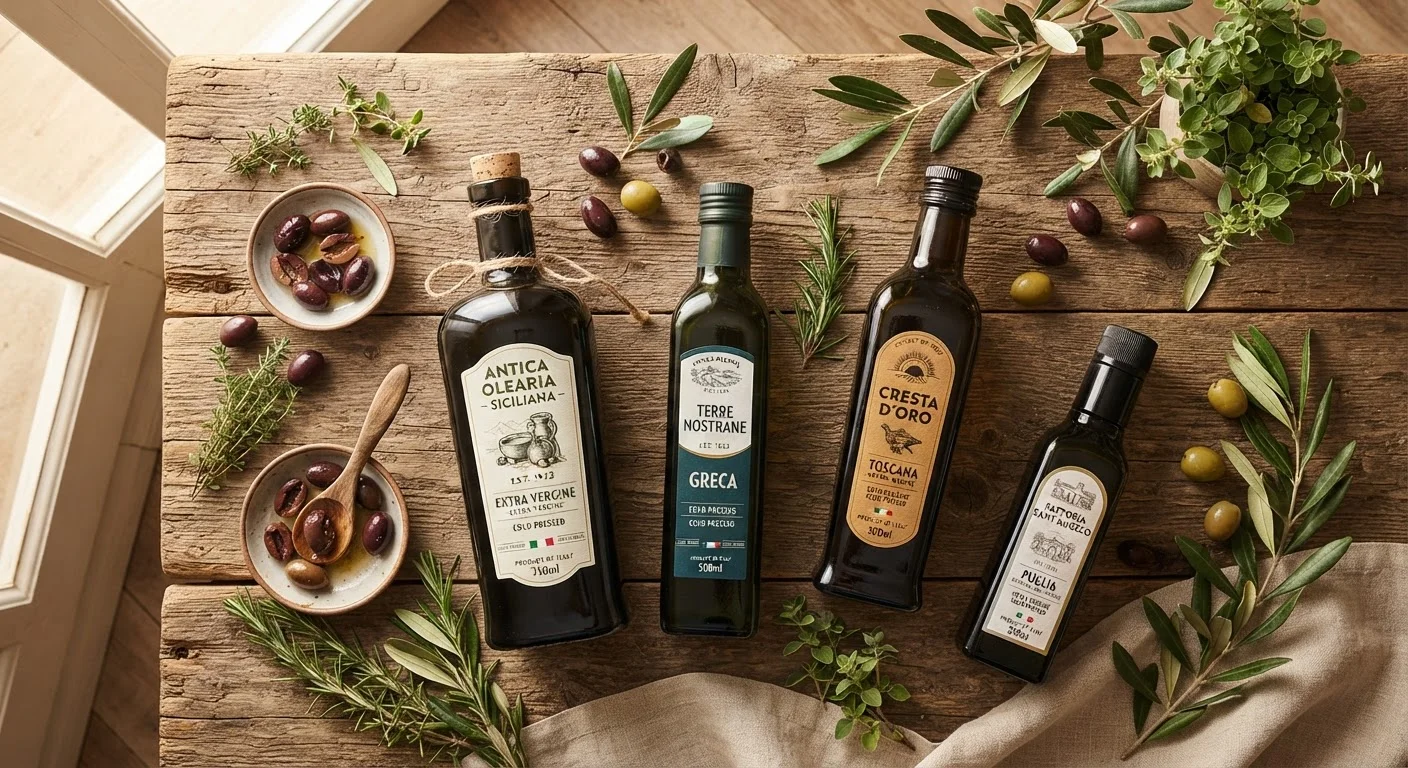
Why Olive Oil Labels Are So Confusing
Walk down the olive oil aisle in any grocery store and you'll encounter a wall of competing claims: extra virgin, pure, light, cold-extracted, first press. Some of these terms carry precise regulatory meaning. Others are essentially marketing language with no standardized definition. Knowing the difference is the first step toward buying with confidence.
Olive oil labeling in the U.S. is governed primarily by voluntary standards set by the USDA and, for imported oils, by the regulations of the exporting country's standards body - most notably the International Olive Council (IOC). Because compliance isn't always strictly enforced domestically, labels can be inconsistent. That's why understanding the terminology yourself matters more than trusting the front of the bottle.
| EVOO Max Free Acidity | 0.8% oleic acid (International Olive Council standard) |
| Typical EVOO Smoke Point | 375-405°F (190-207°C) (Varies by batch and acidity level) |
| Optimal Shelf Life After Harvest | Up to 18 months (General industry guidance; varies by storage conditions) |
| Cold Extraction Temperature Limit | Below 27°C (80.6°F) (IOC definition for cold-processed oils) |
| "Light" Oil - Fat Content vs. EVOO | Essentially identical ("Light" refers to flavor/color, not calories or fat) |
The Label Terms, Defined
Here's what each common grade or descriptor actually means:
- Extra Virgin Olive Oil (EVOO): The highest regulated grade. Produced solely by mechanical means (no chemical solvents), with a free acidity of no more than 0.8% oleic acid, and must pass organoleptic (taste and smell) tests. It should have no flavor defects and a positive fruity character.
- Virgin Olive Oil: Also mechanically extracted but with slightly relaxed standards - free acidity up to 2%. Rarely seen on U.S. shelves but widely used in other countries.
- Pure Olive Oil / Olive Oil: A blend of refined olive oil and a small amount of virgin or extra virgin oil added back for flavor. Refined oil has been chemically or thermally processed to remove defects. "Pure" is a marketing-friendly word here - it doesn't signal higher quality.
- Light Olive Oil: "Light" refers to color and flavor, not calories or fat content. This is highly refined oil with a neutral taste - useful for high-heat cooking or baking where you don't want an olive flavor, but it lacks the polyphenols associated with EVOO.
- Cold Pressed / Cold Extracted: Indicates the oil was processed below a certain temperature threshold (typically 27°C/80.6°F), which helps preserve volatile aromatics and antioxidants. If you've read about what cold-pressed means on juice labels, the concept is similar but the regulatory context differs for oil.
Free Acidity
A chemical measure of the level of free fatty acids in olive oil, expressed as a percentage of oleic acid. Lower free acidity generally indicates fresher, less damaged olives and better oil quality. EVOO must have ≤0.8% free acidity.
Polyphenols
Naturally occurring antioxidant compounds found in olive oil, particularly EVOO. They contribute to the oil's bitterness and peppery finish and are reduced or eliminated through refining processes.
Refined Olive Oil
Oil that has been treated chemically or with heat to remove defects, odors, and acidity. It is neutral in flavor and low in antioxidants. It forms the base of 'pure' and 'light' olive oil blends.
Organoleptic Testing
Sensory evaluation of olive oil - assessing taste, smell, and mouthfeel - conducted by a trained panel. Passing organoleptic tests is a requirement for EVOO classification under IOC and USDA standards.
Oleocanthal
A naturally occurring phenolic compound in extra virgin olive oil responsible for the throat-catch or peppery sensation. It has been studied for anti-inflammatory properties, though research is ongoing.
IOC (International Olive Council)
The intergovernmental body that sets internationally recognized standards for olive oil grades and labeling. Most major olive-oil-producing countries align their regulations with IOC definitions.
How to Evaluate Quality at the Shelf
Label grades are a starting point, but they don't guarantee a great bottle. Several additional signals can help you assess quality before you buy:
- Packaging: Light and heat degrade olive oil rapidly. Choose bottles in dark glass, tin, or opaque containers over clear plastic or clear glass.
- Harvest or bottling date: Olive oil is not like wine - it doesn't improve with age. Look for a harvest date rather than just a "best by" date. EVOO is generally considered at its best within 18 months of harvest.
- Origin specificity: Oils that list a single country of origin - or better, a specific region or estate - are more traceable than blends labeled "Product of multiple countries." Traceability generally correlates with accountability.
- Certification seals: Third-party seals from bodies like the California Olive Oil Council (COOC) or the IOC indicate the oil has been independently tested against established standards. These aren't infallible, but they add a layer of verification.
Once you bring a bottle home, tasting it systematically - rather than just drizzling it on bread - reveals a lot about its actual quality. A well-made EVOO should taste fruity, have a pleasant bitterness, and finish with a peppery catch in the throat (a sign of oleocanthal, a naturally occurring compound).
For broader context on making sense of packaged food labels, reading a nutrition label without getting confused is a useful companion reference.
Common Misconceptions Worth Correcting
A few persistent myths circulate about olive oil that are worth addressing directly:
- "Extra virgin can't be used for cooking." This is overstated. EVOO has a smoke point generally between 375-405°F, which is suitable for most sautéing and roasting. Its antioxidant content may also provide some protection against degradation at heat.
- "Green color means better quality." Color indicates the maturity of olives at harvest and the variety used, not the quality grade. Early-harvest oils tend to be greener and more intensely flavored; later-harvest oils are more golden. Neither is inherently superior.
- "First cold press" is a meaningful distinction today." Historically, olives were pressed multiple times. Modern centrifuge-based extraction means there is effectively only one extraction, making "first press" a relic phrase with no practical meaning for most contemporary oils.
Understanding ingredient sourcing and processing is part of a broader effort to eat more intentionally - something covered in more depth in our look at whole foods versus ultra-processed foods.
The content on this site is provided for informational purposes only and should not be considered a substitute for professional advice. While we strive to provide accurate and up-to-date information, we make no guarantees regarding its completeness or accuracy. Always consult a qualified professional for advice specific to your circumstances before making any decisions.