

Why Tasting Condiments Systematically Actually Matters
Most of us evaluate condiments the same way: we drizzle, dip, or dollop them onto food and see if we like the result. The problem is that method tells you almost nothing about the condiment itself. You're tasting a mixture, and the bread, the meat, or the salad is doing a lot of the heavy lifting. A low-quality olive oil can hide behind good produce. A vinegar with harsh acidity can seem balanced once it's diluted into a dressing.
Tasting neat-meaning a small amount of the condiment on its own-puts the focus where it belongs. It's how professional buyers, food editors, and competitive judges evaluate pantry staples, and there's no reason the approach can't work in a home kitchen. The goal isn't to develop an elaborate palate. It's to build a reliable reference point so you can recognize quality when you find it and avoid paying for marketing instead of flavour.
This method works for extra virgin olive oil, hot sauces, vinegars, soy sauce, fish sauce, mustard, and most other liquid or semi-liquid condiments. For a deeper look at what olive oil labels actually mean before you buy, see our guide to decoding the olive oil aisle.
Tasting Temperature Changes Everything
The difference between a cold and room-temperature olive oil or hot sauce is more dramatic than most people expect. Warming a sample even slightly-by cupping the container in your hands-opens up aromatic compounds that are almost undetectable straight from the refrigerator. When you taste condiments cold out of habit, you're systematically missing a significant portion of the flavour.
What You'll Need Before You Start
The setup is simple and matters more than most people realize. Tasting with the wrong tools or at the wrong temperature introduces variables that skew your impressions.
What you will need
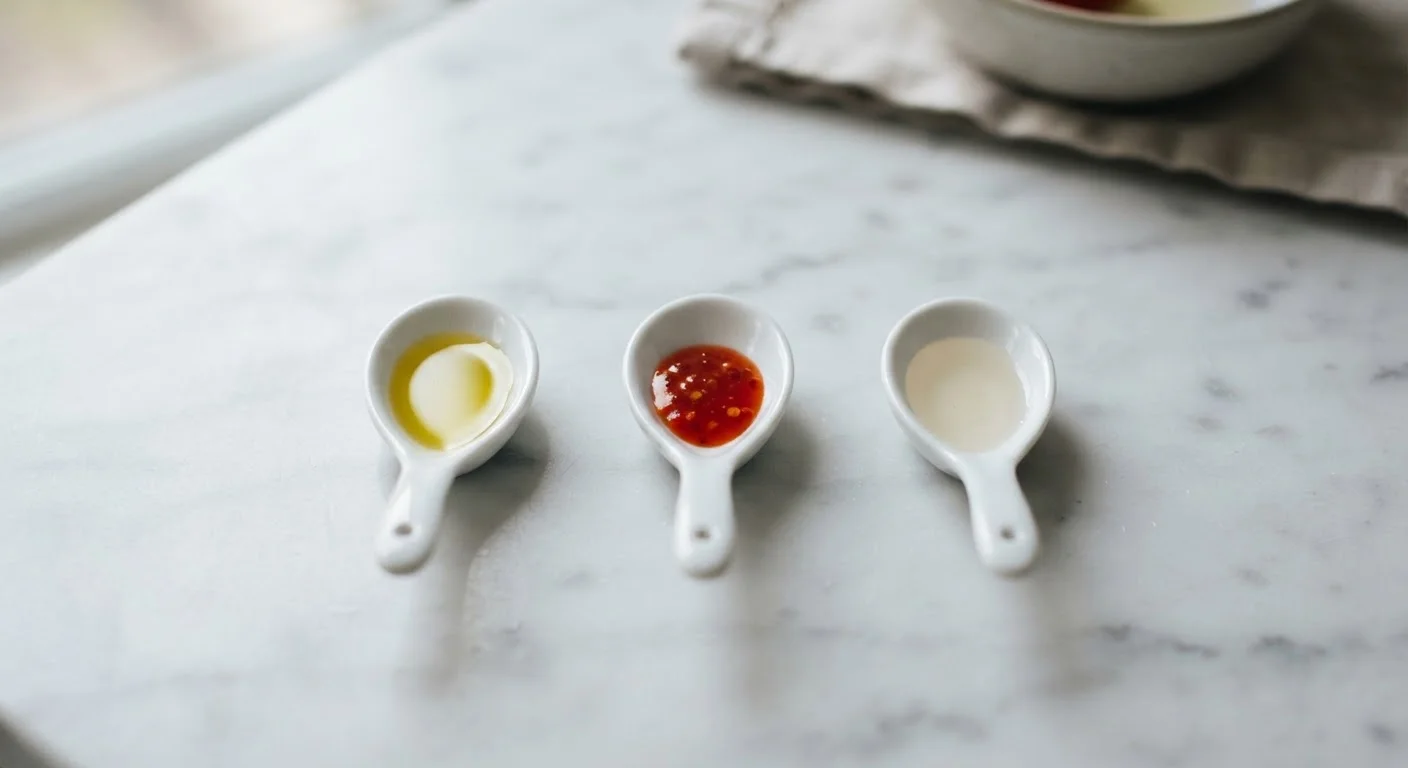
Small white tasting spoons or ramekins
Neutral color lets you assess the condiment's actual color and consistency without visual distortion.
Plain unsalted crackers or white bread
Used between samples to clear residual flavors from the palate so each tasting is evaluated cleanly.
Room-temperature water
Rinse the mouth between samples-cold water temporarily numbs sensitivity, so room temperature is preferable.
Notebook or notes app
Recording brief impressions immediately after tasting builds a reference library you can actually use later.
The Step-by-Step Tasting Method
Follow the steps in order. Skipping the palate-reset stages or rushing the finish evaluation are the two most common mistakes that lead to muddled impressions.
Bring the condiment to room temperature
Cold suppresses volatile aromatic compounds-the molecules responsible for most of what you perceive as flavour. Refrigerated condiments should sit at room temperature for at least 15 minutes before tasting. This is especially important for olive oil and thick sauces, which become more viscous when cold and release far fewer aromas.
Smell before you taste
Pour roughly a teaspoon into a small glass or ramekin and cup it in your hands briefly to warm it slightly. Then bring it to your nose and inhale slowly. Your sense of smell accounts for the majority of what you experience as flavor, so this step isn't optional. Note whether the aroma is fresh, complex, or off in any way. Off-notes-rancidity in olive oil, a chemical edge in hot sauce, or musty notes in vinegar-are easiest to detect here before taste sensations crowd them out.
Taste a small amount and let it sit
Take roughly half a teaspoon. Don't swallow immediately. Let it coat your tongue and the sides of your mouth for five to ten seconds. Different taste receptors are distributed across your palate, and rushing past this stage means you'll only register the initial hit-usually either saltiness, sweetness, or acid-and miss what develops afterward. Pay attention to how the flavor evolves in those first few seconds.
Evaluate the finish
After swallowing, wait 15 to 20 seconds and notice what remains. The finish-how long flavour lingers and whether it's pleasant-is one of the clearest indicators of quality. A condiment with good depth will have a finish that evolves; a thin or low-quality one will disappear quickly or leave an unpleasant aftertaste. Note whether the finish is clean, bitter, hot, or complex.
Reset your palate before the next sample
Eat a small piece of plain cracker or bread and follow with room-temperature water. Wait at least 60 seconds before tasting the next sample. Skipping this step is the single most common error in side-by-side tasting-residual capsaicin from a hot sauce, or lingering acidity from a vinegar, will distort your perception of whatever comes next.
Record your impressions immediately
Write down three to five words immediately after each sample-don't wait until you've tasted everything. Sensory memory fades quickly and impressions blur together. You don't need formal tasting vocabulary. Simple descriptors like "grassy," "sharp," "short finish," "complex," or "harsh acid" are entirely sufficient. Over time, these notes become a genuinely useful reference that saves you from repurchasing condiments that disappointed you.
Highly Concentrated Condiments Require Care
Fish sauce, high-heat chilli extracts, and concentrated fermented pastes are not meant to be tasted in full teaspoon quantities. A single small drop on a tasting spoon is sufficient for extremely pungent or intensely hot products. Tasting too large a volume will overwhelm your palate and make accurate evaluation impossible for the rest of the session.
What to Look For in Common Condiment Types
Once you've run through the steps, you need to know what counts as a good result. Here's a condensed reference by condiment type.
- Extra virgin olive oil
- Look for fresh, grassy, or fruity aromas-not musty, waxy, or rancid notes. A peppery catch in the throat (called the stinging sensation by tasters) indicates polyphenols and is considered a quality marker, not a flaw. Bitterness that fades cleanly is positive; bitterness that lingers sourly is not. For more on understanding how flavour balance works, our article on salting at every stage of cooking offers useful perspective on how individual flavour dimensions interact.
- Hot sauce
- Capsaicin heat should build gradually, not hit immediately and plateau. Look for underlying fruitiness, smokiness, or tang from fermentation-not just raw chilli burn. Vinegary sharpness is common and appropriate in many styles, but it should complement rather than overpower the pepper flavour. A good hot sauce has layers; a thin one has only heat and acid.
- Vinegar (wine, apple cider, balsamic)
- Acidity is the defining feature, but harsh, thin acidity is a sign of lower quality. Wine vinegars should carry identifiable fruit character from the base wine. Apple cider vinegar should taste of fermented apple, not just sour water. Aged balsamic syrup should offer complexity-sweetness, tartness, and depth-not just sweetness with a vinegar edge.
- Soy sauce and fish sauce
- Both are highly saline, so taste only a small drop. In soy sauce, look for umami depth and a slightly sweet finish. In fish sauce, pungency is expected, but the fermented character should smell oceanic rather than putrid. A clean, savory linger is the mark of quality.
The same principle applies to jarred and canned condiments like pastes and prepared sauces-our guide to getting more from canned and jarred foods covers how to evaluate and store them effectively.
The content on this site is provided for informational purposes only and should not be considered a substitute for professional advice. While we strive to provide accurate and up-to-date information, we make no guarantees regarding its completeness or accuracy. Always consult a qualified professional for advice specific to your circumstances before making any decisions.