

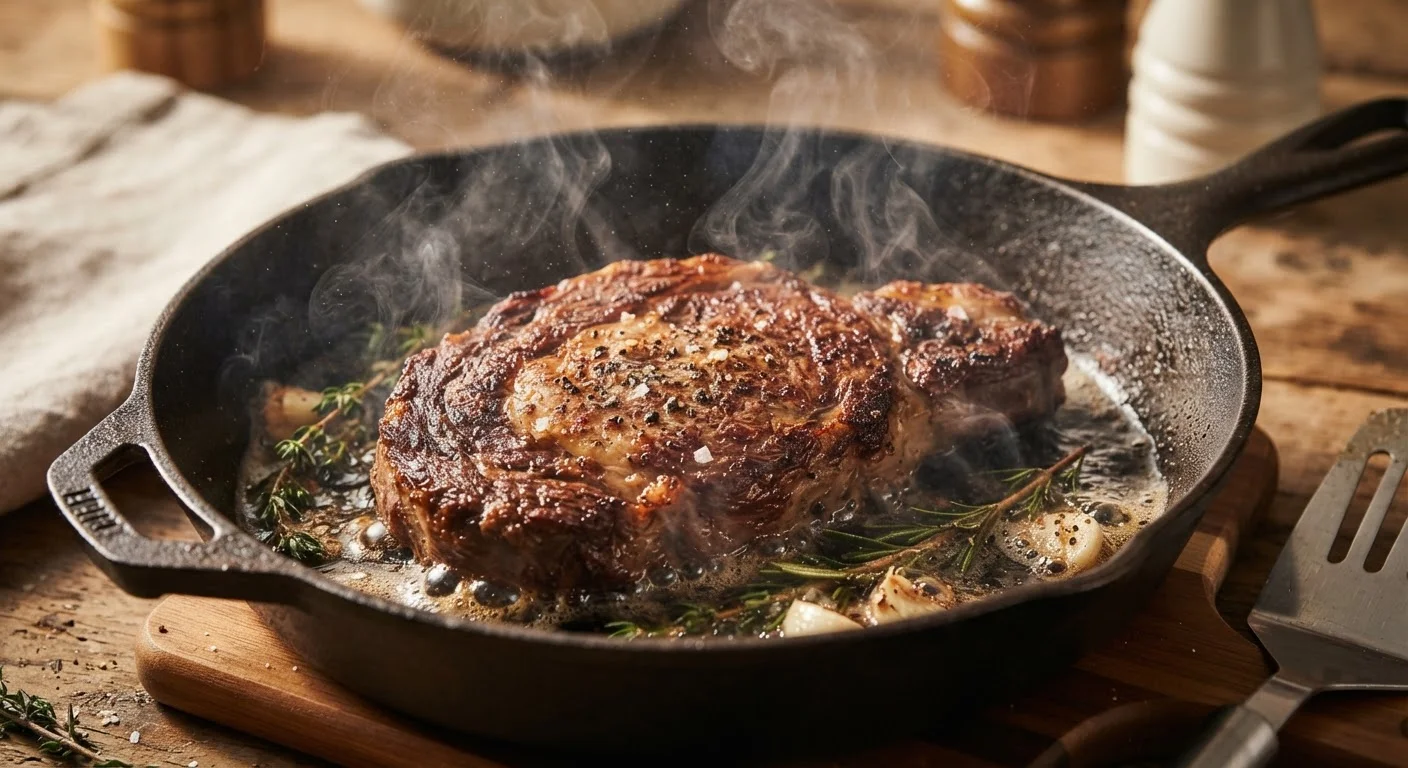
What's Actually Happening When Food Browns
When you put a piece of chicken in a hot skillet and hear that satisfying sizzle, something chemically remarkable is underway. Amino acids on the food's surface are colliding with reducing sugars, and under the influence of heat, they're rearranging into hundreds of new molecules - molecules responsible for roasted, nutty, caramelised, and meaty aromas that make cooked food so appealing.
This cascade of reactions doesn't produce a single compound; it generates an enormously complex mixture. That complexity is precisely why a properly seared steak or a slice of well-toasted bread has layered, satisfying flavour - and why steamed or boiled food, while perfectly nutritious, rarely reaches the same flavour depth. The Maillard reaction is the chemistry behind crust, and understanding it gives you real control in the kitchen.
Maillard Reaction vs. Caramelisation
These two processes are often confused because both involve heat and produce browning. Caramelisation is a purely sugar-based thermal breakdown - it occurs even without proteins present, which is why pure sugar heated in a pan will brown on its own. The Maillard reaction requires both amino acids and reducing sugars, and tends to produce a broader and more savoury flavour profile. In most cooked foods, both processes occur simultaneously.
The Conditions That Make It Work
The Maillard reaction needs two things above all else: sufficient heat and a dry surface. Without both, the reaction either doesn't start or stalls before it can develop meaningful colour and flavour.
Temperature: The reaction begins meaningfully around 280°F (140°C) and accelerates from there. Water boils at 212°F (100°C), so any food with significant surface moisture is effectively capped below the reaction threshold until that moisture evaporates. This is why crowding a pan - which traps steam - produces grey, steamed food instead of a brown crust. See why dry heat vs. moist heat produces such different outcomes for a broader look at how cooking method shapes results.
Surface moisture: Patting proteins dry before cooking is one of the highest-impact, lowest-effort moves in cooking. A damp surface must spend valuable pan time losing moisture before browning can begin - by which point the interior may already be overcooked.
Pan temperature: A cold or insufficiently preheated pan slows the Maillard reaction even if the food is dry. How a pan retains and delivers heat directly affects how well it sustains browning temperatures when cold food is added.
Dry the Surface Before You Sear
Use paper towels to pat proteins thoroughly dry before they hit a hot pan. Even a thin film of surface moisture can delay browning and prevent a proper crust from forming. For skin-on poultry, leaving it uncovered in the refrigerator overnight on a wire rack allows the skin to dry out even further - a simple step that pays off noticeably.
Applying This in Everyday Cooking
Once you understand what the Maillard reaction needs, a number of common cooking frustrations become immediately solvable.
- Pale, soft burger patties: Usually caused by overcrowded pans and insufficient pan temperature. Cook in batches if needed, and preheat the pan fully before adding food.
- Bread that won't form a crust: Surface moisture and oven temperature are the usual culprits. A preheated baking surface and an adequately hot oven (typically 400°F or above for most breads) make a significant difference. The science of temperature and timing in baking covers this in greater detail.
- Roasted vegetables that steam instead of caramelise: Spread them in a single layer with space between pieces, use higher oven heat, and avoid covering the pan. Common habits that rob vegetables of flavour explains the flip side - what happens when heat is applied poorly.
Even canned ingredients can benefit from deliberate browning. Tomato paste, for instance, develops significantly deeper flavour when briefly cooked in oil before liquid is added - the Maillard reaction at work even with a pantry staple. Getting more out of canned and jarred foods explores this kind of technique in more detail.
~700
Flavour compounds produced by the Maillard reaction
Food scientists have identified approximately 700 or more distinct volatile compounds that can result from Maillard chemistry across various foods and cooking conditions.
280°F
Approximate temperature threshold for Maillard browning
Below this surface temperature (roughly 140°C), the reaction proceeds too slowly to produce meaningful browning during typical home cooking times.
1912
Year the reaction was first described scientifically
French chemist Louis-Camille Maillard published his initial description of the amino acid-sugar heating reaction, laying the groundwork for over a century of food science research.
The reaction also underpins the appeal of foods you may not associate with browning: coffee, dark beer, roasted nuts, and soy sauce all owe significant flavour complexity to Maillard chemistry, whether produced through roasting, fermentation, or industrial processing.
Searing a chicken thigh in a stainless steel skillet over high heat produces a deeply browned, crispy skin with savoury, roasted aromas.
Toasting a slice of bread transforms it from soft and mild to crisp with a nutty, slightly bitter edge.
A home cook adds tomato paste to a dry pan before adding stock, allowing it to darken and 'fry' for a minute.
Coffee beans change from green and grassy to richly aromatic during roasting in a drum roaster at high temperatures.
Frequently Asked Questions
The Maillard reaction generally begins around 280-330°F (140-165°C). Below that threshold, food cooks but browns slowly or not at all. Higher temperatures accelerate the reaction significantly, which is why a very hot pan or oven produces faster, deeper browning.
No - they're related but distinct. Caramelisation involves the thermal breakdown of sugars alone. The Maillard reaction requires both amino acids and reducing sugars, and produces a much wider range of flavour compounds. Both can occur simultaneously when cooking many foods.
Surface moisture must evaporate before the food's surface temperature can rise above 212°F (100°C). Until that moisture is gone, the Maillard reaction cannot proceed efficiently. Patting food dry removes that barrier so the surface heats quickly into browning range.
Yes - any sufficiently dry, high-heat environment can trigger it. Oven roasting, broiling, air frying, and even toasting bread all produce Maillard browning. The key factors are heat above the threshold and a relatively dry food surface.
Yes. Foods higher in reducing sugars - such as onions, which convert starches to sugars as they cook - can brown more readily. This is also why some recipes add a small amount of sugar or use ingredients like soy sauce to encourage deeper browning.
At very high temperatures or prolonged cooking, some Maillard reaction products - such as acrylamide in starchy foods - have been flagged by food safety researchers for potential health concerns. The research is ongoing, and general guidance from food safety authorities is to avoid charring or burning food routinely, not to eliminate normal browning.
The content on this site is provided for informational purposes only and should not be considered a substitute for professional advice. While we strive to provide accurate and up-to-date information, we make no guarantees regarding its completeness or accuracy. Always consult a qualified professional for advice specific to your circumstances before making any decisions.