

Our Verdict
DIY checks shine for straightforward visual inspections, fluid monitoring, and simple replacements like air filters or wiper blades - tasks that require minimal tools and carry low safety risk. Anything touching the brake system, suspension geometry, high-voltage components, or emissions controls should go to a qualified mechanic. The dividing line is safety: if an error could compromise your ability to steer or stop the vehicle, that job belongs in a professional shop.
| Best for | Recommended |
|---|---|
| Drivers comfortable with basic vehicle familiarity | DIY checks |
| Safety-critical systems or unfamiliar repairs | Professional mechanic |
| Diagnosing unusual noises, warning lights, or performance changes | Professional mechanic |
| Routine fluid checks, air filter swaps, and wiper replacement | DIY checks |
Why the DIY vs. Mechanic Question Matters
For most drivers, car maintenance sits somewhere between a chore and a mystery. The temptation to handle everything yourself - and save on labor - is real, but so is the risk of doing something incorrectly on a system that keeps you safe. The opposite extreme, deferring every single task to a shop, can mean unnecessary costs and missed opportunities to catch problems early.
The practical answer lies in knowing which side of the line each job falls on. Some maintenance tasks are genuinely accessible to any attentive driver with basic tools. Others involve components where an error could directly compromise steering, braking, or structural integrity - and those belong in trained hands. For a broader look at how routine maintenance fits together, see the full picture on car maintenance costs and schedules.
What Drivers Can Reasonably Check Themselves
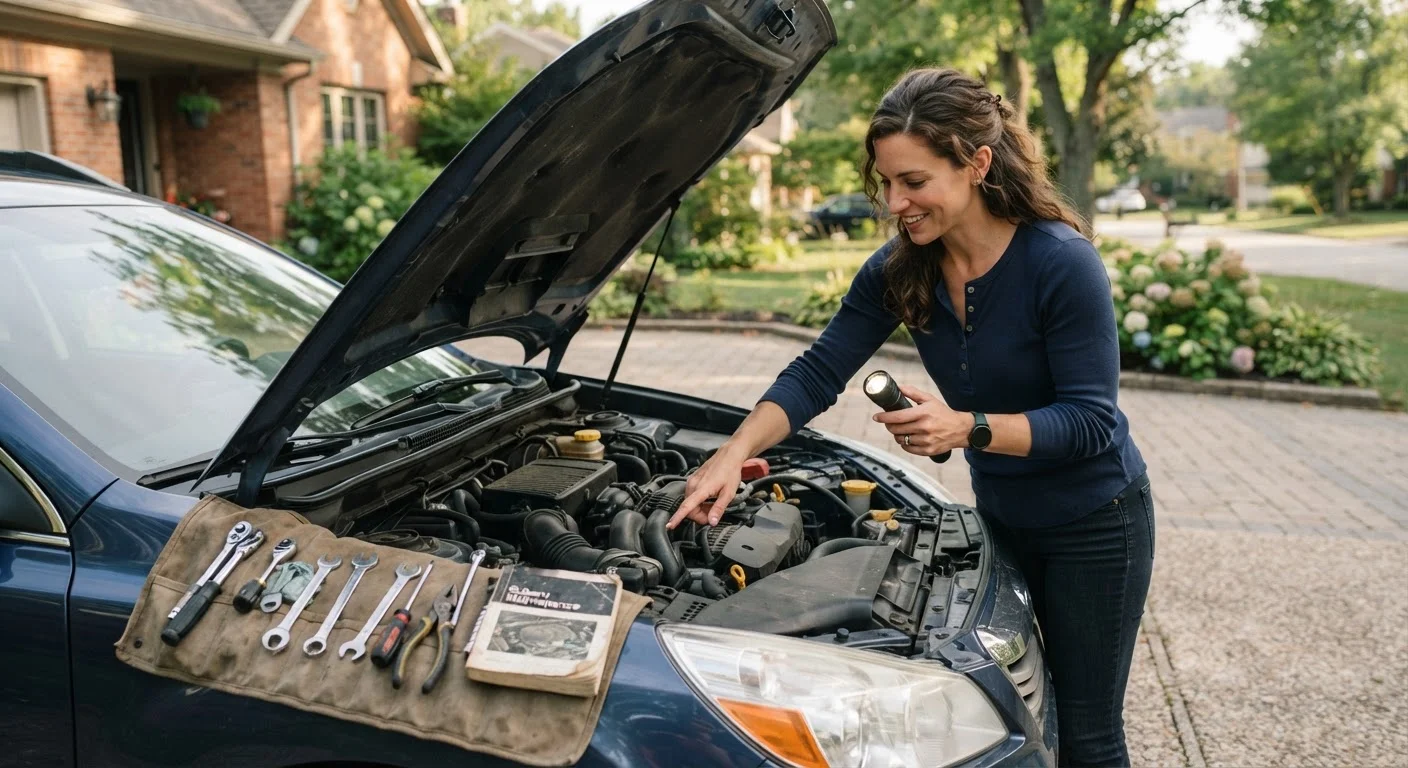
A surprising number of routine checks require nothing more than opening the hood, reading a dipstick, or eyeballing a component. These tasks are low-risk because they involve observation rather than disassembly, and mistakes are usually immediately visible rather than hidden.
- Fluid levels: Engine oil, coolant, brake fluid, power steering fluid, and windshield washer fluid all have clearly marked reservoirs with min/max indicators. Checking them is straightforward; topping off with the correct fluid type (specified in your owner's manual) is equally manageable for most drivers.
- Tire pressure and tread depth: A tire pressure gauge costs a few dollars and takes under two minutes per tire. Tread depth can be estimated with a quarter or a penny. Both checks directly affect safety and fuel efficiency.
- Air filter inspection: Engine and cabin air filters are typically accessible without tools or with a simple clip or screw. A visibly dirty filter is easy to identify and replace.
- Wiper blades: Replacement wiper blades come with straightforward instructions and no mechanical risk.
- Visual checks for leaks or damage: Scanning under the vehicle for fluid spots or visually inspecting belts for obvious cracking gives early warning of developing problems.
These checks fit naturally into a seasonal routine. Our seasonal car maintenance checklist walks through exactly when each one is most important.
Keep Your Owner's Manual Close
Your vehicle's owner's manual specifies the correct fluid types, service intervals, and maintenance requirements for your exact make and model. Following it is more reliable than generic advice. If your manual isn't in the glove box, most manufacturers make digital versions available through their websites.
Where to Draw the Line: Jobs for Qualified Mechanics
Some jobs look approachable on the surface but involve systems where an error has serious downstream consequences. The threshold is straightforward: if the task affects your ability to steer, stop, or control the vehicle - or if it requires specialized tools or calibration - it warrants professional attention.
| Task | DIY-Friendly | See a Mechanic | |
|---|---|---|---|
| Engine oil level check | Yes - dipstick check, no tools needed | Not required for basic check | |
| Tire pressure and tread | Yes - gauge and visual inspection | If sidewall damage is suspected | |
| Air filter replacement | Yes - typically tool-free access | Not necessary | |
| Brake pad replacement | Not recommended - safety-critical | Yes - requires proper tools and torque | |
| Suspension component repair | No - affects handling geometry | Yes - specialized alignment required | |
| Electrical fault diagnosis | Avoid - risk of module damage | Yes - diagnostic equipment needed | |
| Timing belt/chain replacement | No - engine damage risk if wrong | Yes - precision alignment essential | |
| Wiper blade replacement | Yes - simple clip mechanism | Not required |
- Brake system work: Replacing brake pads might appear simple, but incorrect installation, improper torque on caliper bolts, or contaminated rotors can cause brake fade or failure. Hydraulic brake line work carries additional risk. Any brake symptom - squealing, grinding, a soft pedal - should be evaluated by a mechanic. See brake wear signals worth taking seriously for what those symptoms typically indicate.
- Suspension and steering components: Ball joints, tie rods, and wheel bearings affect handling geometry. Incorrect installation can make a vehicle unpredictable at speed.
- Electrical diagnosis and repair: Modern vehicles have complex, interconnected electrical systems. Incorrect wiring can damage control modules, disable safety systems, or create fire risk.
- Emissions system components: Catalytic converters, oxygen sensors, and EGR valves are regulated components. Incorrect handling can affect emissions compliance and trigger persistent warning lights.
- Timing belt or chain replacement: Requires precise alignment and, in interference engines, a single misstep can cause catastrophic engine damage.
If you notice something unusual - a new noise, a warning light, or a change in how the vehicle handles - acting promptly is important. Ignoring small problems rarely keeps them small.
Building a Maintenance Mindset That Works
The most useful habit any driver can develop is regular observation - noticing changes before they become failures. You don't need mechanical expertise to recognize that a fluid level has dropped, that a tire looks low, or that a belt has developed visible cracking. What matters is acting on those observations rather than waiting.
First-time owners in particular benefit from understanding what their vehicle actually requires. A grounded introduction to car maintenance from scratch covers how to read your owner's manual and set up a basic service schedule. Beyond routine items, there are tasks that receive less attention precisely because they fail silently - overlooked maintenance tasks like coolant flushes and serpentine belts are worth adding to any checklist.
When in doubt about whether a job falls within your capability, a professional inspection is the right call. A mechanic who finds nothing wrong has still given you reliable information. One who identifies a developing problem early has potentially prevented a far more expensive repair - or a roadside breakdown.
The content on this site is provided for informational purposes only and should not be considered a substitute for professional advice. While we strive to provide accurate and up-to-date information, we make no guarantees regarding its completeness or accuracy. Always consult a qualified professional for advice specific to your circumstances before making any decisions.