

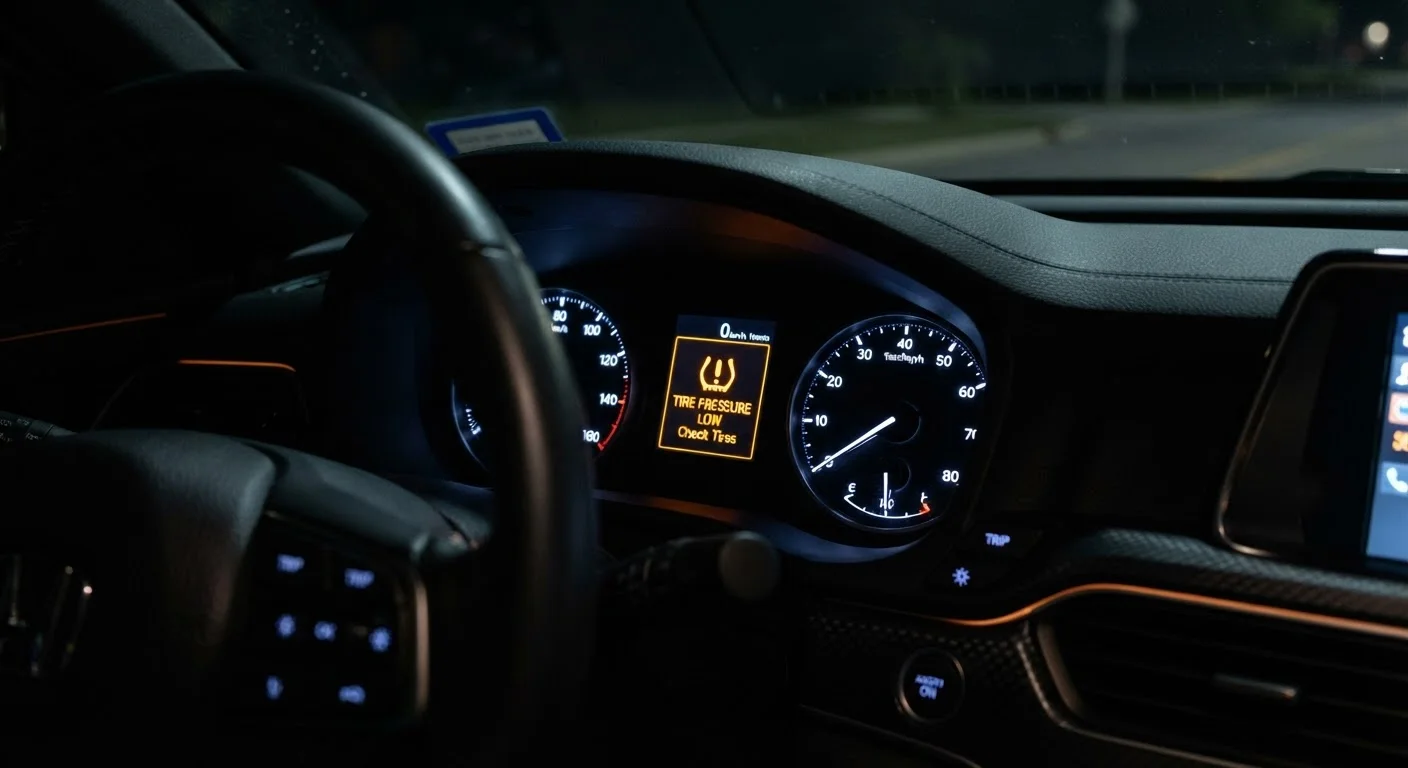
What the Steady TPMS Light Is Telling You
When the TPMS warning light glows steadily on your dashboard, it is communicating one primary message: one or more of your tires has dropped to a pressure level that federal safety standards consider a meaningful risk. Under U.S. regulations, direct TPMS systems are calibrated to alert when a tire falls to 25% or more below the vehicle manufacturer's recommended pressure - a threshold where handling, braking distance, and tire durability are all compromised.
The first step is to identify which tire is affected. Some vehicles display individual tire pressures on the infotainment screen; others only trigger the general warning icon. In either case, use a reliable handheld pressure gauge to check all four tires - and the spare if your vehicle has one. Inflate any underinflated tire to the pressure listed on the placard inside your driver's door jamb, not the maximum pressure printed on the tire sidewall.
For a deeper look at how to measure and interpret tire pressure readings correctly, see our practical primer on tyre pressure and tread depth. If you'd like a portable solution for roadside inflation, our article on portable tyre inflators explains what those tools can realistically handle.
Always Use the Door Placard Pressure - Not the Tire Sidewall
The maximum pressure printed on a tire's sidewall is not the recommended operating pressure for your vehicle. The correct target pressure is on the sticker inside your driver's door jamb or in your owner's manual. Using the wrong figure can leave you over- or under-inflated even after a correction.
What a Flashing TPMS Light Means - and Why It's Different
A TPMS light that blinks or flashes - typically for 60 to 90 seconds after startup before either staying on or going off - is signaling something different from simple pressure loss. This behavior usually indicates a fault within the monitoring system itself. Common causes include a sensor with a depleted battery (TPMS sensors have internal batteries with a finite lifespan, typically 5-10 years), a sensor that has been damaged, or a system that has lost communication with one of its sensors after a wheel change.
A flashing light does not confirm your tires are at safe pressure - it only tells you the system cannot reliably verify their status. Because the safety monitoring function is effectively disabled, this warrants a visit to a qualified mechanic or tire shop for diagnosis. Attempting to interpret a blinking TPMS light as a simple low-pressure alert can lead to overlooking a tire that genuinely needs attention.
Indirect TPMS Works Differently
Some vehicles - particularly older models or certain economy cars - use indirect TPMS, which monitors wheel rotation speed via the ABS sensors rather than measuring actual air pressure. This type cannot tell you which specific tire is low or give a pressure reading; it can only detect that one wheel is rotating at a different rate than the others, which often - but not always - indicates pressure loss. Check your owner's manual to determine which system your vehicle uses.
Cold Weather, Resets, and Common Misunderstandings
Temperature-related TPMS alerts are among the most misunderstood. As ambient temperature drops, air pressure inside tires decreases - roughly 1 PSI per 10°F. A vehicle parked overnight during a cold snap may trigger the TPMS light in the morning even if its tires were perfectly inflated the day before. After inflating the tires to the correct cold-inflation pressure and driving briefly, the light typically extinguishes as the sensors confirm acceptable readings.
It's also worth knowing that some vehicles do not automatically reset the TPMS indicator after inflation. Certain systems require a deliberate reset procedure - often a button press or a menu selection - before the light clears. Your owner's manual is the most reliable source for the exact reset procedure for your vehicle, since the process varies significantly by manufacturer and model year.
Finally, TPMS is a minimum-threshold alert, not a continuous pressure readout. Tires can lose air gradually over weeks without triggering the light until they cross the 25% threshold. Routine manual checks - once a month and before long trips - remain the most reliable way to catch pressure loss early. Our broader car maintenance hub covers this and other essential upkeep habits in more detail.
When TPMS Warnings Deserve Immediate Action
Not every TPMS alert is a mild inconvenience. If the warning light illuminates while you are driving at highway speeds - especially if accompanied by any vibration, pulling to one side, or a change in steering feel - treat it as urgent. A rapidly deflating tire can cause a blowout, and the consequences at speed are severe. Reduce your speed gradually, avoid sudden steering inputs, and move safely to the shoulder or an exit as soon as possible.
Similarly, if you inflate a tire that continues losing pressure within hours or a day, the tire likely has a puncture, valve stem leak, or bead seal issue that requires professional repair or replacement. TPMS alerts that recur on the same tire despite repeated inflation are a clear signal to have that tire inspected by a technician rather than simply topping it off again. For context on other warning signals that deserve prompt professional attention, our article on brake wear signals illustrates how vehicle warning indicators - taken seriously - are designed to prevent larger problems.
This article provides general educational information about TPMS systems. Always consult a qualified mechanic for diagnosis and repair of vehicle safety systems, and refer to your vehicle's owner's manual for manufacturer-specific guidance.
Frequently Asked Questions
You should avoid driving normally with the TPMS light illuminated. A steady light means at least one tire is likely 25% or more below its recommended pressure, which increases blowout risk and degrades handling. Pull over safely when possible and check your tire pressures.
Air contracts in lower temperatures, typically causing tire pressure to drop about 1 PSI for every 10°F decrease. This can trigger the TPMS light even if your tires were correctly inflated when it was warmer. Inflate the tires to the recommended pressure and the light should go off once the sensors register the correction.
A blinking or flashing TPMS light generally indicates a malfunction within the monitoring system - such as a dead sensor battery or a faulty sensor - rather than a straightforward pressure problem. Have the system inspected by a qualified mechanic to diagnose the specific fault.
Many vehicles reset the TPMS light automatically after you inflate to the correct pressure and drive for a short distance. Others require a manual reset procedure, which varies by make and model. Check your owner's manual for the exact reset steps for your specific vehicle.
No. TPMS typically only alerts you when pressure is already significantly low - often 25% below the recommended level. Regular manual checks with a calibrated pressure gauge help you catch gradual pressure loss before it reaches the warning threshold.
Yes. Replacing wheels with aftermarket options may require repositioning, reprogramming, or replacing the TPMS sensors. Incompatible wheels can cause persistent warning lights or system malfunctions. Always consult a qualified technician when changing wheels.
The content on this site is provided for informational purposes only and should not be considered a substitute for professional advice. While we strive to provide accurate and up-to-date information, we make no guarantees regarding its completeness or accuracy. Always consult a qualified professional for advice specific to your circumstances before making any decisions.