

Our Verdict
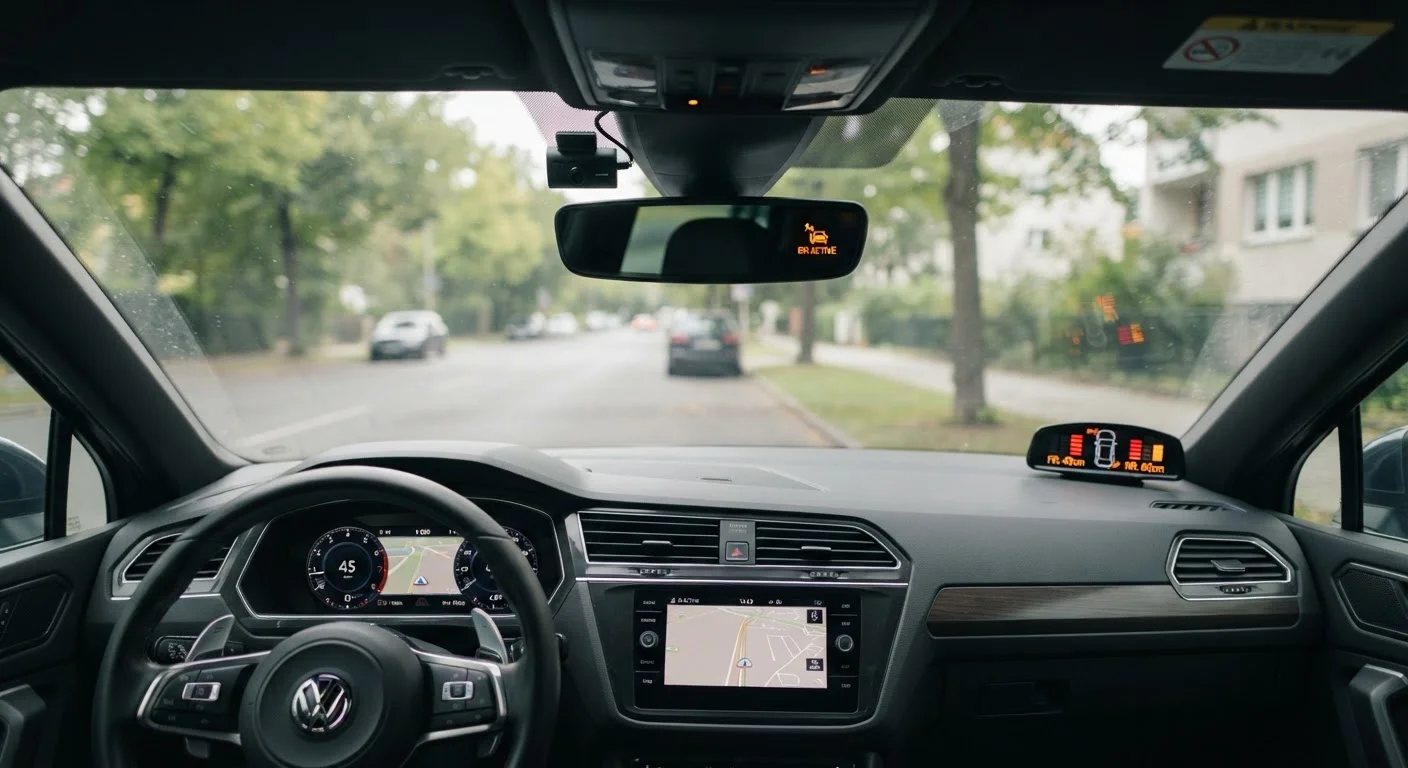
Each of these three accessories addresses a different gap in driver awareness. Dash cams offer the most value for documenting incidents and discouraging risky behavior around your vehicle. Blind-spot mirrors deliver reliable, zero-power lane-change assistance at minimal cost. Parking sensors shine in tight urban environments where low-speed maneuvering is frequent. None is universally superior - the right choice depends on where and how you drive.
| Best for | Recommended |
|---|---|
| Drivers who want incident documentation and accountability | Dash Cam |
| Highway commuters concerned about lane changes | Blind-Spot Mirrors |
| City drivers and those who frequently parallel park | Parking Sensors |
| Older vehicles lacking any modern driver-assistance features | Combination of all three |
Setting the Stage: What These Accessories Actually Do
The aftermarket safety accessory market is crowded, and not everything on store shelves earns its place in your vehicle. For a broader look at how to separate genuinely useful add-ons from overmarketed novelties, see our guide on what counts as an upgrade vs. a gimmick. This article narrows the focus to three of the most commonly considered options: dash cams, blind-spot mirrors, and parking sensors.
Each tackles a specific visibility or documentation gap that many vehicles - particularly older ones - leave unaddressed. Understanding precisely what each device does, and where it falls short, is the only reliable way to decide whether it suits your driving situation.
| Dash Cam | Blind-Spot Mirror | Parking Sensors | |
|---|---|---|---|
| Primary function | Records video evidence | Expands side mirror field of view | Detects nearby obstacles audibly |
| Collision prevention | None - reactive only | Indirect - improves lane awareness | Audible warning before impact |
| Power requirement | Yes - wired or hardwired | None | Yes - wired to vehicle |
| Installation complexity | Low to moderate | Very low | Moderate to high |
| Works in darkness | Varies by camera quality | Yes | Yes - no camera needed |
| Common limitations | Storage, privacy laws, no prevention | Distance distortion from convex lens | False positives in rain or debris |
| Best driving environment | All contexts | Highway and multi-lane roads | Urban, residential, parking lots |
Dash Cams: A Witness, Not a Guardian
A dash cam continuously records video through your windshield while the vehicle is running, typically using loop recording to overwrite older footage. Some models add a rear-facing lens, cabin view, or a parking-mode feature that activates on motion when the car is stationary.
Their clearest benefit is evidentiary: in the event of a collision or road-rage incident, footage can clarify what actually happened. Insurance adjusters and law enforcement can review an objective record rather than relying solely on conflicting driver accounts. Some insurers acknowledge dash cam footage in claims processes, though policies vary - check with your provider directly.
What dash cams do not do is prevent a collision. They are reactive by design. Image quality also varies significantly depending on lens resolution and sensor performance in low-light conditions - factors worth researching carefully before purchase. Privacy laws governing dash cam use differ by state; recording passengers or audio without consent may carry legal implications in some jurisdictions. Before mounting one, read our detailed primer on what every driver should know before fitting a dash cam.
Blind-Spot Mirrors: Simple, Reliable, and Underrated
Blind-spot mirrors are small, wide-angle convex mirrors that attach to the corner of a vehicle's existing side mirrors. By expanding the field of view, they allow drivers to see portions of the adjacent lane that a standard flat mirror does not capture.
Their appeal is straightforward: no wiring, no power source, no compatibility concerns. A correctly positioned blind-spot mirror works on any vehicle with an external side mirror. The key phrase is correctly positioned - angled too far inward, they merely duplicate what the main mirror already shows. The typical placement is in the upper outboard corner of the mirror glass.
The limitation is perceptual. Convex mirrors compress distance, which means objects appear farther away than they are. Drivers unfamiliar with this effect can misjudge closing speed. Blind-spot mirrors also do nothing for the area directly behind the vehicle, making them a complement to - not a replacement for - reversing aids. If your vehicle lacks a backup camera, fitting a reversing camera is a separate consideration worth exploring.
Getting Blind-Spot Mirror Placement Right
Position the blind-spot mirror in the upper outboard corner of your side mirror glass so it shows the lane beside you without duplicating your main mirror's view. Adjust it while parked: the adjacent lane should be visible, and your own vehicle's side should barely appear in the convex lens. Take a few drives on a familiar route to recalibrate your distance perception before relying on it in heavy traffic.
Parking Sensors: Useful in Close Quarters, With Caveats
Parking sensors use ultrasonic or electromagnetic technology to detect objects within a short range of the vehicle - typically the rear bumper, though front sensor kits also exist. As the vehicle closes on an obstacle, an audible tone increases in frequency, alerting the driver to stop.
In dense urban environments and tight parking structures, this kind of proximity feedback is genuinely useful. Sensors can detect low objects that a reversing camera's viewing angle may miss, and they operate effectively in the dark where a camera image degrades.
However, ultrasonic sensors can be triggered by environmental factors: heavy rain, thick mud on the bumper, or even tall grass in a driveway. False positives reduce how much drivers trust the system over time - a well-documented behavioral effect in driver-assistance research. Electromagnetic strip sensors, mounted inside the bumper, tend to produce fewer false triggers but require more careful installation. For vehicles where aftermarket installation involves cutting into bumpers or routing wiring through the cabin, professional fitting is worth the added cost to avoid compromising structural integrity or electrical systems.
For a broader perspective on how safety accessories fit into an overall upgrade strategy, the complete guide to upgrading your vehicle sensibly covers the wider decision-making framework.
Don't Let Sensors Replace Active Observation
Parking sensors are an aid, not a substitute for checking mirrors and physically scanning your surroundings before reversing. Sensors have documented blind zones - typically objects less than 25 cm tall or those pressed flat against the bumper - and can fail silently if cabling corrodes or a transducer is damaged. Always perform a full visual check before moving in confined spaces, regardless of what the sensor system indicates.
Choosing Based on Your Driving Environment
Rather than asking which accessory is objectively best, it's more productive to ask which gap in your current setup matters most. A rural highway driver who rarely parks in tight spaces has a different risk profile than an urban commuter who parallel parks daily.
- Frequent highway driving: Blind-spot mirrors address the highest-frequency risk - lane changes - at minimal cost and complexity.
- Urban and residential driving: Parking sensors provide the most immediate feedback for low-speed maneuvering where dents and scrapes are common.
- All driving contexts: A dash cam adds a documentation layer that serves as passive protection regardless of driving environment.
Drivers considering multiple accessories should also weigh installation quality. A poorly mounted dash cam that obstructs the driver's sightline, or parking sensors with corroded connections, can create new problems rather than solving existing ones. Safety modifications should always leave the vehicle in a condition at least as safe as it was before - and any electrical work on modern vehicles with complex driver-assistance systems may warrant a qualified installer.
It's also worth noting that accessories interact with existing vehicle safety systems. See our related piece on why aftermarket additions can sometimes interfere with safety systems for an example of how easy it is to overlook these interactions.
The content on this site is provided for informational purposes only and should not be considered a substitute for professional advice. While we strive to provide accurate and up-to-date information, we make no guarantees regarding its completeness or accuracy. Always consult a qualified professional for advice specific to your circumstances before making any decisions.