

Why This Matters More Than Most Drivers Realize
Seat covers are one of the most popular interior accessories for everyday drivers - they protect upholstery, add comfort, and let owners personalize their cabins. But there's a safety dimension that many buyers overlook entirely: side-impact airbags.
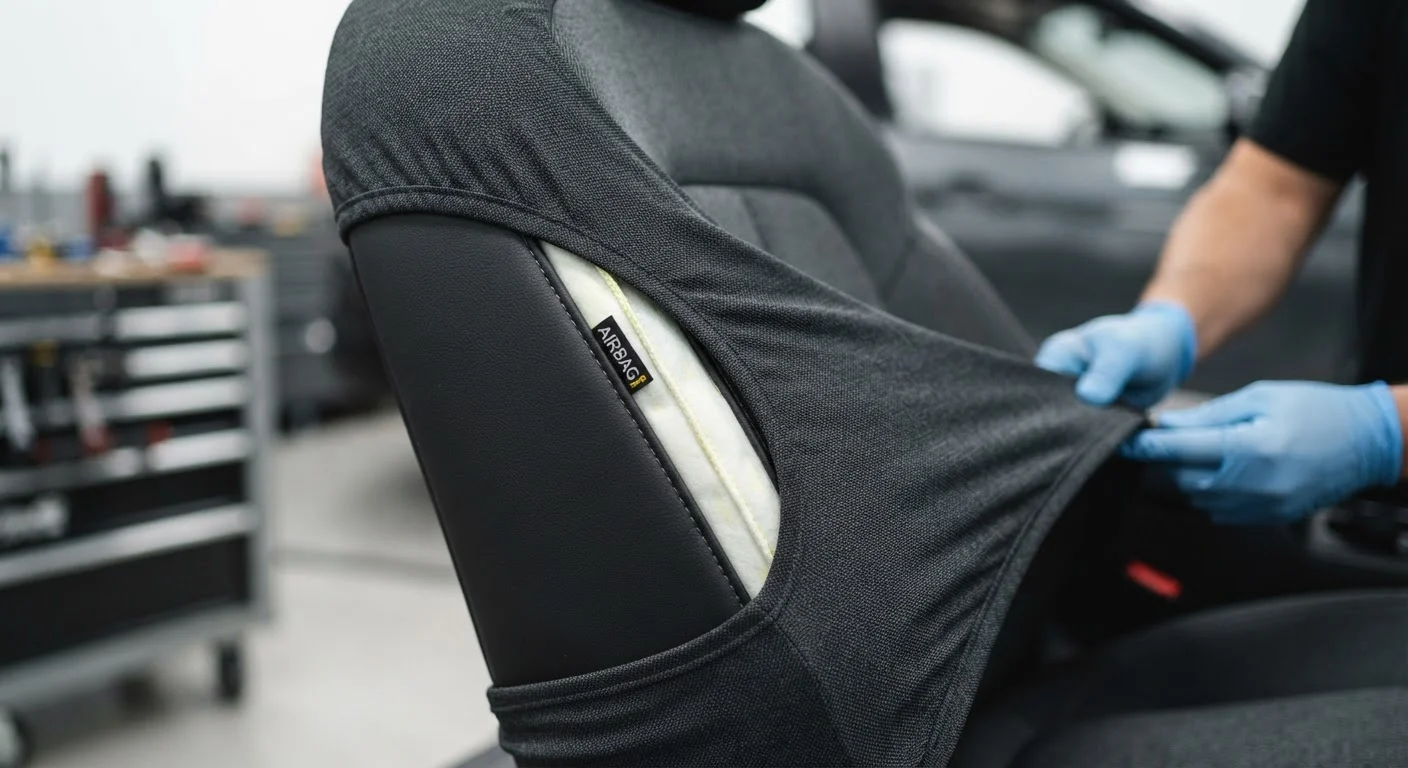
In a significant number of modern vehicles, side curtain or seat-mounted airbags are integrated directly into the outer bolster of the front seats. These airbags are designed to deploy through a pre-cut, weakened seam in the seat's upholstery in the event of a side collision. When an aftermarket seat cover is placed over that seam, it can interfere with - or entirely block - that deployment path.
This isn't a theoretical risk. Safety engineers design airbag deployment timing and force with specific material thicknesses in mind. An additional layer of fabric, particularly stiff or reinforced material, can delay or redirect the airbag in ways that compromise occupant protection. For a system that operates in milliseconds during a crash, even a small obstruction is significant.
Before buying any seat cover, it's worth understanding what your vehicle's seat actually contains - and what to look for to avoid creating a hidden hazard. For a broader look at how to evaluate car accessories, see our complete guide to upgrading your vehicle sensibly.
Side Airbags Are a Critical Safety System
Seat-mounted side airbags are engineered to protect occupants from serious injury in lateral collisions. Obstructing their deployment path - even unintentionally - can undermine that protection. If you are uncertain whether your vehicle's seats contain airbags, consult your owner's manual or speak with a qualified mechanic before fitting any aftermarket cover.
Common Mistakes When Choosing Seat Covers
The errors drivers make when selecting seat covers tend to follow predictable patterns. Recognizing them is the first step toward making a safer, better-informed choice.
Buying a universal-fit seat cover without checking whether your seats contain airbags.
Why it happens: Universal covers are widely available and attractively priced, leading buyers to assume 'one size fits all' applies to safety considerations as well as dimensions.
Assuming 'airbag compatible' labeling is standardized or regulated across all manufacturers.
Why it happens: Shoppers reasonably expect product safety claims to meet a consistent standard, but 'airbag compatible' is not a regulated term and can be applied loosely by different manufacturers.
Installing a seat cover without inspecting the airbag deployment seam location first.
Why it happens: Most buyers focus on aesthetics and fit during installation, not on locating structural or safety features beneath the cover.
Using thick, rigid, or heavily padded covers on seats with integrated side airbags.
Why it happens: Thicker materials are often marketed as more durable or luxurious, making them appealing without obvious safety implications.
Ignoring the possibility that a previously fitted seat cover - from a prior owner - may be incompatible.
Why it happens: Used vehicle buyers rarely audit seat covers already in place, especially if they appear clean and well-fitted.
Improper Covers May Affect Your Warranty
Fitting a seat cover that interferes with an airbag or safety restraint system could potentially affect your vehicle manufacturer's warranty coverage for that system. Some insurers may also raise questions about modifications that alter factory safety equipment. Review your warranty documentation and, if in doubt, ask your dealership before installation.
If you're evaluating other vehicle safety accessories alongside seat covers, our guide to dash cams, blind-spot mirrors, and parking sensors covers how to assess real-world effectiveness. And if you're trying to determine whether a seat cover is a genuine upgrade or just marketing, our breakdown of upgrades vs. gimmicks is worth reading first.
The content on this site is provided for informational purposes only and should not be considered a substitute for professional advice. While we strive to provide accurate and up-to-date information, we make no guarantees regarding its completeness or accuracy. Always consult a qualified professional for advice specific to your circumstances before making any decisions.