

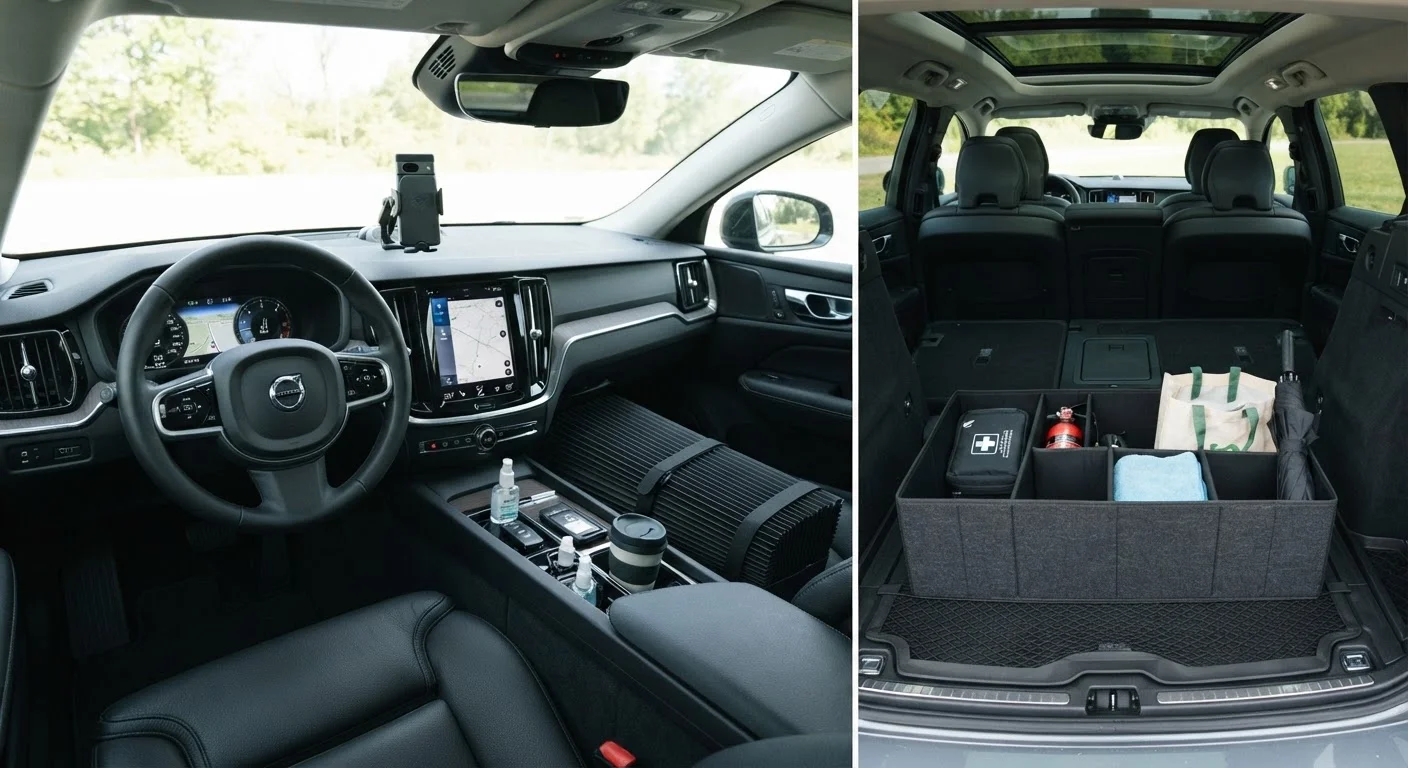
Why Accessorizing Your Vehicle Deserves Careful Thought
The car accessories market is enormous, noisy, and filled with products ranging from genuinely useful to entirely gimmicky. For everyday drivers, the challenge isn't finding options - it's filtering them. A well-chosen accessory can improve safety, reduce stress, and extend how long your vehicle stays in good shape. A poorly chosen one can waste money, clutter your cabin, or in rare cases interfere with vehicle systems.
Before exploring specific categories, it helps to think about what problem you're actually trying to solve. Do you commute long distances and want better ergonomics? Do you frequently drive in adverse weather? Are you hauling gear regularly? The answers shape which accessories genuinely earn their place. If you're also weighing a vehicle change, our vehicle buying hub offers grounded guidance on choosing the right car first.
77%
Drivers who don't carry a full roadside emergency kit
Industry surveys consistently find a large majority of drivers are underprepared for common roadside emergencies such as flat tires or dead batteries.
20%
Cabin temperature reduction from windshield sunshades
Research from automotive consumer groups suggests quality sunshades can meaningfully reduce parked interior temperatures in direct sunlight.
25%
Fuel efficiency loss from significantly underinflated tires
The U.S. Department of Energy notes that tire pressure maintenance has a measurable impact on fuel economy and tire wear.
Safety and Emergency Accessories Worth Considering
Safety-related accessories tend to offer the clearest return on investment. A roadside emergency kit - typically containing jumper cables, a reflective triangle, a basic first-aid kit, a tire inflator, and a flashlight - is something most drivers don't think about until they urgently need one. Keeping one in your trunk is a widely recommended baseline by automotive safety organizations.
Dashcams record video footage of your surroundings while driving, which can be valuable documentation in the event of an accident. Look for models with reliable loop recording, a wide field of view, and, if relevant to your situation, a parking mode that records when the vehicle is stationary. Blind-spot mirrors are another low-cost addition that can meaningfully reduce a common accident risk, particularly for drivers who regularly change lanes on highways.
Don't Disable or Override Safety Systems
Some aftermarket accessories - particularly those involving OBD port adapters, suspension modifications, or electronic add-ons - can interact unexpectedly with factory safety systems such as ABS, traction control, or airbag sensors. Always verify that an accessory is explicitly stated as compatible with your vehicle's systems before installing it. When in doubt, consult a qualified mechanic before proceeding.
Tire pressure monitoring accessories - including standalone digital gauges - complement (but don't replace) your vehicle's built-in TPMS if it has one. Maintaining correct tire pressure is one of the simplest ways to improve fuel efficiency and tire longevity, and the car maintenance hub covers the broader discipline of keeping your vehicle reliable.
Comfort and Convenience Upgrades
Comfort accessories address the daily friction of driving. Seat cushions designed for lumbar support can reduce fatigue on longer drives, and they're available in a range of materials and profiles to match different body types and seat geometries. Steering wheel covers can improve grip and reduce heat transfer in summer climates, though it's worth ensuring any cover fits snugly enough not to interfere with control.
Windshield sunshades protect your interior from UV damage and dramatically reduce cabin temperature when parked in direct sun - a practical accessory for drivers in warmer states. Trunk organizers and cargo nets help prevent loose items from shifting during braking or cornering, which is both a convenience and a minor safety consideration.
When selecting a seat cushion or lumbar support, bring it to your vehicle and test it before committing. Seat geometry varies significantly between models, and what works in one vehicle may cause discomfort in another.
Seat accessory returns are common precisely because drivers don't account for how existing seat shape interacts with an add-on cushion - a quick in-car test saves time and money.
Keep a small notepad or use your phone's voice memo feature to log what accessories you've added and when. This helps you track what's working and gives you accurate information if a mechanic ever needs to know what's been modified.
Mechanics and service advisors occasionally encounter issues caused by aftermarket accessories; having a clear log helps diagnose problems faster and demonstrates responsible ownership.
Technology and Navigation Add-Ons
Phone mounts are among the most universally useful accessories available. A secure, stable mount keeps your device visible for navigation without requiring you to hold it - which is both safer and, in most U.S. states, legally required. Vent mounts, windshield mounts, and dashboard mounts each have trade-offs in stability and sightline impact; choosing one appropriate for your vehicle's layout matters.
Bluetooth adapters and FM transmitters allow older vehicles to stream audio from a smartphone through the car's speakers, a functional solution for vehicles without built-in connectivity. For drivers with newer vehicles, wireless charging pads that integrate with existing wireless charging systems can reduce cable clutter. Before purchasing any technology accessory, verify compatibility with your vehicle's existing systems and, for hardwired devices, consider whether professional installation is appropriate.
Exterior and Cargo Protection
Protecting your vehicle's exterior reduces long-term depreciation and maintenance costs. Floor mats - particularly all-weather rubber liners - guard against mud, snow, and moisture that can degrade factory carpeting. Cargo liners for SUVs and trucks serve the same purpose in the load area. When purchasing fitted versions, always confirm sizing against your specific make, model, and year.
Mud flaps help reduce debris thrown by tires onto rocker panels and rear quarters, which is especially worthwhile for drivers on unpaved roads or in regions with road salt. Car covers are useful for vehicles stored outdoors for extended periods. Understanding how fluid and mechanical systems interact with exterior wear is useful context - our article on your car's fluid systems explains how internal maintenance and external care connect.
How to Evaluate Any Accessory Before You Commit
A useful framework for evaluating any accessory involves three questions: Does it solve a real problem I actually have? Is it compatible with my specific vehicle? Does it meet a credible quality standard?
On compatibility, check the manufacturer's fitment guide and cross-reference against owner forums specific to your vehicle. For electronic accessories, verify they won't interfere with existing systems - some aftermarket devices have been reported to affect OBD (on-board diagnostics) performance when connected to the diagnostics port.
On quality, look for accessories that meet relevant safety standards where applicable - for example, phone mounts should be robust enough not to drop your device during braking. Read verified owner reviews that speak to long-term durability, not just initial impressions.
Finally, consider installation. Some accessories are genuinely plug-and-play; others - particularly hardwired electronics, suspension modifications, or anything touching safety systems - should be handled by a qualified mechanic. Attempting complex installations without the appropriate knowledge carries real risk of damage or injury.
Start With What You Already Need
Rather than browsing for accessories broadly, identify the two or three friction points in your daily driving experience and research solutions for those specifically. This approach keeps spending purposeful and prevents accumulating unused items. Revisiting your vehicle's owner's manual before purchasing fitted accessories can also save a return trip.
The content on this site is provided for informational purposes only and should not be considered a substitute for professional advice. While we strive to provide accurate and up-to-date information, we make no guarantees regarding its completeness or accuracy. Always consult a qualified professional for advice specific to your circumstances before making any decisions.