

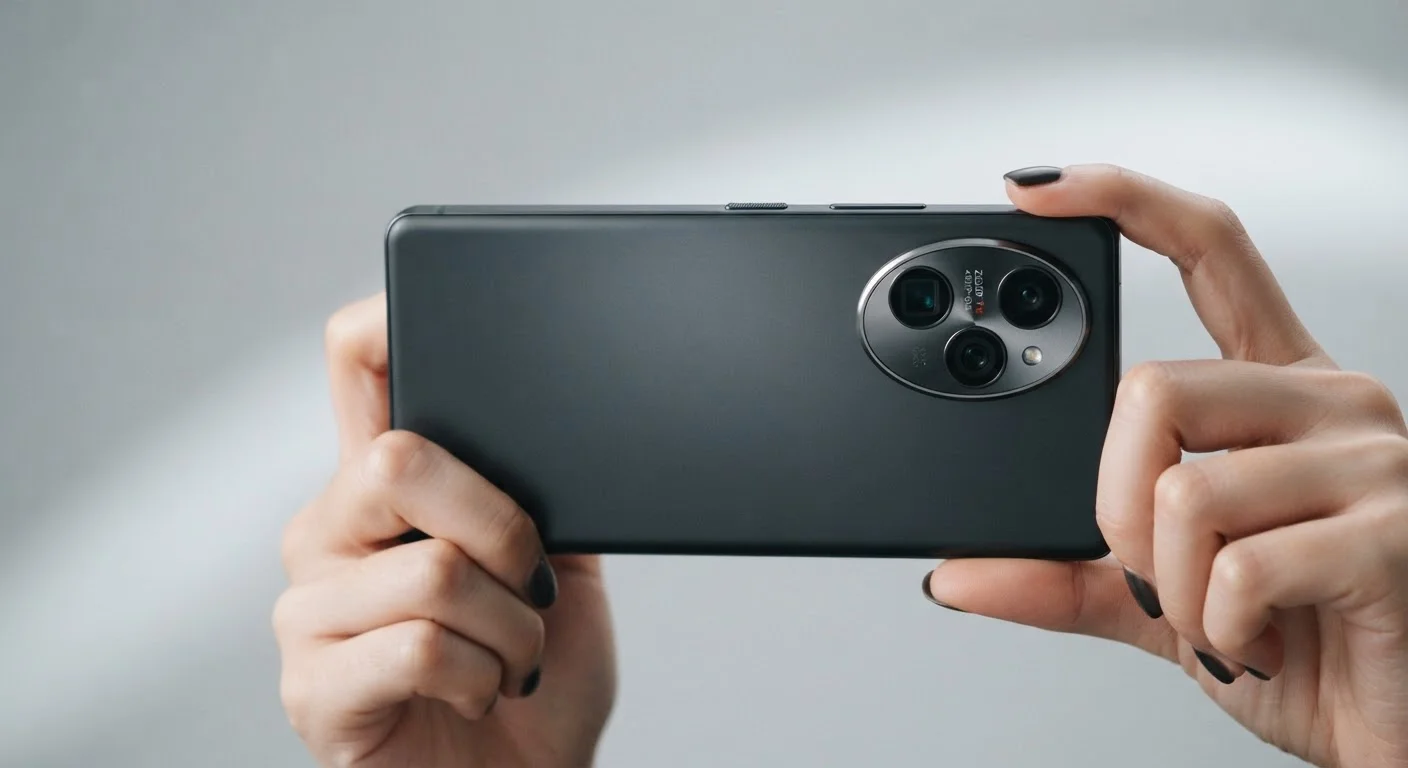
Why Camera Specs Can Be Misleading
Smartphone product pages are packed with numbers: 200MP cameras, f/1.8 apertures, 1/1.57" sensors. The figures look impressive, but without context they're nearly impossible to interpret. Higher numbers don't always mean better photos - and manufacturers know that large numbers sell devices.
This reference guide breaks down the three most frequently listed camera specifications, explains what each one actually measures, and clarifies what it means for the photos you'll take day to day. If you find spec sheets confusing in general, our guide to reading smartphone spec sheets covers the full picture beyond the camera.
Megapixel (MP)
One million pixels. Megapixel count determines the maximum resolution of a captured image. Higher MP allows more cropping flexibility, but does not directly equal better photo quality.
Aperture (f-number)
The size of a lens opening, expressed as an f-number (e.g., f/1.8). A lower f-number means a wider opening that admits more light, improving low-light performance and enabling background blur.
Image Sensor
The electronic component inside a camera that captures light and converts it into a digital image. Larger sensors generally capture more light, producing better dynamic range and lower noise.
Pixel Binning
A processing technique that combines multiple small pixels into one larger effective pixel. It improves low-light performance by gathering more light, though at the cost of the sensor's maximum resolution.
Depth of Field
The range of distance in a photo that appears acceptably sharp. A shallow depth of field keeps the subject in focus while blurring the background - the 'bokeh' effect.
Dynamic Range
The range of light intensities a sensor can capture in a single image, from darkest shadows to brightest highlights. Greater dynamic range preserves detail in high-contrast scenes.
Megapixels: Resolution Isn't Everything
A megapixel (MP) is one million pixels - the individual dots of color that form a digital image. A 12MP camera captures roughly 12 million pixels per photo, while a 200MP camera captures 200 million.
More pixels allow you to crop deeply into an image without visible degradation, and to print at very large sizes without losing sharpness. In everyday shooting - social media, texting, on-screen viewing - the difference between 12MP and 50MP is rarely visible. Most screens can't display more than about 8-10MP of detail anyway.
The catch: cramming more pixels onto a small sensor shrinks each individual pixel. Smaller pixels capture less light, which tends to produce more noise (grain) in low-light conditions. Many phones address this with pixel binning - combining several smaller pixels into one larger effective pixel to improve low-light performance, at the cost of final resolution. A 200MP sensor may actually shoot in a 12.5MP binned mode by default for most everyday photos.
| Megapixel count | Affects cropping and print size, not everyday sharpness |
| Smartphone aperture range | Typically f/1.4 - f/2.8 across main lenses |
| Sensor size notation | Larger denominator = smaller sensor (1/2.3" < 1/1.57") |
| Pixel binning effect | Can reduce effective resolution to 1/4 of listed MP for better low-light shots |
| Fixed aperture | Smartphone lenses cannot adjust aperture - f-number is fixed per lens |
Aperture: How Much Light the Lens Lets In
Aperture describes the size of the lens opening through which light enters. On a spec sheet it appears as an f-number: f/1.8, f/2.0, f/2.4. The lower the f-number, the wider the opening - meaning more light reaches the sensor.
A wider aperture (lower f-number) delivers two practical benefits. First, better low-light performance: more light gathered means brighter photos with less noise without resorting to a slow shutter speed. Second, a shallower depth of field: the subject stays sharp while the background blurs - the effect often called bokeh. Premium phones simulate this blur digitally even on lenses with narrower apertures, so software processing matters as much as the aperture number alone.
One important caveat: smartphone lenses have a fixed aperture, unlike interchangeable camera lenses, which can be adjusted. The f-number on the spec sheet is the only aperture the lens operates at. Some phones list different apertures for different lenses (wide, ultrawide, telephoto), since each lens is a separate optical unit.
Sensor Size: The Spec That Matters Most
The image sensor is the electronic component that converts light into a digital image. Sensor size is listed in a fractional-inch format such as 1/1.57" or 1/2.3" - a notation inherited from older camera-tube technology. Counterintuitively, a larger denominator means a smaller sensor: 1/1.57" is physically bigger than 1/2.3".
A larger sensor has more surface area to gather light. More light means richer color, greater dynamic range (detail in both bright highlights and dark shadows), and significantly cleaner low-light shots. Of the three specs covered here, sensor size tends to be the strongest single predictor of overall image quality - though it still interacts with lens quality, pixel size, and software processing.
Sensor size is also the spec least likely to be inflated by marketing, because it represents a real physical component cost. Phones with notably larger sensors are generally more expensive to manufacture, which is why the spec correlates reasonably well with price tier. For a broader view of how camera quality factors into the total cost of a device, see our piece on the hidden costs of owning a smartphone.
1/1.57"
Sensor size associated with flagship-tier low-light performance
Sensors at or near this size appear in several high-end smartphones and represent a meaningful step up from mid-range 1/2.3" sensors.
f/1.4-f/1.8
Aperture range of wide-angle main lenses in premium phones
Wider apertures in this range allow notably more light than f/2.4 lenses common in entry-level devices, improving indoor and night photography.
~8-10 MP
Effective resolution most screens can display
Most consumer displays, including large TVs and desktop monitors, cannot render meaningful detail beyond roughly 8-10 megapixels at normal viewing distances.
Reading the Full Spec Sheet in Context
No single camera spec tells the whole story. A phone with a high megapixel count but a tiny sensor and a narrow aperture will often underperform a device with fewer megapixels but a larger sensor and wider aperture - especially indoors or at night. Software processing, including computational photography features like night mode and HDR, can close that gap further.
When evaluating a camera spec sheet, treat megapixels as a ceiling on detail, aperture as a guide to low-light capability and background blur, and sensor size as a broad indicator of overall light-gathering quality. Display specs follow similar logic - the numbers need context - and our guide to mobile display specs applies the same plain-language approach to screens. If you're weighing a refurbished device where camera condition matters, understanding refurbished phone grades is worth reviewing before you decide.
The content on this site is provided for informational purposes only and should not be considered a substitute for professional advice. While we strive to provide accurate and up-to-date information, we make no guarantees regarding its completeness or accuracy. Always consult a qualified professional for advice specific to your circumstances before making any decisions.