

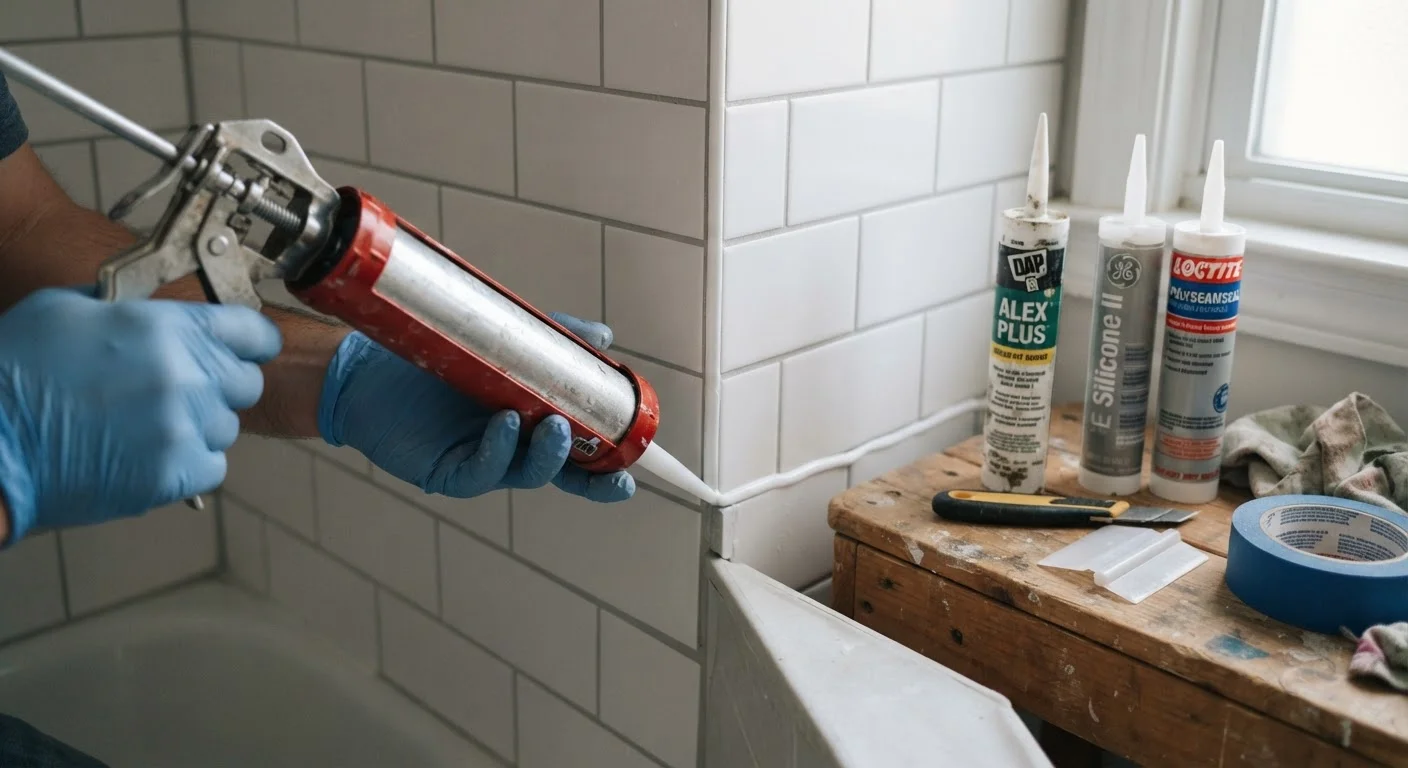
Option A
Caulk
The paintable, rigid-cure workhorse for interior gaps.
Best for: Best for stationary joints on interior walls, baseboards, trim, and window casings where painting is required.
Option B
Sealant
The flexible, moisture-resistant choice for dynamic or wet areas.
Best for: Best for areas exposed to water, movement, or temperature swings - tubs, showers, exterior penetrations, and expansion joints.
What Sets Caulk and Sealant Apart
Walk down any hardware store aisle and you'll find tubes labeled both "caulk" and "sealant" sitting side by side. The terms are often used loosely, even interchangeably, but they describe materials with meaningfully different chemistry and performance profiles.
Caulk - most commonly latex or acrylic latex - cures to a relatively rigid state. It's designed to fill gaps between stationary surfaces: think the joint between a baseboard and drywall, or the seam where a window casing meets interior plaster. Because it cures firm, it takes paint well, which makes it the go-to product for any gap that needs to disappear under a coat of wall or trim paint.
Sealant - most commonly silicone, polyurethane, or a hybrid of the two - stays permanently flexible after curing. That elasticity is the point: sealant is engineered to stretch and compress as the surrounding materials move due to temperature, moisture, or normal structural settling. The tradeoff is that most silicone sealants don't accept paint; once cured, paint tends to peel right off the surface.
| Criterion | Caulk | Sealant |
|---|---|---|
| Primary base material | Latex / acrylic latex | Silicone, polyurethane, or hybrid |
| Flexibility after cure | Rigid to semi-rigid | Permanently flexible |
| Paintable | Yes (most formulas) | Usually no (especially silicone) |
| Water resistance | Moderate (interior use) | High - designed for wet areas |
| UV and exterior durability | Limited - can dry out and crack | Strong - resists weathering |
| Typical best uses | Trim, baseboards, interior seams | Tubs, showers, exterior joints |
| Ease of cleanup | Soap and water (wet) | Requires solvent (silicone types) |
Understanding this core distinction - rigid vs. flexible, paintable vs. waterproof - is the foundation for making the right call before you open any tube.
Where Each Product Belongs
Use caulk for interior, stationary joints. Common applications include filling the gap between baseboard and flooring before painting, sealing window and door casing to drywall, and touching up hairline cracks at ceiling-to-wall transitions. If the gap doesn't move and the surface will be painted, caulk is almost always the correct choice. It's worth noting that caulk is not a structural filler - gaps wider than about ¼ inch typically need backer rod (a foam cord inserted into the gap to reduce depth) before caulk is applied on top.
Use sealant for wet areas, outdoor joints, and anywhere movement is expected. Bathtub surrounds, shower bases, and kitchen sink perimeters all qualify. So do exterior window and door frames, gaps around plumbing or HVAC penetrations through exterior walls, and concrete expansion joints. If water exposure or thermal movement is part of the picture, reach for a sealant.
Grout Is Not a Substitute for Sealant
In tiled showers and tub surrounds, the 90-degree corner joints - where the floor meets the wall and where two walls meet - should be filled with flexible sealant, not grout. Grout is rigid and will crack as the substrate flexes even slightly. Color-matched sealants are widely available and provide a visually seamless result alongside grout lines while maintaining the necessary flexibility.
One common mistake is using caulk in a tile shower. Grout may look correct at the floor-to-wall transition, but that corner joint actually moves slightly with steam and temperature changes - it needs a flexible sealant, not rigid caulk or grout. Our guide on why grout keeps cracking explains the structural reasons behind that kind of joint failure in more detail.
For below-grade situations - like sealing around a pipe penetration in a basement wall - standard caulk is entirely insufficient. Polyurethane sealants designed for masonry, or hydraulic cement for active leaks, are the appropriate materials. See our overview of basement waterproofing approaches for broader context on managing moisture at that level.
Application Tips That Affect the Outcome
Product choice only gets you halfway there. Surface preparation and application technique determine whether the seal lasts.
- Surface must be clean and dry. Silicone sealants in particular will not bond to dusty, oily, or damp surfaces. Wipe surfaces with isopropyl alcohol and allow them to fully dry before applying.
- Remove old material completely. Applying fresh caulk or sealant over a failing bead traps the failure underneath. Use a plastic scraper or oscillating tool to remove the old material, then clean the substrate before starting fresh.
- Cut the nozzle at a 45-degree angle and start with a smaller opening than you think you need - you can always widen it, but you can't un-squeeze excess product.
- Tool the bead promptly. Use a wet finger or caulk-finishing tool to press the bead into the joint and create a concave profile within a minute or two of application. This improves adhesion on both sides of the joint and sheds water more effectively.
- Respect the cure time. Many latex caulks are paintable within an hour but need 24 hours to fully cure before exposure to water. Silicone sealants may need 24-72 hours of undisturbed cure before water exposure, depending on humidity and bead thickness. Check the product's technical data sheet for specifics.
For interior wall repairs where caulk is just one step in a broader finishing process, our guide to drywall repair and seamless finishing covers how joint compound, texture matching, and caulk work together for a polished result.
The content on this site is provided for informational purposes only and should not be considered a substitute for professional advice. While we strive to provide accurate and up-to-date information, we make no guarantees regarding its completeness or accuracy. Always consult a qualified professional for advice specific to your circumstances before making any decisions.