

Summary
22 items · 1.5-3 hours spread across 1-2 weekends
Why Closing Down the Garden Properly Pays Off
It's tempting to walk away from the garden the moment temperatures drop, but the tasks you do - or skip - at the end of the season directly shape how well your garden performs next year. Soil structure, pest populations, plant health, and tool longevity are all influenced by what happens in those final autumn weeks.
Think of a garden close-down the way you'd approach any other seasonal home maintenance task. Just as methodical pre-project planning prevents costly surprises mid-renovation, a structured garden wrap-up prevents unnecessary losses over winter and dramatically reduces spring prep time.
This checklist is organised by area so you can work through it systematically - whether you tackle it in one long Saturday session or spread tasks over two weekends. Use it alongside our year-round outdoor living guide for a complete picture of seasonal garden care.
Plant Care & Beds
Soil Health
Tools & Equipment
Irrigation & Water Features
Season-End Planning
Tools, Irrigation, and Infrastructure
Your tools and watering systems represent a real investment, and autumn is the time to protect them. Metal left damp or caked with soil over winter corrodes; rubber hoses split when water freezes inside them; wooden handles crack if stored unsealed.
Don't Drain Irrigation Lines Without Proper Winterization
Simply turning off the water supply is not enough to protect in-ground irrigation systems in freeze-prone climates. Residual water trapped in lateral lines, valves, and heads can expand as it freezes and crack components that are costly to replace. In most cases, compressed air blow-out is required - a task many homeowners prefer to hand off to an irrigation professional the first time they do it.
Good soil management at close-down also lays the groundwork for water-efficient growing next year. The principles of water-wise gardening - including deep soil preparation and organic matter addition - are most effective when the groundwork is laid in autumn, giving amendments months to integrate before the first seeds go in.
Garden fork or spade
Turning in compost, dividing perennials, and loosening compacted soil before mulching.
Hand pruners and loppers
Cutting back dead annuals, perennials, and woody stems cleanly without tearing plant tissue.
Leaf rake
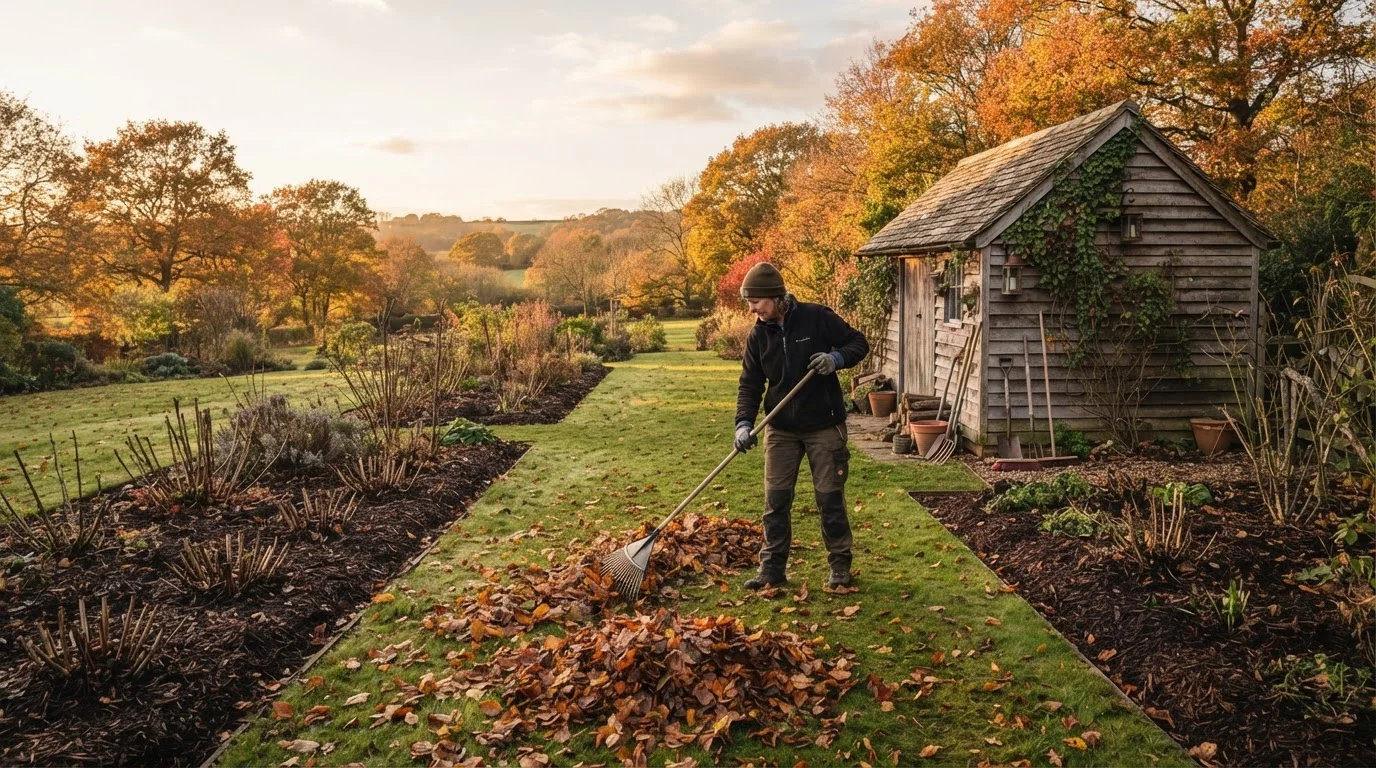
Clearing beds of fallen leaves and plant debris that can harbour pests and fungal spores over winter.
Soil testing kit or mailer
Assessing pH and nutrient levels so any amendments can be applied and incorporated over winter.
Compressed air or irrigation blow-out adapter
Clearing water from in-ground irrigation lines to prevent freeze damage.
Sharpening file
Restoring a working edge to hoes, spades, and loppers so they're ready to use next spring.
Food-grade mineral oil or linseed oil
Protecting metal tool surfaces and conditioning wooden handles against winter moisture.
Planning Notes for Next Spring
The final step most gardeners skip is also one of the most valuable: documenting what happened this season while details are still fresh. Which beds were overcrowded? Which herbs bolted early? Where did slugs consistently appear? If you grow herbs outdoors, pairing your close-down notes with guidance on placement, pruning, and harvesting can help you make smarter layout decisions next year.
A simple notebook or phone note works fine. Record what was planted where, what performed well, and any changes you'd make. Sketch a rough layout if you rotate crops - many soil-borne diseases and pests are reduced by moving plant families to different beds each year. These notes cost you ten minutes now and can save hours of head-scratching in March.
This article is for general informational and educational purposes. Results will vary based on your local climate, soil conditions, and specific plant varieties. Always consult local cooperative extension resources or a qualified horticulturist for advice tailored to your region.
The content on this site is provided for informational purposes only and should not be considered a substitute for professional advice. While we strive to provide accurate and up-to-date information, we make no guarantees regarding its completeness or accuracy. Always consult a qualified professional for advice specific to your circumstances before making any decisions.