

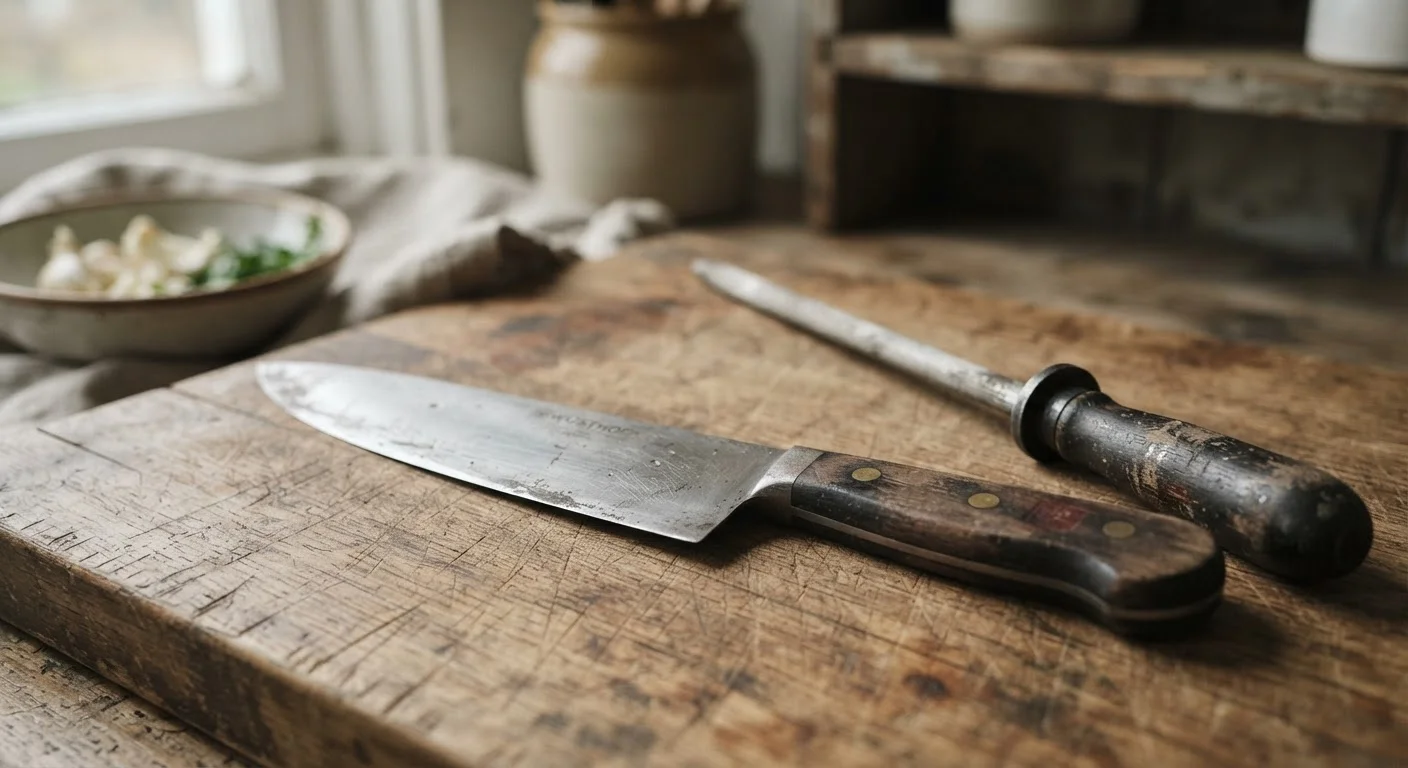
The Habits Behind a Dull Blade
A sharp knife isn't a luxury - it's a safety essential and a fundamental efficiency tool in any kitchen. Yet most home cooks find themselves wrestling with dull blades far sooner than they should. The culprit is rarely the knife itself. It's almost always a cluster of routine habits that steadily destroy the blade's edge without obvious warning signs.
Understanding what causes dulling - and why each habit is so damaging - is the first step toward keeping your knives performing the way they were designed to. For a deeper grounding in how knives work before diving into maintenance, see what a chef's knife actually does.
Washing knives in the dishwasher instead of by hand.
Why it happens: The dishwasher seems like a convenient catch-all for kitchenware, and many people assume it's fine for knives since the blades are metal.
Using glass, ceramic, or stone cutting surfaces.
Why it happens: Glass and marble boards look attractive and seem hygienic, so they're a popular kitchen aesthetic choice - but they're significantly harder than steel.
Storing knives loose in a drawer with other utensils.
Why it happens: Tossing knives into a general utensil drawer is the path of least resistance, and the damage it causes isn't visible after any single incident.
Skipping regular honing with a honing steel or ceramic rod.
Why it happens: Many home cooks conflate honing with sharpening and assume their knife doesn't need attention unless it's visibly struggling to cut.
Using the blade's edge to scrape food off the cutting board.
Why it happens: It's a natural motion: finish cutting, then sweep the ingredients toward the pan with the knife. Most people do it without thinking.
Using the wrong knife for the task at hand.
Why it happens: When one knife is easily accessible, home cooks default to it for everything - hacking through squash with a paring knife, or using a chef's knife to pry open shells.
Building Better Knife Habits for the Long Term
Most of these mistakes are easy to correct once you know what to look for. The payoff is real: a knife that stays sharp through weeks of regular cooking, requires less frequent sharpening, and stays safer to use. Dull knives require more force, which increases the risk of slipping and injury.
3-5×
Faster dulling on hard cutting surfaces
Culinary educators commonly note that glass and ceramic boards accelerate edge wear several times faster than wood or plastic alternatives.
~30 sec
Time needed to hone a knife properly
A consistent honing routine of just a few strokes per session - roughly 30 seconds - is widely cited by professional cooks as the single most effective daily maintenance habit.
Consistency matters more than any single technique. Honing before or after each session, drying and storing properly, and reserving each knife for its intended purpose will extend the time between sharpenings significantly. For a practical guide to the full maintenance routine, these knife-care practices cover what professional and home cooks actually rely on.
Once your blades are holding their edge again, putting them to proper use becomes far more rewarding. Foundational knife skills - from grip to blade angle - are easier to execute cleanly when the tool itself is in good condition.
The content on this site is provided for informational purposes only and should not be considered a substitute for professional advice. While we strive to provide accurate and up-to-date information, we make no guarantees regarding its completeness or accuracy. Always consult a qualified professional for advice specific to your circumstances before making any decisions.