

Our Verdict
A stand mixer is a genuinely useful piece of equipment for cooks who bake regularly - especially those making yeast breads, large cake batches, or meringues with any frequency. For everyone else, the combination of high price, substantial counter space, and limited everyday versatility means the math rarely works out. It's an appliance that rewards commitment; it doesn't create it.
Home bakers who produce bread, pastry, or baked goods at least weekly and have dedicated counter space or easy cabinet access.
What a Stand Mixer Actually Does
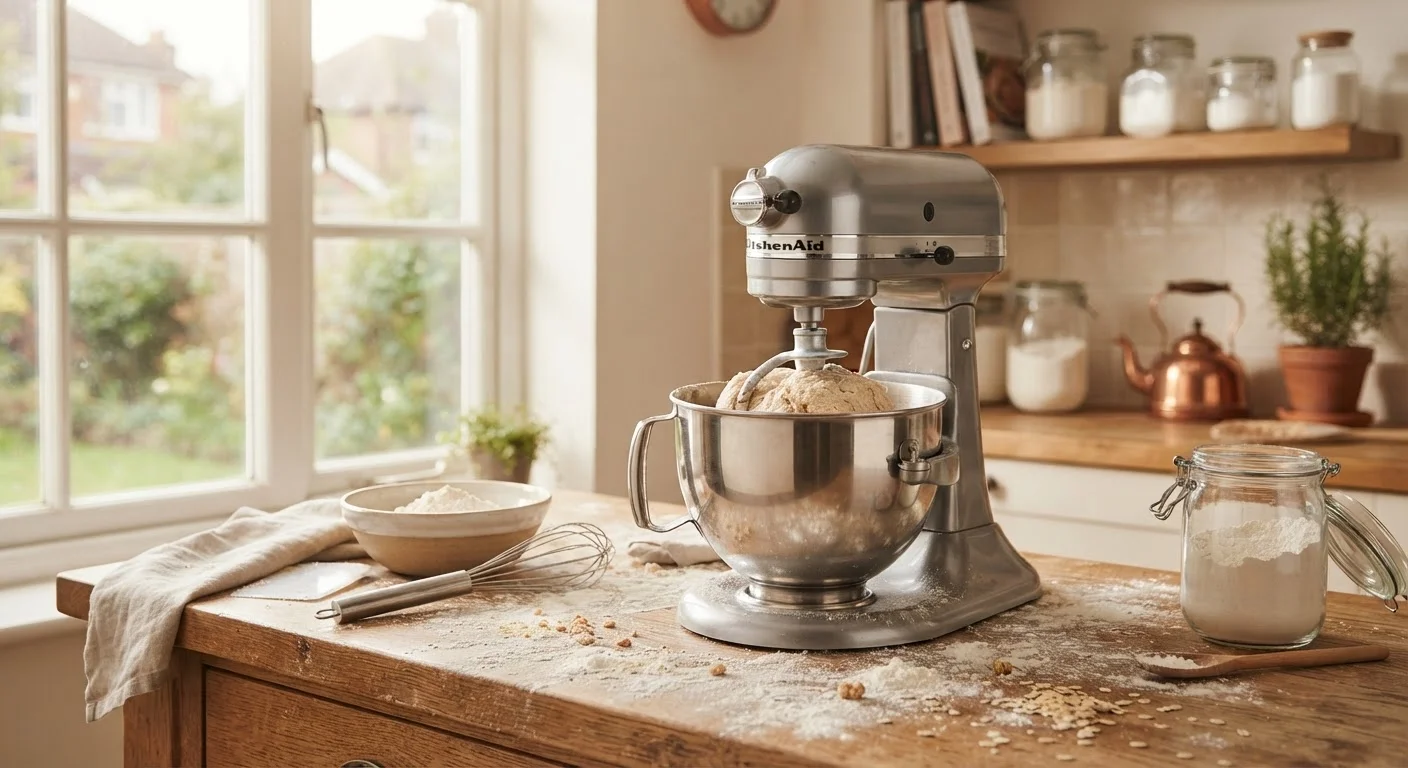
A stand mixer is a countertop appliance with a motorized base, a mixing bowl, and interchangeable attachments - most commonly a flat beater for cake batters and cookie doughs, a dough hook for bread, and a wire whip for egg whites and cream. The defining feature is hands-free operation: once running, the mixer works without anyone holding it, allowing cooks to do other things while it runs.
Most models operate across a range of speeds, and the bowl-lift or tilt-head design determines how accessible the bowl is during mixing. Higher-wattage motors handle stiffer doughs without straining; lower-powered units can bog down with dense mixtures. Attachments sold separately - pasta rollers, meat grinders, ice cream bowls - can extend what the machine does, though each adds cost.
Understanding this basic function matters because it's the honest foundation for deciding whether one belongs in your kitchen. For a deeper look at how this equipment compares to other appliances, see our guide to small appliances that expand what you can cook.
The Case For Owning One
Handles heavy doughs without strain or fatigue
Stiff bread doughs and enriched doughs like brioche require sustained mixing force that quickly tires a hand mixer motor or human arms. A stand mixer maintains consistent torque throughout.
Frees up hands for other kitchen tasks
Because the machine runs unattended, cooks can prep, clean, or manage other components simultaneously - a real efficiency gain during complex baking projects.
Produces consistent results across batches
Fixed speed settings and a stable bowl reduce variability, which matters for recipes where over- or under-mixing affects texture noticeably, such as chiffon cakes or sourdough.
Built to last many years with proper care
Many well-maintained stand mixers remain in regular use for 15-20 years or more, spreading the upfront cost over a long ownership period.
Attachment ecosystem adds genuine versatility
Pasta rollers, meat grinders, and vegetable spiralizers can turn the machine into a multi-function tool - useful for cooks who would actually use those capabilities.
The strongest argument for a stand mixer is consistency under load. When making a stiff bread dough or whipping egg whites to stiff peaks, the machine maintains steady speed and torque far longer than a human arm - or a hand mixer - can comfortably manage. Bakers who work with enriched doughs like brioche, or who regularly make multiple batches of cookies or cakes, will find the time and physical effort savings meaningful rather than marginal.
Hands-free operation also changes how kitchen time is organized. While the mixer handles a ten-minute knead, a cook can prep other components, clean up, or tend to something on the stove. That multitasking dividend compounds over repeated baking sessions.
Finally, a well-built stand mixer is durable. Many home cooks report using the same machine for decades, which shifts the cost calculus over a long ownership horizon.
The Case Against Owning One
High upfront purchase cost
Capable models typically start around $300-$400, with higher-end options well above that. For infrequent bakers, the cost-per-use rarely justifies the investment.
Occupies significant counter or storage space
Most stand mixers weigh 20-25 pounds and take up a large footprint, making them difficult to store and move repeatedly - which often means they sit unused.
Overkill for light or occasional mixing tasks
A hand mixer or even a sturdy whisk handles most everyday tasks - frosting, whipped cream, simple batters - without the cost or space commitment.
Attachments represent additional expense
The base machine handles mixing, but expanding its function requires purchasing accessories that can add significantly to the total cost of ownership.
Motor can struggle with very large or very stiff loads
Lower-wattage consumer models may overheat or wear out faster when pushed with maximum-capacity stiff doughs, particularly on prolonged kneading cycles.
The objections to stand mixer ownership are real and worth taking seriously. Counter space is finite, and a stand mixer occupies a sizable footprint - typically 12 to 16 inches of depth. In smaller kitchens, that often means displacing something else or committing to regular in-and-out storage, which is heavy and inconvenient enough to discourage use.
Cost is the second barrier. Entry-level models start at roughly $300-$400, with mid-range and professional-grade machines running considerably higher. For a cook who makes pancakes on weekends and the occasional birthday cake, that investment rarely pays off in practice.
It's also worth being honest about what a hand mixer can do. Most light-to-medium mixing tasks - whipped cream, standard cake batter, frosting - are well within a hand mixer's capability at a fraction of the price and storage footprint. For a broader audit of which kitchen tools actually earn their place, the kitchen equipment audit guide offers a useful framework.
Hand Mixer vs. Stand Mixer: A Practical Distinction
Hand mixers are not a compromise - they're a genuinely capable tool for most home baking needs, and they cost a fraction of stand mixer prices while storing in a drawer. The stand mixer's real advantage is sustained power and hands-free operation, both of which matter most for heavy doughs and high-volume baking. If those use cases don't describe your kitchen, a hand mixer may simply be the more practical choice.
The Questions Worth Asking Before You Decide
Before committing, the most useful exercise is an honest inventory of your actual baking habits - not your aspirational ones. A few questions worth working through:
- How often do you bake from scratch? Once a week or more suggests real utility. A few times a year does not.
- What do you typically make? Yeast breads, meringues, and large batches of stiff dough benefit most. Muffins, quick breads, and simple batters do not.
- Do you have dedicated counter space or genuinely easy storage? An appliance that lives in a back cabinet rarely gets used.
- Do you already own a hand mixer? If so, be specific about what it can't do that you actually need.
This kind of honest assessment - applied to all your kitchen equipment - is the same logic behind building a pantry that actually earns its space. See which pantry staples genuinely pull their weight for a related perspective on making every item count.
The content on this site is provided for informational purposes only and should not be considered a substitute for professional advice. While we strive to provide accurate and up-to-date information, we make no guarantees regarding its completeness or accuracy. Always consult a qualified professional for advice specific to your circumstances before making any decisions.