

Our Verdict
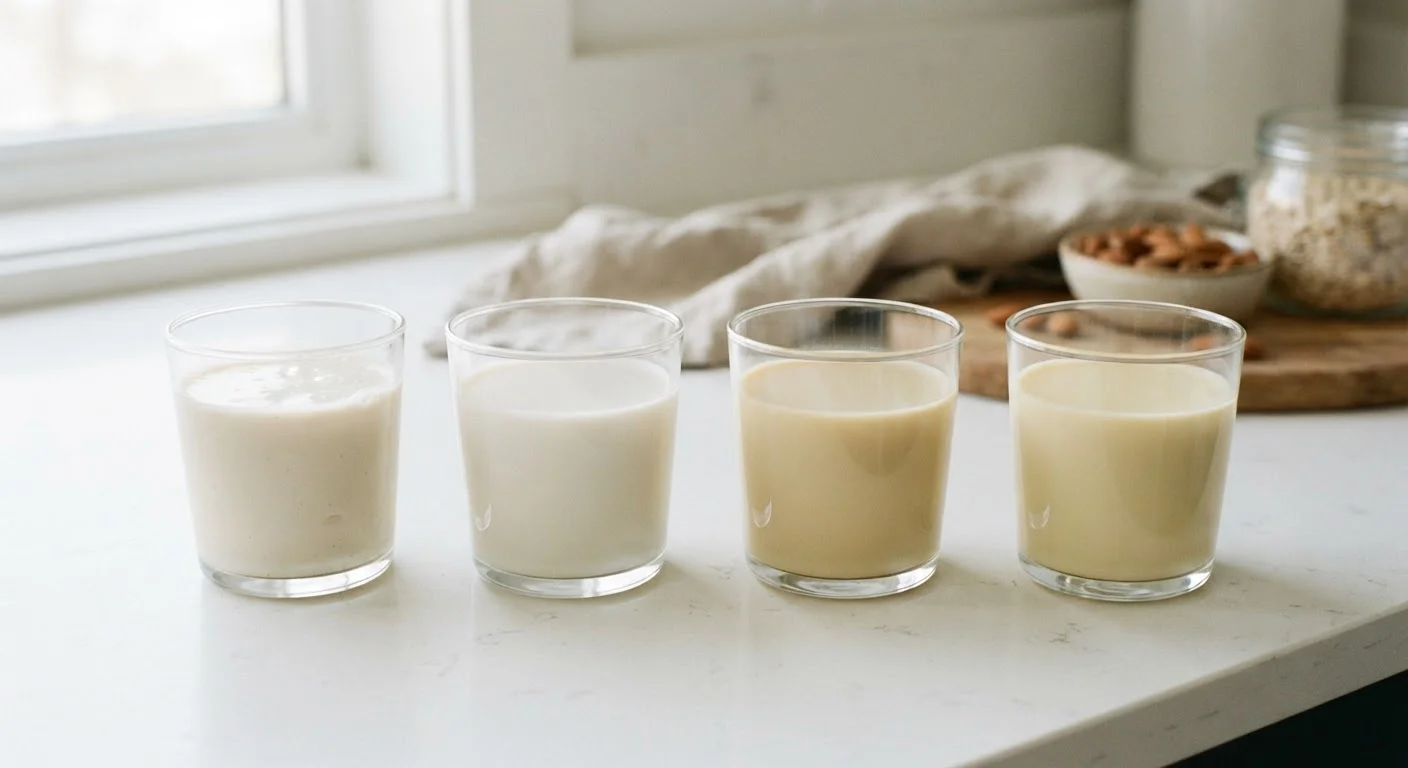
No single plant-based milk outperforms the others in every category. Soy delivers the most protein and has the longest track record of nutritional study; oat suits texture-focused applications like lattes; almond keeps calories low; and pea offers a protein-dense, nut-free alternative. The right choice depends on your nutritional priorities, taste preferences, and how you plan to use it.
| Best for | Recommended |
|---|---|
| High protein needs or replacing dairy milk nutritionally | Soy milk |
| Coffee drinks, lattes, and creamy baked goods | Oat milk |
| Low-calorie, light-flavored everyday use | Almond milk |
| Nut-free households seeking high protein | Pea milk |
Why Plant-Based Milks Aren't Interchangeable
Plant-based milks have moved far beyond a niche health-food shelf section. Oat, almond, soy, and pea varieties now fill entire refrigerated cases, and while they're all dairy alternatives, they differ significantly in protein, fat, carbohydrate content, and culinary behavior. Treating them as equivalent can lead to nutritional gaps or disappointing results in the kitchen.
One important nuance: most of these milks are fortified with calcium, vitamin D, and sometimes B12-nutrients found naturally in dairy. Fortification levels vary by brand, so reading the nutrition label carefully is the most reliable way to compare what you're actually getting per cup.
| Oat Milk | Almond Milk | Soy Milk | Pea Milk | |
|---|---|---|---|---|
| Protein (per cup) | 2-4g | ~1g | 7-9g | ~8g |
| Calories (unsweetened) | 90-130 | 30-40 | 80-100 | 70-130 |
| Texture | Creamy, full-bodied | Thin, watery | Medium, dairy-like | Creamy, neutral |
| Flavor | Mildly sweet, oaty | Light, slightly nutty | Mild, slightly beany | Neutral, clean |
| Major allergen | No (check gluten) | Yes (tree nut) | Yes (soy) | No |
| Best culinary use | Coffee, baking | Smoothies, cereal | Cooking, sauces | Everyday drinking |
| Complete protein | No | No | Yes | Yes |
| Typical availability | Widely available | Widely available | Widely available | Growing, less common |
Protein: The Biggest Differentiator
If protein is your priority, soy milk has a clear edge. Made from whole soybeans or soy protein isolate, it typically delivers 7-9 grams of protein per cup and contains all essential amino acids-making it a complete protein source, similar in profile to dairy. This is worth noting for anyone relying on plant-based milks as a meaningful protein contributor to their diet. For broader context on plant protein completeness, see our look at plant-based protein sources and how to combine them.
Pea milk, derived from yellow split peas, is a relative newcomer but competes closely with soy-often providing 8 grams of protein per cup, also with a complete amino acid profile. Oat milk averages 2-4 grams, and almond milk typically offers just 1 gram per cup in most commercial versions. If protein matters to you, the gap between soy or pea and the other two is substantial.
Check Fortification, Not Just Protein
When comparing plant-based milks, look beyond the protein line on the label. Calcium, vitamin D, and vitamin B12 are frequently added but at varying amounts-some products provide 45% of the daily value for calcium, while others offer closer to 10%. Choosing an unfortified version means you may need to compensate through other dietary sources.
Texture, Flavor, and Culinary Performance
Oat milk's popularity in coffee shops isn't accidental. Its higher carbohydrate content-around 15-20 grams per cup, compared to almond's 1-2 grams-gives it a natural body that froths reasonably well and doesn't separate sharply when heated. It also has a mild, slightly sweet flavor that blends without competing with coffee or baked goods.
Almond milk is thinner and waterier by nature, which can make it feel diluted in hot drinks unless a barista-style version (with added stabilizers for emulsification) is used. Its subtly nutty flavor works well in smoothies or cold applications. Soy milk behaves more like low-fat dairy in cooking-it holds up reasonably in soups and sauces-but can occasionally curdle in highly acidic environments. Pea milk has a neutral, clean flavor and a creaminess closer to 2% dairy milk, though its availability in stores remains more limited than the others.
Nutritional Considerations Beyond Protein
Calories range widely: unsweetened almond milk can be as low as 30-40 calories per cup, while oat milk typically runs 90-130 calories. Soy and pea milks fall in the 80-130 range depending on formulation. Fat content is also variable-almond milk is low in saturated fat, oat milk contains mostly unsaturated fat, and pea milk often contains sunflower oil for texture.
Added sugar is a frequent concern. Flavored and sweetened versions of all four can contain 12-15 grams of added sugar per cup-comparable to some sweetened beverages. Unsweetened versions are available across all categories and are worth seeking out if sugar intake is something you're monitoring. Understanding ingredient lists is part of distinguishing well-formulated options from more heavily processed ones; our overview of whole foods vs. ultra-processed foods covers what to look for.
Allergens, Environment, and Other Practical Factors
Soy and almond are both among the major food allergens recognized by the FDA, which can be a dealbreaker for some households. Pea milk and oat milk are generally considered suitable for those avoiding nuts and soy, though oat milk may be cross-contaminated with gluten in non-certified facilities-relevant for those with celiac disease.
From an environmental standpoint, general lifecycle assessments have found that almond cultivation requires significant water (particularly in drought-prone growing regions), while oat milk tends to have a lower land, water, and emissions footprint per liter than dairy. Soy's footprint is complicated by land-use concerns in some growing regions, though a large portion of global soy is used in animal feed rather than human food products. These are general patterns-individual product footprints depend on sourcing and production methods, and research in this area continues to evolve.
Ultimately, the most nutritionally sound choice is one you'll actually consume consistently and that fits your broader eating pattern. No plant milk is a perfect dairy replacement in every dimension, but each addresses a different set of priorities well.
The content on this site is provided for informational purposes only and should not be considered a substitute for professional advice. While we strive to provide accurate and up-to-date information, we make no guarantees regarding its completeness or accuracy. Always consult a qualified professional for advice specific to your circumstances before making any decisions.