

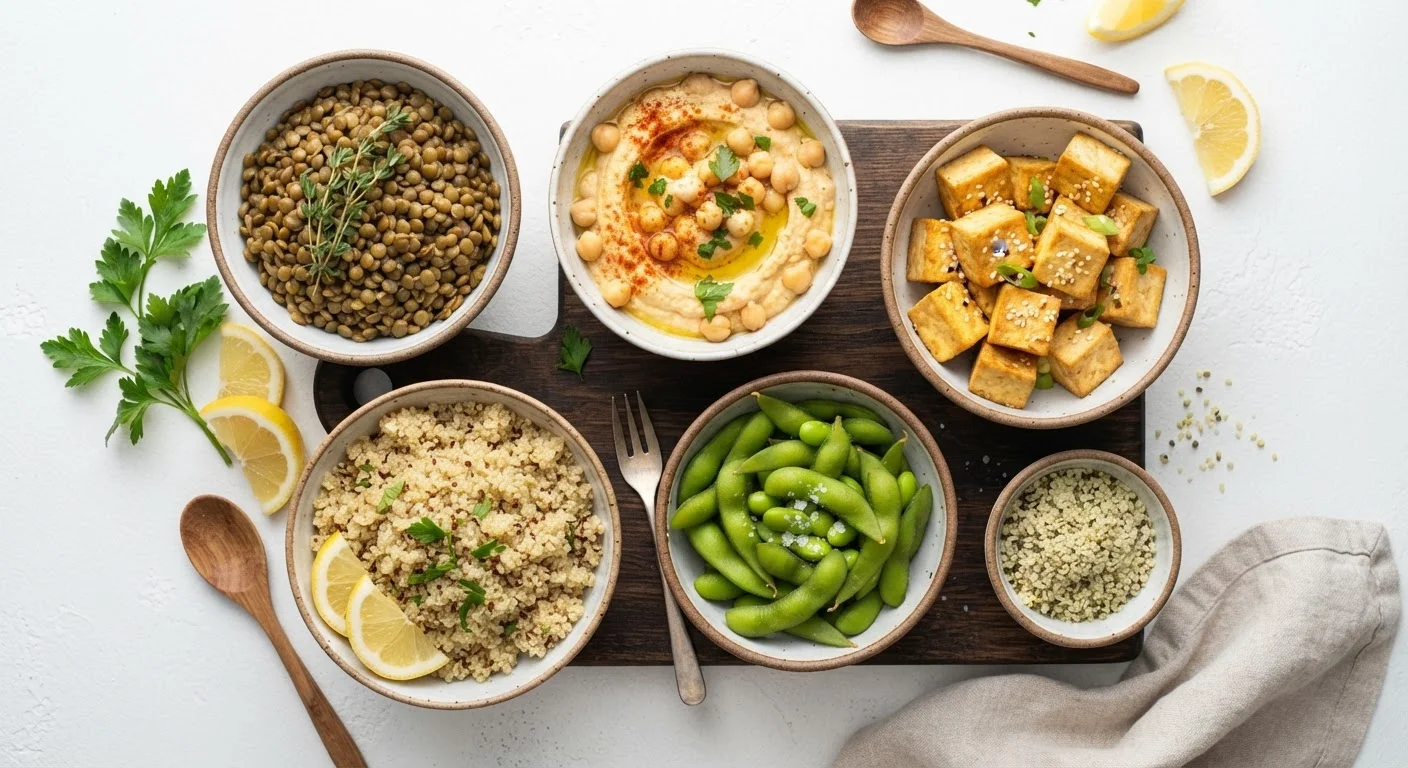
Our Verdict
Plant-based proteins offer genuine nutritional value alongside meaningful environmental and dietary benefits, but they require more intentional planning than animal-based proteins to ensure all essential amino acids and key micronutrients are consistently covered. With a varied diet and informed food pairing, most healthy adults can meet their protein needs from plant sources alone.
Ideal for health-conscious consumers looking to reduce or replace animal protein while maintaining nutritional balance through strategic meal planning.
What Makes a Protein 'Complete' or 'Incomplete'?
Proteins are made up of amino acids, nine of which are classified as essential - the body cannot synthesize them and must obtain them from food. Animal proteins (meat, eggs, dairy) typically contain all nine in adequate proportions, earning the label complete proteins.
Most plant proteins are considered incomplete because they are low in at least one essential amino acid. Legumes, for instance, tend to be low in methionine, while grains are often low in lysine. This doesn't make them nutritionally inferior - it simply means variety and pairing matter more. Soy (edamame, tofu, tempeh) and quinoa are notable exceptions, providing all nine essential amino acids in meaningful amounts.
For a broader look at how protein fits within overall nutrition, see building a balanced plate for foundational guidance.
Strengths of Plant-Based Proteins
Plant proteins bring a range of nutritional advantages beyond amino acids alone.
Rich in fiber alongside protein
Legumes and whole grains deliver dietary fiber, which supports digestive health and satiety - something animal proteins don't provide.
Associated with lower saturated fat intake
Most whole-food plant proteins contain little to no saturated fat, which dietary guidelines consistently link to cardiovascular health when consumed as part of a balanced diet.
Provide beneficial phytonutrients
Plant protein foods like lentils, beans, and soy contain polyphenols and other plant compounds that may support long-term health outcomes, though research is ongoing.
Soy and quinoa offer complete amino profiles
For those seeking a reliable single-source complete protein, foods like edamame, tofu, tempeh, and quinoa contain all nine essential amino acids without requiring pairing.
Supports dietary variety and pattern diversity
Rotating through a range of legumes, seeds, nuts, and grains naturally broadens micronutrient intake compared to relying on a narrow set of protein foods.
Whole-food plant protein sources - lentils, black beans, edamame, tempeh, chickpeas - also supply fiber, antioxidants, and phytonutrients that are absent from most animal proteins. This nutritional density is a meaningful upside for general health.
Gaps to Watch on a Plant-Heavy Diet
Choosing plant proteins over animal ones can leave certain nutrients underrepresented if diet planning is passive rather than intentional.
Vitamin B12 is essentially absent from plants
B12 is found almost exclusively in animal-derived foods. Those eating a fully plant-based diet are generally advised by healthcare professionals to consider supplementation or fortified foods.
Non-heme iron is less readily absorbed
Plants contain non-heme iron, which the body absorbs less efficiently than heme iron from meat. Pairing iron-rich plant foods with vitamin C sources can improve absorption.
Long-chain omega-3s are limited
ALA (found in flaxseed, chia, walnuts) is the main plant omega-3, but conversion to the more bioactive EPA and DHA forms is inefficient. Algae-derived supplements provide a direct plant source of DHA.
Zinc bioavailability is reduced by phytates
Phytic acid in legumes and grains can bind zinc, reducing how much the body absorbs. Soaking, sprouting, or fermenting these foods can help reduce phytate content.
Requires more deliberate meal planning
Meeting protein and micronutrient targets on a plant-based diet demands more active food knowledge and planning compared to diets that include a wider range of animal foods.
Several of these gaps - particularly vitamin B12 - cannot be reliably addressed through diet alone for those eating exclusively plant-based foods. A registered dietitian can help assess individual needs. For more detail on commonly missed nutrients, see nutritional gaps that commonly go unnoticed in everyday diets.
A Note on Vitamin B12 and Plant Diets
Vitamin B12 deficiency can develop gradually and cause neurological symptoms if left unaddressed. Unlike most micronutrient gaps, it cannot reliably be filled through plant foods alone - even so-called natural sources like algae or fermented foods are not considered dependable by current nutrition consensus. If you follow a predominantly or fully plant-based diet, speak with a healthcare provider about whether supplementation is appropriate for you.
This article provides general nutrition education and is not a substitute for personalized medical or dietary advice. Consult a qualified healthcare professional before making significant changes to your diet, especially if you have a chronic health condition.
How to Combine Plant Proteins Effectively
The good news: you don't need to engineer every meal like a chemistry equation. Research suggests that consuming a variety of plant proteins throughout the day - not necessarily at every single meal - is sufficient to cover the full range of essential amino acids for most healthy adults.
Practical pairing examples include:
- Rice and beans - lysine from beans offsets rice's shortfall; methionine from rice complements beans
- Hummus and whole-grain pita - chickpeas and wheat amino acids are mutually complementary
- Peanut butter on whole-grain bread - a familiar combination with solid amino acid coverage
- Lentil soup with a grain-based side - a staple globally for good nutritional reason
Incorporating a diversity of these combinations into your weekly routine is straightforward with a little planning. The weekly meal planning framework offers practical ways to organize meals around nutritional balance without rigid rules.
~14g
Protein per half-cup of cooked lentils
According to USDA FoodData Central, cooked lentils are among the most protein-dense legumes per serving.
~18g
Protein per half-cup of firm tofu
USDA data places firm tofu as a high-protein, complete-amino-acid plant option comparable to many animal sources per serving.
1.7×
Heme vs. non-heme iron absorption difference
Research consistently shows heme iron is absorbed at roughly 15-35%, while non-heme iron absorption ranges from 2-20% depending on dietary context.
The content on this site is provided for informational purposes only and should not be considered a substitute for professional advice. While we strive to provide accurate and up-to-date information, we make no guarantees regarding its completeness or accuracy. Always consult a qualified professional for advice specific to your circumstances before making any decisions.