

Why Pantry Strategy Matters
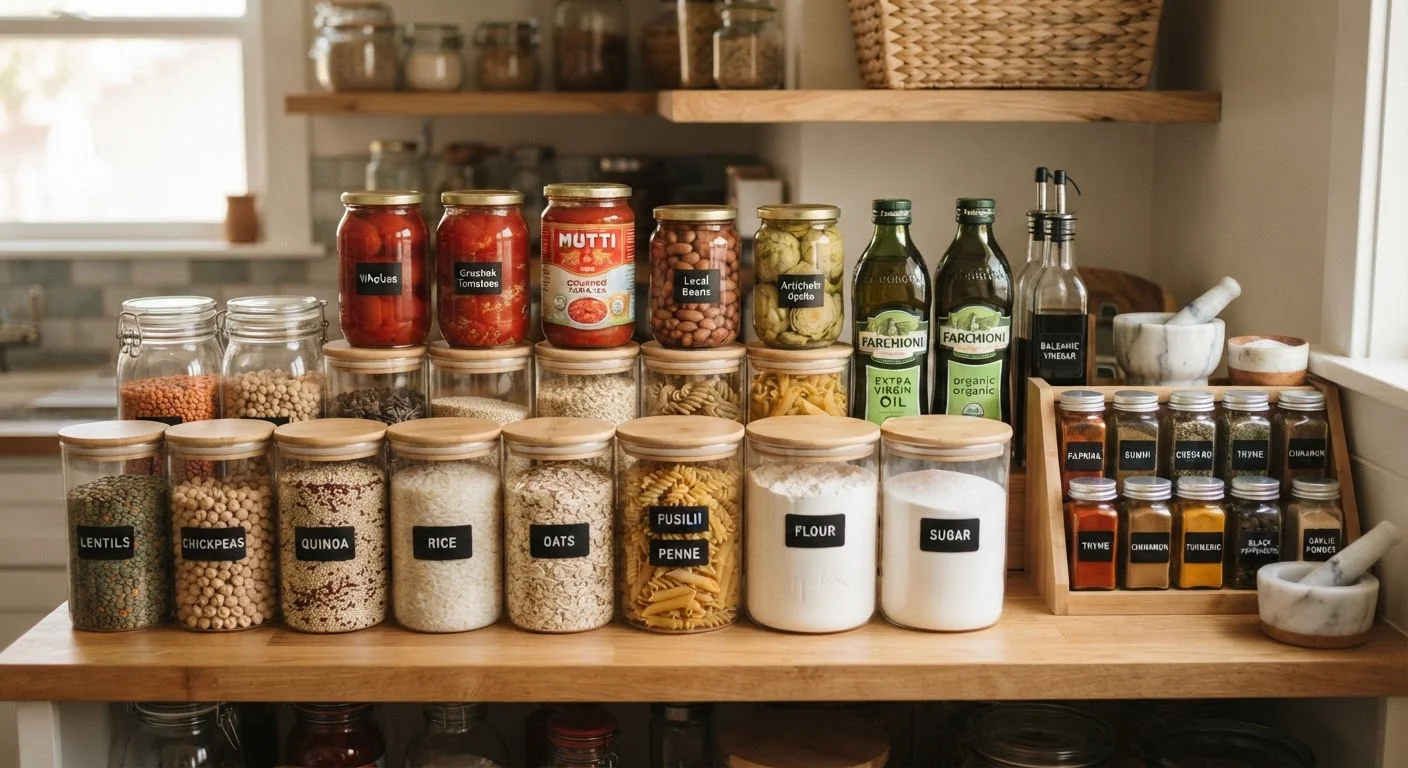
A well-stocked pantry is less about accumulating ingredients and more about reducing friction. When the right staples are already on your shelf, weeknight meals stop feeling like logistical problems. You spend less time at the store, waste less food, and gain the flexibility to cook from what you have rather than racing to a recipe's exact shopping list.
The challenge is knowing which items actually pull their weight. Pantry clutter is real - specialty pastes bought for one recipe, duplicate spices, expired cans pushed to the back. The goal is a curated selection of shelf-stable ingredients that genuinely work across multiple dishes and cooking styles. For a fuller look at building this kind of pantry from the ground up, see the complete guide to stocking and organising a functional pantry.
Below are the staple categories - and specific picks within them - that consistently earn their shelf space for everyday home cooks.
Extra-Virgin Olive Oil
A quality extra-virgin olive oil is the workhorse fat of most Western and Mediterranean kitchens. It's used raw for dressings and finishing, and at moderate heat for sautéing aromatics. Its flavor - fruity, slightly bitter, grassy depending on origin - adds depth that neutral oils can't replicate. Store it away from light and heat, and plan to use a bottle within a few months of opening to preserve flavor.
Olive oil adds flavor neutral fats simply can't replicate, raw or cooked.
Canned or Dried Legumes
Chickpeas, cannellini beans, black beans, and lentils are among the most versatile proteins in a pantry. Canned versions are ready in minutes; dried versions are more economical and offer better texture when you have time to plan ahead. They work in soups, stews, salads, grain bowls, and even blended into dips. Legumes also pair well with aromatics and acids, making them adaptable to virtually any cuisine's flavor profile.
Legumes are ready-in-minutes protein that adapts to almost any cuisine.
Whole or Crushed Canned Tomatoes
Canned tomatoes are often better than out-of-season fresh ones, and they form the base of an enormous range of dishes - pasta sauces, braises, curries, shakshuka, soups. Whole canned tomatoes give you control over texture; crushed or diced versions speed things up. Look for varieties packed in tomato juice rather than heavy purée for more versatility. A can or two on hand means a satisfying dinner is rarely more than 30 minutes away.
Canned tomatoes often outperform out-of-season fresh ones in cooked dishes.
Pasta and Whole Grains
Dried pasta, rice, farro, and quinoa provide the structural base for countless meals and store for months without quality loss. Varying the grains in your pantry keeps meals from feeling repetitive and gives you different textures and nutritional profiles to work with. Farro and brown rice work well in grain bowls and soups; pasta is indispensable for quick weeknight cooking. Knowing standard volume and weight conversions helps when scaling grain recipes up or down.
A variety of grains and pasta prevents meal repetition and stores exceptionally well.
A Core Spice Set
You don't need 40 spices - you need the right 10 to 12. Cumin, smoked paprika, turmeric, coriander, red pepper flakes, oregano, cinnamon, and black pepper cover most flavor directions. Whole spices (like cumin or coriander seeds) last longer than pre-ground and deliver more aroma when toasted fresh. Spices lose potency over time - if something smells faint when you open the jar, it's time to replace it, not just use more of it.
Ten to twelve well-chosen spices cover nearly every cuisine direction you'll want.
Umami Builders: Soy Sauce, Fish Sauce, and Miso
These condiments are force multipliers. A small amount of soy sauce deepens a braise; fish sauce adds savory complexity to soups and dressings without tasting overtly fishy; miso stirred into a pan sauce or soup adds richness and body. None of these flavors dominate when used with a light hand - they simply make everything taste more complete. All three store well and last far longer than most refrigerated condiments.
Used sparingly, umami condiments make everything else taste more complete.
Acid: Vinegar and Canned or Jarred Citrus Products
Acid is what makes food taste bright rather than flat, and a pantry without it shows up in every dish. Red wine vinegar, apple cider vinegar, and sherry vinegar each have distinct characters suited to different uses. Shelf-stable lemon juice and preserved lemons extend your acid toolkit without the waste of fresh citrus going unused. A splash of vinegar at the end of cooking is one of the simplest ways to lift an otherwise finished dish.
Acid is the finishing element that separates bright, vibrant dishes from flat ones.
Canned Fish
Tuna, sardines, anchovies, and salmon are among the most underused pantry proteins in American kitchens. Tuna works in salads, pasta, and grain bowls; sardines on toast or in tomato-based pastas are quick and satisfying; anchovies dissolve into sauces and dressings to add depth without being identifiable as fish. These are shelf-stable, require no prep beyond opening a tin, and provide a fast protein source on nights when cooking time is short. For more on reading quality and using canned goods effectively, getting more from canned and jarred foods is worth reading.
Canned fish is the fastest shelf-stable protein most home cooks consistently underuse.
Putting It All Together
A functional pantry isn't static. It evolves as your cooking habits do, and the most useful collections are revisited periodically to cull what isn't being used. The items above were chosen because they overlap - olive oil finishes a can of white beans, canned tomatoes anchor a lentil stew, soy sauce deepens a grain bowl. That interconnection is what makes a pantry genuinely useful rather than just full.
Audit Before You Restock
Before adding more to your pantry, pull everything out and check expiration dates, consolidate duplicates, and note what's actually being used. A cluttered pantry hides useful ingredients and leads to repeat purchases of things you already have. A quick audit every three to four months keeps the collection lean and functional.
If you're working with limited cabinet space, the same principles of selective stocking apply - just at a smaller scale. Smart storage principles for small kitchens can help you make every shelf count. And if you want to sharpen how you shop for and use canned goods specifically, getting more out of canned and jarred foods covers quality assessment and storage in practical detail.
The content on this site is provided for informational purposes only and should not be considered a substitute for professional advice. While we strive to provide accurate and up-to-date information, we make no guarantees regarding its completeness or accuracy. Always consult a qualified professional for advice specific to your circumstances before making any decisions.