

The Biology Behind Changing Skin
Skin is a living organ, and like all organs, it changes in composition and function as the body ages. Two parallel processes drive these changes. Intrinsic aging unfolds according to your genetic blueprint - collagen and elastin production slows, cell turnover decreases, and the skin's ability to retain moisture diminishes. Extrinsic aging is layered on top of this, shaped by decades of UV exposure, pollution, stress, sleep patterns, and diet.
The interaction between these two forces explains why two people of the same age can have noticeably different skin. Genetics sets a baseline, but lifestyle and environment significantly influence how that baseline shifts over time. Understanding this distinction is useful because it clarifies which factors are within your control - and why habits built early in life tend to have compounding effects.
For a grounding in the fundamentals before exploring how skin evolves decade by decade, see the core steps of a skincare routine and what each one accomplishes.
~1%
Annual collagen loss rate after the mid-20s
Dermatology research estimates collagen production declines by approximately 1% per year beginning in the mid-20s, contributing to visible changes in skin firmness over time.
Up to 90%
Visible aging attributed to UV exposure
Studies in dermatology, including research published in journals like Clinical, Cosmetic and Investigational Dermatology, attribute up to 90% of visible skin aging signs to cumulative sun exposure rather than intrinsic factors.
30%
Collagen decline in first five years post-menopause
Research indicates that skin collagen content can decrease by approximately 30% in the first five years following menopause, reflecting the significant role of estrogen in skin structure.
Your 20s: Building the Foundation
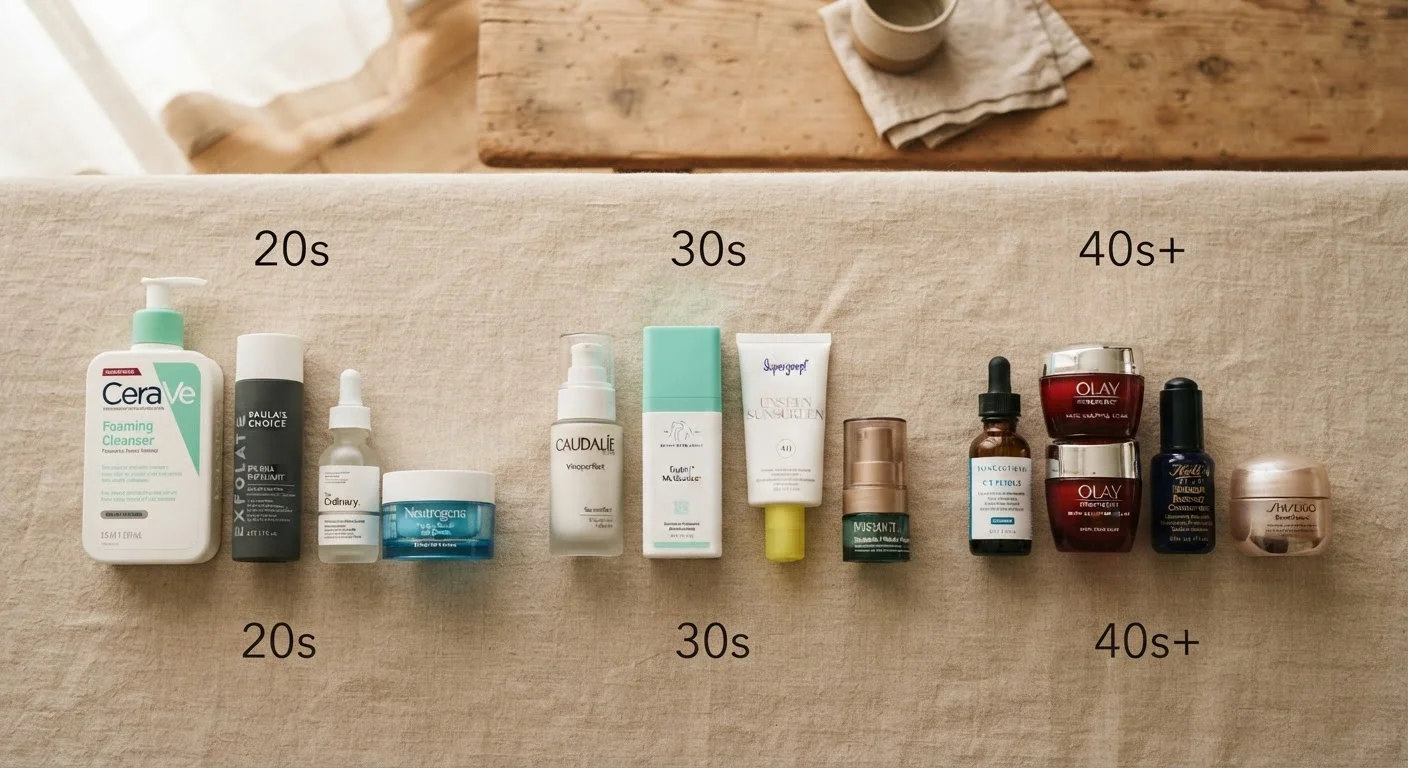
In your 20s, skin is typically at or near its peak in terms of collagen density, oil production regulation, and cellular turnover. Breakouts remain common due to hormonal activity, but recovery is generally faster. The most consequential skincare decision in this decade is establishing a sun protection habit - UV damage accrues silently and manifests visibly years later.
A straightforward routine centered on cleansing, moisturizing, and daily broad-spectrum SPF addresses most needs. For those managing acne-prone skin, understanding your skin type and what it means for product selection can prevent the common mistake of over-stripping already-reactive skin.
Antioxidant serums, particularly those containing vitamin C, can complement sun protection by neutralizing free radicals. This decade is less about correction and more about building habits that preserve what's already functioning well.
Your 30s: The First Shifts
By the mid-30s, many people begin noticing changes that weren't present before: slower recovery from dryness, fine lines forming around the eyes and forehead, and a subtle shift in skin tone evenness. Collagen synthesis starts declining - estimates from dermatology research suggest this begins in the mid-20s and continues gradually, with noticeable surface effects often appearing in the 30s.
This is often the decade when more targeted ingredients enter the picture. Retinoids - vitamin A derivatives that support cell turnover and are among the most studied ingredients in skincare - are frequently introduced here. Retinol and its alternatives like bakuchiol each have distinct mechanisms worth understanding before committing to either.
Product layering also becomes more nuanced in the 30s, as people often combine multiple targeted products. The sequence in which you apply them matters - see how skincare layering works for the underlying principles.
A person in their early 30s notices fine lines appearing around their eyes for the first time and finds that the moisturizer they used throughout their 20s no longer feels adequate.
Someone in their late 40s switches from a gel cleanser to a cream cleanser and notices their skin feels significantly less tight and reactive after washing.
A person in their 20s who grew up in a high-UV environment begins noticing uneven pigmentation developing in their early 30s despite otherwise youthful-looking skin.
Your 40s and Beyond: Adapting to Structural Changes
The 40s and 50s bring more pronounced shifts in skin structure. Estrogen decline around perimenopause and menopause significantly affects skin - reducing moisture retention, collagen density, and skin thickness. Sebaceous gland activity decreases, making dryness a more persistent concern. Loss of facial volume and changes in skin elasticity also become more apparent.
Routines typically become more hydration-focused, with richer moisturizers, humectants like hyaluronic acid, and occlusive ingredients that help seal moisture in. Retinoids remain relevant but may need to be used alongside more supportive, barrier-friendly ingredients. Sun protection continues to matter - UV exposure compounds existing structural changes, and photoaging does not plateau.
Morning and evening routines serve different purposes in mature skin, particularly because some active ingredients used at night - like retinoids - interact with sun exposure. Structuring a routine around this distinction becomes more important as the number of actives in use grows.
This article is for general informational purposes only and does not constitute medical or dermatological advice. Consult a qualified healthcare or skincare professional for guidance tailored to your individual needs.
Frequently Asked Questions
There is no single correct age, but building foundational habits - consistent sun protection, gentle cleansing, and moisturizing - in your 20s is widely supported by dermatologists. These steps address the environmental factors that accumulate over decades. More targeted ingredients like retinoids are often introduced in the late 20s or 30s, but individual needs vary.
Sebaceous (oil) glands become less active with age, and the skin's ability to retain moisture decreases as the natural moisturizing factor and lipid content of the skin barrier decline. Hormonal changes, particularly around menopause, can accelerate this process. These changes make consistent moisturization increasingly important over time.
Yes, skin type can shift over the decades. Oily skin in your 20s may become combination or normal in your 30s and drier in your 40s and beyond. Hormonal fluctuations, lifestyle changes, and environmental factors all play a role. It's worth reassessing your skin type periodically rather than assuming it stays fixed.
Research consistently identifies UV exposure as the leading driver of visible, premature skin aging - a process called photoaging. Daily broad-spectrum sunscreen use is one of the most evidence-backed interventions in preventive skincare. Its protective effects compound over time, making early and consistent use meaningful.
Retinoids, peptides, antioxidants like vitamin C, and humectants like hyaluronic acid are among the most studied ingredients for supporting aging skin. Each works differently - retinoids support cell turnover, peptides may signal collagen production, antioxidants combat oxidative stress, and humectants draw moisture into the skin. A dermatologist can help match ingredients to your specific concerns.
Generally, routines may become more targeted with age as specific concerns like loss of firmness, uneven tone, or dryness become more pronounced. However, a more complex routine is not automatically better - using too many active ingredients at once can cause irritation. Building up gradually and focusing on well-supported actives tends to be more effective than layering numerous products.
The content on this site is provided for informational purposes only and should not be considered a substitute for professional advice. While we strive to provide accurate and up-to-date information, we make no guarantees regarding its completeness or accuracy. Always consult a qualified professional for advice specific to your circumstances before making any decisions.