

Start here
Why a Consistent Routine Matters
Foundation
Step 1: Cleansing
Build on it
Step 3: Treatment (Serums and Actives)
Lock it in
Step 4: Moisturising
Don't skip
Step 5: Sun Protection
Why a Consistent Routine Matters
Skin is the body's largest organ and its primary barrier against the environment. A consistent skincare routine supports that barrier - helping skin manage moisture, recover from daily stressors, and function more effectively over time.
The goal isn't perfection or a lengthy product list. Research consistently points to regularity as more important than complexity. A short routine performed daily tends to produce better results than an elaborate one applied sporadically. Understanding what each step actually does is the first step toward building something sustainable.
Skin barrier
The outermost layer of skin that controls moisture loss and blocks environmental irritants. A healthy barrier is central to most skincare goals.
Humectant
An ingredient that attracts and holds moisture from the environment or deeper skin layers. Hyaluronic acid and glycerin are common examples.
Occlusive
An ingredient that forms a protective layer on the skin's surface to prevent moisture from evaporating. Heavier creams and balms often contain occlusives.
Active ingredient
A skincare ingredient with a specific, targeted function - such as exfoliating, brightening, or supporting cell turnover. Examples include retinoids, vitamin C, and AHAs.
pH balance
A measure of how acidic or alkaline the skin's surface is. Healthy skin is mildly acidic, and some cleansers or toners are formulated to help restore this balance after washing.
Broad-spectrum SPF
A sunscreen designation indicating protection against both UVA and UVB rays. 'Broad-spectrum' on a label means the product addresses both types of UV radiation.
Step 1: Cleansing
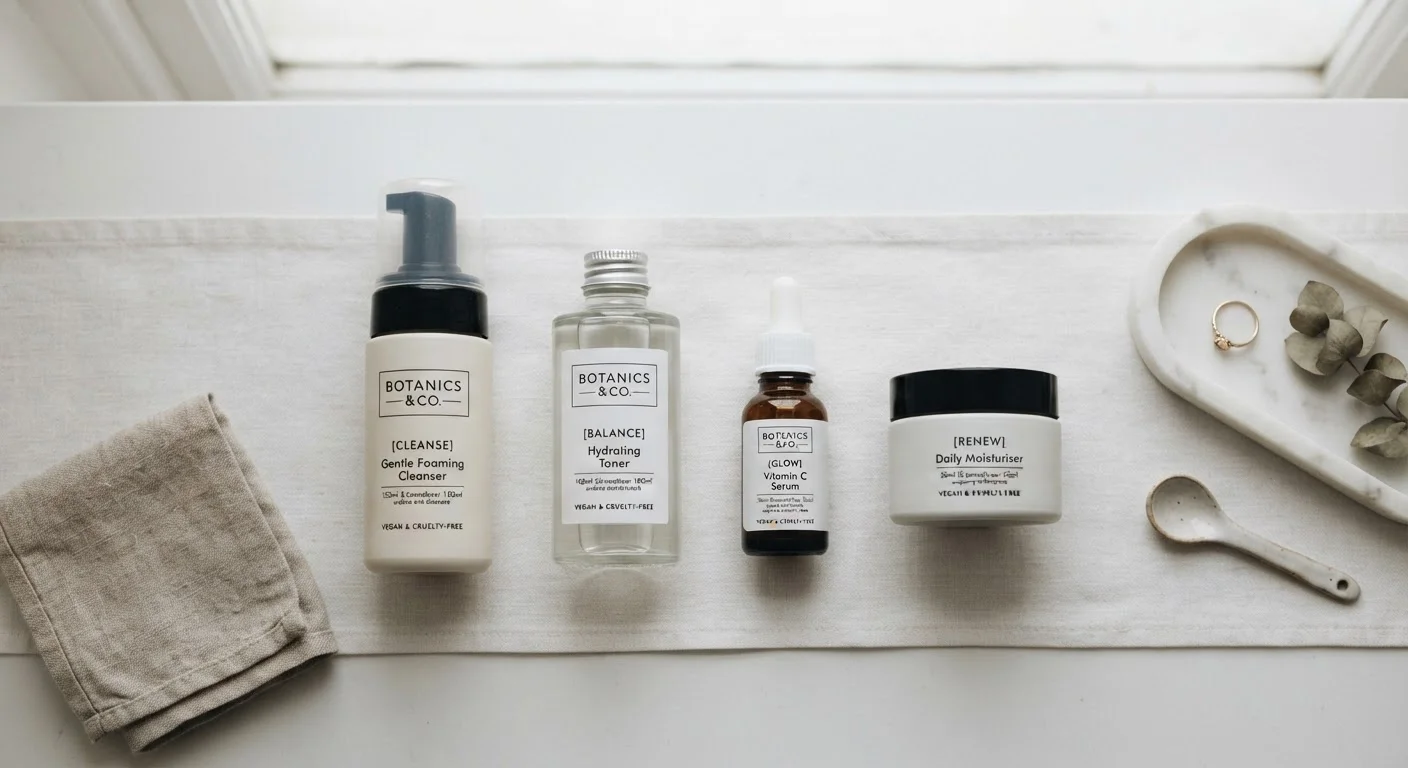
Cleansing removes surface debris - excess oil, environmental pollutants, sunscreen residue, and dead skin cells that accumulate through the day. Beyond basic hygiene, it prepares the skin to absorb whatever you apply next. Products applied to a dirty surface are less effective.
Cleansing is typically recommended twice daily - morning and evening - though those with dry or sensitive skin may prefer a gentler rinse in the morning rather than a full wash. Over-cleansing can strip the skin's natural oils and disrupt its moisture barrier, so finding an appropriate formula for your skin type matters.
If you have reactive or easily irritated skin, see our guidance on building a routine for sensitive skin before experimenting with new cleansers.
Step 2: Toning
Toners are liquid formulas applied after cleansing. Their function has shifted considerably over the decades - older formulations were often alcohol-based and designed to strip oil, while modern toners typically serve a more supportive role: restoring the skin's pH balance after cleansing, delivering a preliminary layer of hydration, or priming the skin for the steps that follow.
Some toners also contain mild exfoliating acids (such as glycolic or lactic acid) that help clear dead cells from the skin's surface. This step is genuinely optional. If your current routine is working well without it, there is no compelling reason to add one.
Introduce One Product at a Time
When building or changing a skincare routine, add one new product at a time and allow at least two weeks before introducing another. This makes it far easier to identify the source if your skin reacts badly. It also gives each product a fair chance to demonstrate its effect.
Step 3: Treatment (Serums and Actives)
Serums are concentrated formulas designed to deliver specific active ingredients deeper into the skin. Because they're typically water-based and lightweight, they're applied before heavier products - so the skin can absorb them without interference.
Common serum ingredients include vitamin C (an antioxidant frequently associated with brightening), hyaluronic acid (a humectant that draws moisture to the skin), niacinamide (associated with improving uneven tone and strengthening the skin barrier), and retinoids (derivatives of vitamin A studied for their effects on cell turnover). Each ingredient has a specific purpose, and not every skin type needs every one.
Layering multiple actives requires care - some combinations can cause irritation. For sequencing guidance, see our article on layering skincare products in the right order.
Step 4: Moisturising
Moisturisers serve two primary functions: delivering water to the skin (hydration) and sealing it in (occlusion). Even oily skin benefits from moisturiser - when the skin's surface is dry, it can signal the body to produce more oil as compensation.
Moisturisers come in three main formats: lotions (lightest, good for oily or combination skin), creams (mid-weight, suitable for most skin types), and ointments or balms (heaviest, often used for very dry or compromised skin). The right choice depends on your skin type, climate, and what you've already applied in previous steps. Skin behaves differently at different life stages too - our piece on how skin changes over time explores how moisturising needs evolve.
Step 5: Sun Protection
Sunscreen is applied last in the morning routine and is consistently cited by dermatologists as the single most impactful step for long-term skin health. UV radiation is a leading contributor to premature skin ageing, uneven pigmentation, and skin barrier damage - and it reaches the skin even on overcast days and through windows.
Broad-spectrum sunscreens protect against both UVA rays (associated with deeper skin damage and ageing) and UVB rays (associated with burning). SPF 30 blocks approximately 97% of UVB rays; higher SPF values offer marginally greater but not total protection. Reapplication every two hours during sun exposure is generally recommended.
Sunscreen is not interchangeable with moisturiser. While some moisturisers include an SPF rating, standalone sunscreen typically offers more reliable coverage.
This article is for general informational purposes only and does not constitute medical or dermatological advice. If you have a skin condition or specific concerns, consult a qualified healthcare or skincare professional.
Frequently Asked Questions
Not necessarily. Cleansing and moisturising are widely recommended as the everyday minimum. Toning, serums, and actives can be added as your routine matures. Sunscreen should be applied every morning regardless of how minimal your routine is.
Some products - like a gentle cleanser or a plain moisturiser - work fine in both routines. Others, such as certain active ingredients, are better suited to either morning or evening use. For a detailed breakdown, see our guide on <a href="/beauty-fitness/skincare-basics/morning-vs-evening-skincare-routines-whats-actually-different">AM and PM routine differences</a>.
The general principle is to apply thinnest to thickest - water-based serums before heavier moisturisers, for example. Sunscreen goes on last in the morning. Our <a href="/beauty-fitness/skincare-basics/layering-skincare-products-in-the-right-order">layering guide</a> covers the sequencing logic in detail.
Toner is optional rather than essential. Modern formulas have evolved beyond the alcohol-heavy astringents of earlier decades - today's toners can deliver hydration, mild exfoliation, or pH balancing. Whether you need one depends on your skin concerns and the rest of your routine.
Skin cell turnover takes roughly 28 to 40 days, so meaningful changes to texture or tone often take at least four to six weeks to become visible. Introducing one product at a time also helps you identify what's working - and what isn't.
Stop using the product and allow your skin to settle before reintroducing anything new. Patch testing before full application is a useful precaution. Our article on <a href="/beauty-fitness/skincare-basics/what-to-check-before-starting-any-new-skincare-product">what to check before starting a new skincare product</a> provides a practical checklist.
The content on this site is provided for informational purposes only and should not be considered a substitute for professional advice. While we strive to provide accurate and up-to-date information, we make no guarantees regarding its completeness or accuracy. Always consult a qualified professional for advice specific to your circumstances before making any decisions.