

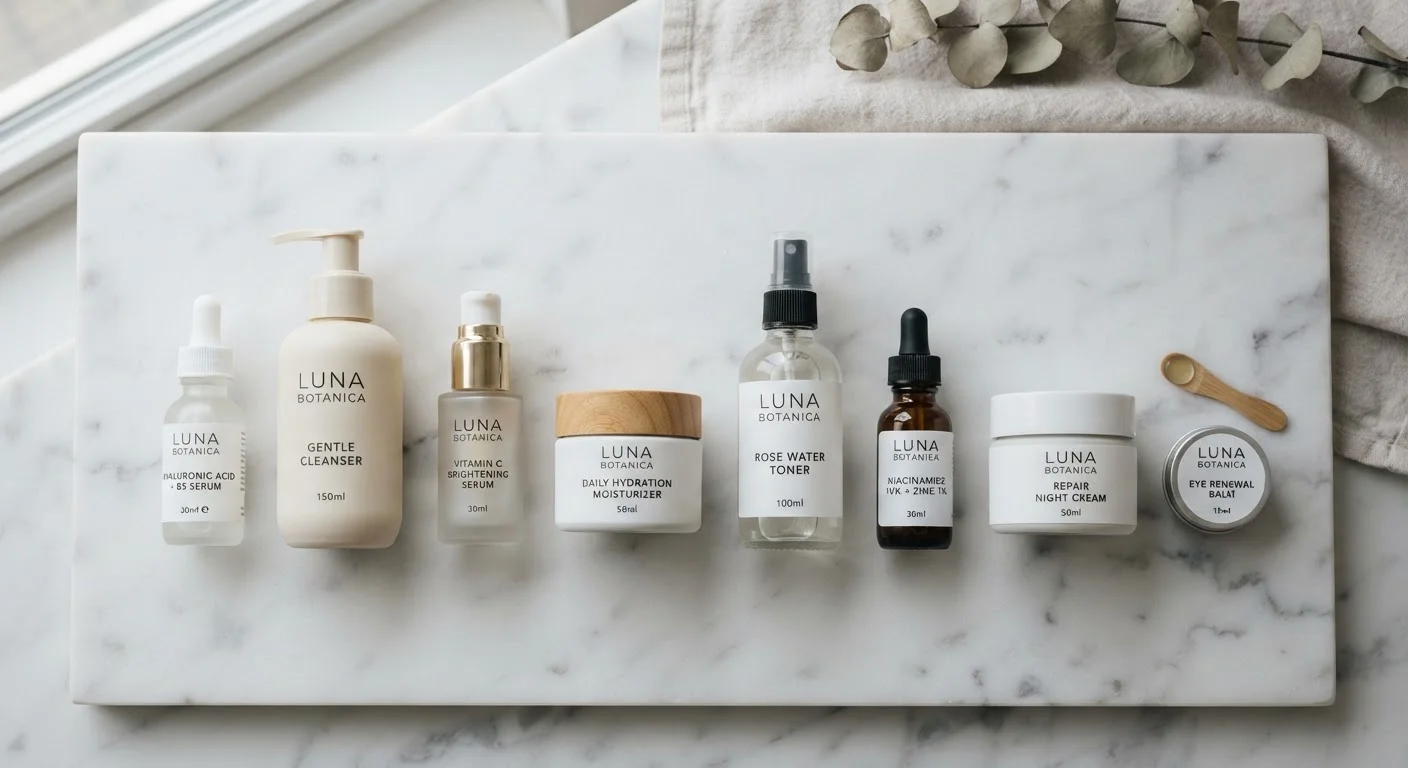
Why Order Actually Matters
Skincare layering isn't a marketing concept - it reflects how skin absorbs different formulations. The skin's outer barrier is selectively permeable, meaning smaller, lighter molecules penetrate more readily than heavier ones. When a thick occlusive cream is applied first, it can create a physical film that limits what gets through afterward. Getting the sequence right means active ingredients reach the layer of skin where they can be effective.
The foundational principle is straightforward: apply products from thinnest to thickest consistency, and from water-based to oil-based. This keeps the pathway to the skin clear for ingredients that need to penetrate, while heavier products seal everything in at the end.
For a broader look at what each routine step is doing and why, see our guide to core skincare steps.
What you will need
The Step-by-Step Layering Sequence
The steps below reflect a general framework that applies to both morning and evening routines, with a few key differences noted. Not every step is necessary for everyone - a minimal routine done in the right order is more effective than an elaborate one applied haphazardly.
Cleanse
Start with a clean base. Use a cleanser appropriate for your skin type to remove dirt, oil, and any previous product residue. Pat - don't rub - skin dry with a clean towel. All subsequent steps depend on the skin being clean and free of barriers that would block absorption.
Apply Toner or Essence (if using)
Toners and essences are water-based, often hydrating or lightly exfoliating, and go on immediately after cleansing. Apply with clean hands or a cotton pad and allow it to absorb before moving on. These products prime the skin for better uptake of what follows.
Apply Targeted Serums
Serums are typically lightweight, fast-absorbing, and contain concentrated active ingredients - vitamin C, niacinamide, hyaluronic acid, or exfoliating acids, for example. Apply the thinnest serum first. If using multiple serums, wait 30-60 seconds between each. Use only 2-3 drops; a thin, even layer is sufficient.
Apply Eye Cream (if using)
Eye creams are typically richer than serums but lighter than full moisturizers. Apply a small amount around the orbital bone - not directly on the lash line - using your ring finger, which applies the least pressure. The eye area has thinner, more delicate skin and benefits from gentler, targeted formulations.
Apply Moisturizer
Moisturizer sits above the serums, sealing in the ingredients beneath and supporting the skin barrier. Choose a formulation suited to your skin type - lighter gels for oily skin, richer creams for dry skin. Apply while skin is still slightly tacky from previous steps to lock in hydration effectively.
Apply Facial Oil (if using, evening only)
Facial oils are occlusive or semi-occlusive and go on after moisturizer, not before. Because oil repels water, applying an oil before a water-based moisturizer would block it from penetrating. In the morning, skip facial oil entirely if you plan to apply sunscreen - oils can interfere with SPF formulas.
Apply Sunscreen (morning only)
Sunscreen is the final step in every morning routine, applied after moisturizer has had 60 seconds to settle. Use a broad-spectrum SPF 30 or higher and apply it evenly across the face and neck. Do not layer anything over sunscreen - doing so disrupts the protective film and reduces efficacy.
Less Is Often More
A routine with three to five well-chosen, correctly sequenced products will generally outperform one with ten products applied in the wrong order. If you're new to layering, start with a cleanser, a single serum, a moisturizer, and sunscreen - then build from there once you understand how your skin responds.
Common Layering Mistakes to Avoid
Even with a good product selection, a few habitual errors can undermine results.
- Applying SPF under moisturizer: Sunscreen must go on last in a morning routine. Layering anything over it dilutes its protection.
- Rushing between steps: Skipping wait time between layers means products physically mix on the skin rather than each absorbing independently.
- Using too many actives at once: Stacking multiple exfoliating acids or potent actives in one session can compromise the skin barrier. Some ingredients work better on alternating evenings or in AM/PM splits.
- Ignoring pH considerations: Vitamin C (ascorbic acid) and AHA/BHA exfoliants are most effective at a lower pH. Applying an alkaline product immediately before them can reduce their efficacy.
To understand which ingredient pairings support or interfere with each other, the guide to skincare ingredient interactions is a useful reference. And if you're adding new products to your routine, check this practical checklist first before introducing anything new.
Overloading Can Backfire
Using too many products in one session increases the risk of irritation, product pilling, and barrier disruption. If your skin feels tight, stings, or becomes reactive, scale back to the basics and reintroduce products one at a time. Those with sensitive skin should take particular care - see our guide to building a routine for sensitive skin for more tailored guidance.
Morning vs. Evening: Key Differences
The sequence logic stays the same in both routines, but the product choices and priorities shift. Morning routines focus on protection - antioxidants and sunscreen take priority. Evening routines focus on repair and renewal - this is when retinoids, richer moisturizers, and restorative treatments are typically used, since UV exposure isn't a concern and skin cell turnover is elevated overnight.
Sunscreen is non-negotiable in the morning and unnecessary at night. Retinoids are generally reserved for evening use due to their photosensitivity. For a deeper comparison of what belongs in each routine, see morning vs. evening skincare routines explained.
If you're uncertain whether your moisturizer is positioned correctly in your routine - or whether it's the right formulation - this article on moisturizer effectiveness addresses common misconceptions.
This article is for general informational purposes only. If you have a diagnosed skin condition or are under dermatological care, consult your healthcare provider before making changes to your skincare routine.
The content on this site is provided for informational purposes only and should not be considered a substitute for professional advice. While we strive to provide accurate and up-to-date information, we make no guarantees regarding its completeness or accuracy. Always consult a qualified professional for advice specific to your circumstances before making any decisions.