

Why Quarantine Is Non-Negotiable
New fish - even those that look perfectly healthy at the store - can carry pathogens, parasites, or bacterial infections without showing obvious symptoms. Ich (Ichthyophthirius multifiliis), velvet, and internal worms are common examples of conditions that remain dormant or invisible during the stress of transport, only to emerge days later in your display tank. By then, every fish you own may already be exposed.
Quarantine breaks this chain. By isolating new arrivals before introducing them to your main aquarium, you protect established fish, preserve the biological balance you've worked to build, and give yourself a controlled environment to observe and - if needed - treat the newcomer. It's the same logic behind isolating any new animal before mixing them with others. See how a similar principle applies in introducing a new cat to a household with other pets.
Many beginners skip this step because it seems like extra effort or an unnecessary expense. The reality is that treating a full tank outbreak is far more costly, stressful, and potentially lethal to your fish than investing in a simple quarantine setup from the start. Skipping quarantine also pairs poorly with other gaps in foundational knowledge - common fish care myths can compound the risks significantly.
What you will need
Setting Up Your Quarantine Tank
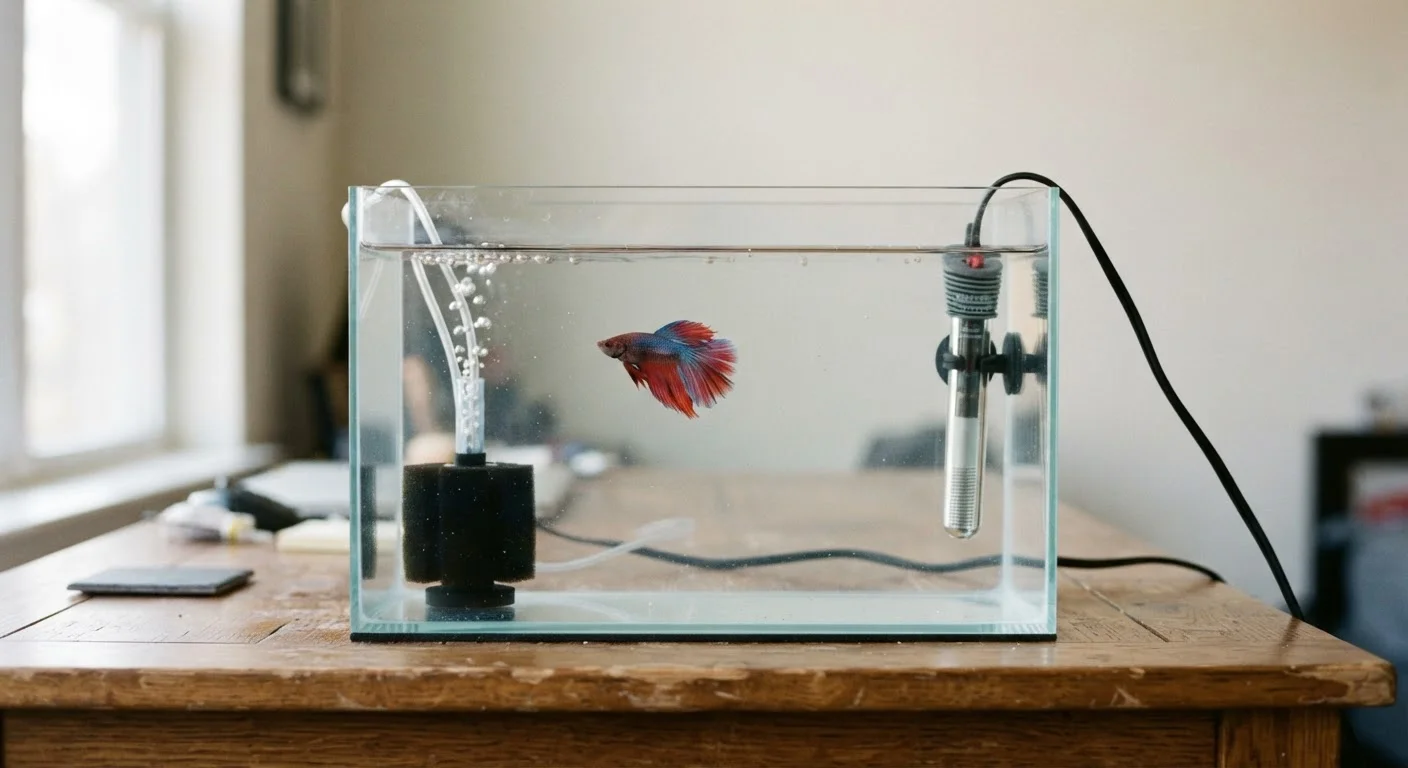
A quarantine tank doesn't need to be elaborate. A 10-20 gallon bare-bottom tank is appropriate for most freshwater species; marine fish may need slightly larger space depending on their size. Bare bottom (no substrate) is preferred because it makes waste visible, simplifies cleaning, and removes hiding spots for parasites.
10-20 Gallon Bare-Bottom Tank
Provides an isolated environment for observing and if necessary treating new fish before display tank introduction.
Adjustable Aquarium Heater
Maintains a stable, species-appropriate temperature throughout the quarantine period.
Sponge Filter
Provides gentle biological and mechanical filtration without creating strong currents that stress recovering fish.
Liquid Water Test Kit
Allows accurate daily monitoring of ammonia, nitrite, nitrate, and pH to catch water quality problems early.
Water Conditioner / Dechlorinator
Neutralizes chlorine and chloramines in tap water to make it safe for fish.
Drip Acclimation Line
Enables slow, controlled water mixing during acclimation to minimize osmotic stress on new fish.
Cycle or seed the quarantine filter before use. The fastest method is to move a piece of established filter media - a sponge insert or bio-media - from your main tank's filter into the quarantine filter. This transfers beneficial bacteria and jump-starts the nitrogen cycle, preventing a harmful ammonia spike. If this isn't possible, conduct daily small water changes (15-20%) throughout the quarantine period to manage ammonia manually. Understanding the nitrogen cycle in fish tanks will help you recognize when water quality is compromised.
Prepare the quarantine tank before fish arrive
Set up the tank at least 24-48 hours before you bring home new fish. Fill it with dechlorinated water, install the heater and filter, and match the temperature to your main tank (typically 75-80°F for tropical freshwater species). Add one or two pieces of inert shelter - PVC pipe sections or plain ceramic hides - so the fish feel secure without introducing décor that could harbor pathogens.
Acclimate new fish to the quarantine tank
Float the sealed bag or container from the store in the quarantine tank for 15-20 minutes to equalize temperature. Then use a drip acclimation line or the cup method - adding small amounts of quarantine tank water to the transport water every few minutes over 30-45 minutes - before gently transferring the fish. Avoid pouring store water into your quarantine tank, as it may carry pathogens.
Monitor water parameters daily
Test ammonia, nitrite, nitrate, and pH every day for the first week, then every two to three days thereafter. Ammonia and nitrite should read zero; any detectable levels require an immediate partial water change of 15-25%. Keep a simple log of readings so you can identify trends early.
Observe fish behavior and appearance daily
Spend two to three minutes each day watching the new fish at close range. Note posture, fin condition, respiration rate, and feeding response. Offer a small amount of food each day and observe whether the fish eats normally. Document anything unusual, even if it seems minor - patterns over several days are often more informative than single observations.
Introduce fish to the display tank only after a clean observation period
After two to four weeks with no signs of illness and stable water parameters, the fish is ready for the main tank. Repeat the slow acclimation process to adjust the fish to your display tank's specific water chemistry. Turn off the lights in the main tank during introduction to reduce territorial aggression from existing residents.
What to Watch for During Quarantine
The quarantine period - generally two to four weeks, though some veterinarians recommend up to six for marine species - is your observation window. Examine new fish daily at a consistent time, ideally when tank lights first come on and fish are transitioning from rest to activity.
Key warning signs to monitor include: clamped fins, labored breathing at the surface, unusual hiding behavior, white spots or dusty film on scales, loss of appetite, bloating, or erratic swimming. Any of these may warrant consultation with an aquatic veterinarian. Do not begin treatment based on guesswork - misidentified conditions are commonly treated with the wrong medication, which can stress or harm fish unnecessarily.
If no symptoms emerge and water parameters remain stable throughout the observation window, the fish can be introduced to your display tank using a slow acclimation process to match temperature and water chemistry.
This article provides general educational guidance on aquarium care and is not a substitute for advice from a qualified aquatic veterinarian.
The content on this site is provided for informational purposes only and should not be considered a substitute for professional advice. While we strive to provide accurate and up-to-date information, we make no guarantees regarding its completeness or accuracy. Always consult a qualified professional for advice specific to your circumstances before making any decisions.