

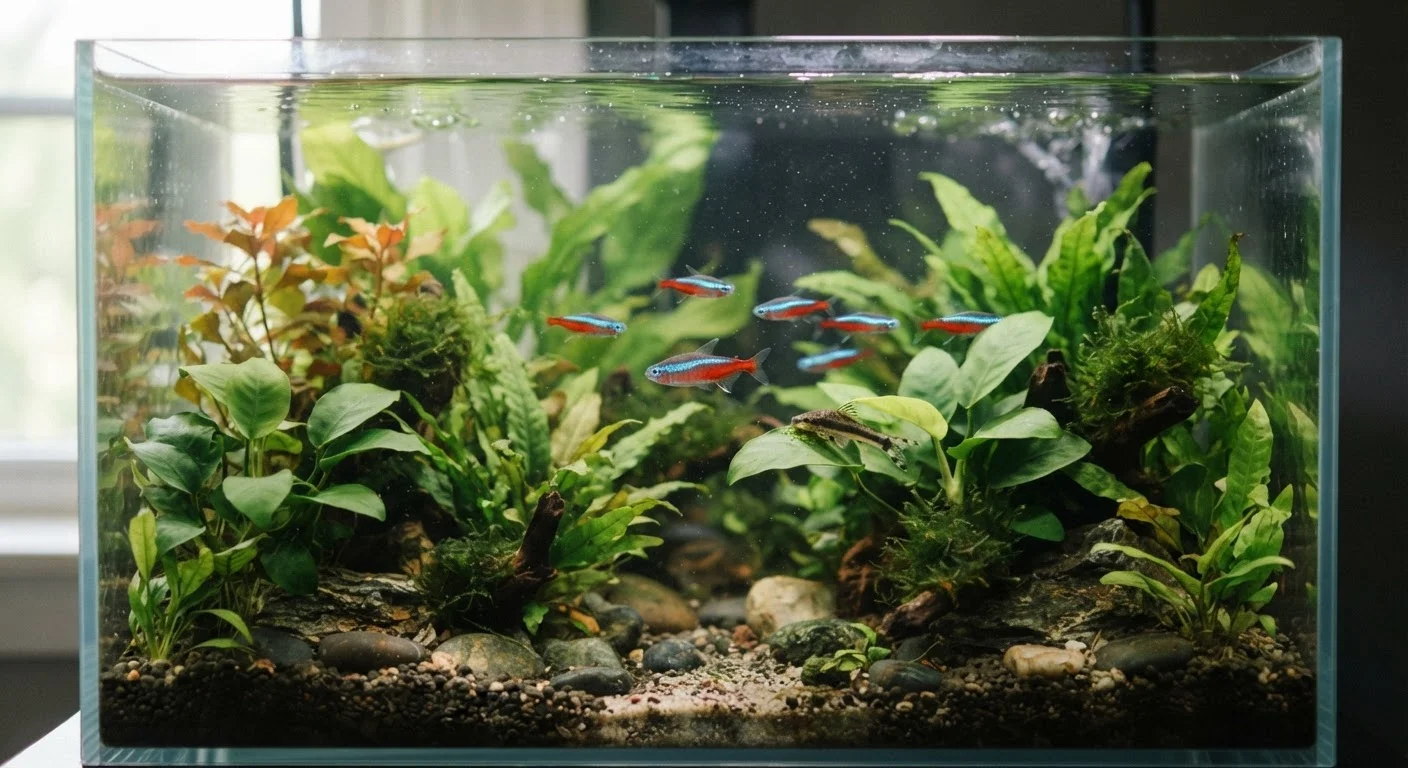
Why 'Clean-Looking' Water Deceives New Fishkeepers
One of the most common - and costly - misconceptions in fish keeping is equating water clarity with water safety. Ammonia, nitrite, and nitrate are all colorless and odorless. A tank can look pristine while harboring ammonia concentrations lethal to fish within hours. This misunderstanding drives what hobbyists call new tank syndrome: fish added to an aesthetically appealing but biologically immature tank die within days or weeks, often blamed on poor-quality fish rather than the actual cause.
Understanding why this happens requires understanding the nitrogen cycle - the invisible biological engine that makes any aquarium actually livable.
Many widely held beliefs about fish care are flat-out wrong, and the idea that a clear tank is a safe tank is among the most consequential of them.
How the Nitrogen Cycle Works, Step by Step
Every fish produces ammonia constantly - through gill excretion, urine, and decomposing waste. Ammonia (NH₃) is acutely toxic to fish at even low concentrations, interfering with oxygen uptake and damaging gill tissue.
The cycle begins when ammonia-oxidizing bacteria - primarily from the genus Nitrosomonas - colonize porous surfaces in the tank. These bacteria consume ammonia and convert it into nitrite (NO₂⁻). Nitrite is also highly toxic, disrupting red blood cells' ability to carry oxygen in a condition known as methemoglobinemia.
A second group of bacteria, including Nitrospira, then converts nitrite into nitrate (NO₃⁻). Nitrate accumulates gradually and, while much less acutely toxic, must be managed through regular partial water changes to prevent chronic harm. This final conversion marks a functionally cycled tank.
0.02 ppm
Ammonia level toxic to many freshwater fish
Even trace concentrations of unionized ammonia (NH₃) can cause gill damage and behavioral stress in sensitive species, according to established aquatic toxicology references.
3-6 weeks
Typical time to cycle a new aquarium
This range is widely cited in aquarium husbandry literature, though temperature, ammonia load, and bacterial seeding can shorten or extend the timeline.
40 ppm
General nitrate threshold for freshwater fish
Many fishkeeping authorities suggest keeping nitrate below 40 ppm for most freshwater species, with lower targets recommended for sensitive fish and invertebrates.
These bacteria do not float freely in the water - they attach to surfaces. This is why filter media, substrate, and porous decorations are critical real estate for biological filtration. Rinsing filter media under tap water, which contains chlorine or chloramine, can kill these colonies and crash an otherwise healthy cycle.
Cycling a New Tank: What the Process Actually Looks Like
A new tank has no established bacterial colonies, so cycling must be initiated deliberately. The most common approaches involve introducing an ammonia source - either pure ammonia solution, fish food allowed to decompose, or a small number of hardy fish - and then waiting for bacterial populations to develop and stabilize.
During cycling, a reliable test kit (liquid reagent kits are more accurate than paper strips) will show a predictable progression: ammonia rises first, then nitrite spikes as ammonia-oxidizing bacteria establish, and finally nitrate begins to appear as the second bacterial group takes hold. When both ammonia and nitrite readings reach zero and nitrate is detectable, the cycle is complete.
Speed Up Cycling With Bacterial Seeding
Adding a handful of gravel, a used sponge filter, or a piece of décor from a healthy, established tank can dramatically shorten the cycling period by introducing an existing bacterial population. Always ensure the source tank is disease-free before transferring any material. Some aquarium stores will also provide small amounts of established filter media on request.
This process typically takes three to six weeks. Temperature affects the pace - warmer water supports faster bacterial growth. Seeding a new tank with filter media, gravel, or décor from a mature, healthy aquarium can accelerate colonization significantly. For a thorough walkthrough of the full setup process, see our complete guide to setting up a freshwater aquarium.
Maintaining the Cycle in an Established Tank
Once a tank is cycled, the goal shifts to protecting the bacterial colony and managing nitrate accumulation. Partial water changes - typically 20-30% weekly, depending on stocking density - dilute nitrate without removing the bacteria attached to solid surfaces. Replacing filter media entirely, rather than rinsing it gently in dechlorinated or tank water, is one of the most frequent ways hobbyists accidentally damage their biological filtration.
Antibiotics used to treat fish disease can also suppress or kill nitrifying bacteria, so testing water parameters closely during and after any medication course is important. Overstocking produces more ammonia than an established bacterial colony can handle, overwhelming the system and causing a partial cycle crash even in a mature tank.
When adding new fish, quarantine is an often-overlooked step that also protects tank stability. Quarantining new fish before adding them to the main tank prevents disease introduction and avoids the sudden ammonia load that can destabilize a newly stocked system.
Aquatic plants add a useful supplementary layer - they absorb nitrate and trace amounts of ammonia - but they do not replace biological filtration. Think of them as a buffer, not a substitute.
This article is for general informational and educational purposes. For concerns about fish health, consult a veterinarian experienced in aquatic species.
Frequently Asked Questions
Most aquariums complete an initial nitrogen cycle within three to six weeks, though this varies with tank temperature, ammonia source, and whether beneficial bacteria are seeded from an established tank. Warmer water (between 75-80°F) generally speeds bacterial growth. Testing water parameters regularly is the only reliable way to confirm when cycling is complete.
Fish can survive short-term in an uncycled tank, but they are exposed to rising ammonia and nitrite levels that cause stress, gill damage, and immune suppression. This is commonly called 'new tank syndrome.' Frequent partial water changes can reduce harm during cycling, but a fully cycled tank is essential for long-term fish health.
A sudden ammonia spike in an established tank often signals a 'cycle crash' - a loss of beneficial bacteria caused by overuse of chlorinated water during water changes, antibiotic medications, or a large bacterial die-off. Overstocking or a dead fish decomposing unnoticed can also overwhelm the bacterial colony. Testing daily and performing partial water changes can help stabilize the tank while bacteria recover.
Nitrate is far less acutely toxic than ammonia or nitrite, but elevated levels over time (generally above 40 ppm for most freshwater species) cause chronic stress, reduced immune function, and reproductive problems. Sensitive species like discus or certain invertebrates may show harm at lower concentrations. Regular partial water changes are the standard method for keeping nitrate in a safe range.
Aquatic plants absorb nitrate and even small amounts of ammonia as nutrients, which can reduce the buildup of harmful compounds. However, plants do not replace the bacterial nitrogen cycle - they supplement it. A heavily planted tank still requires adequate filtration and beneficial bacteria to process waste at a rate fish can tolerate.
A tank is considered cycled when a test shows zero ammonia, zero nitrite, and a detectable level of nitrate after an ammonia source has been present for several weeks. Using a liquid test kit (rather than strip tests) provides more reliable readings. Only after confirming these parameters should you introduce a full fish population.
The content on this site is provided for informational purposes only and should not be considered a substitute for professional advice. While we strive to provide accurate and up-to-date information, we make no guarantees regarding its completeness or accuracy. Always consult a qualified professional for advice specific to your circumstances before making any decisions.