

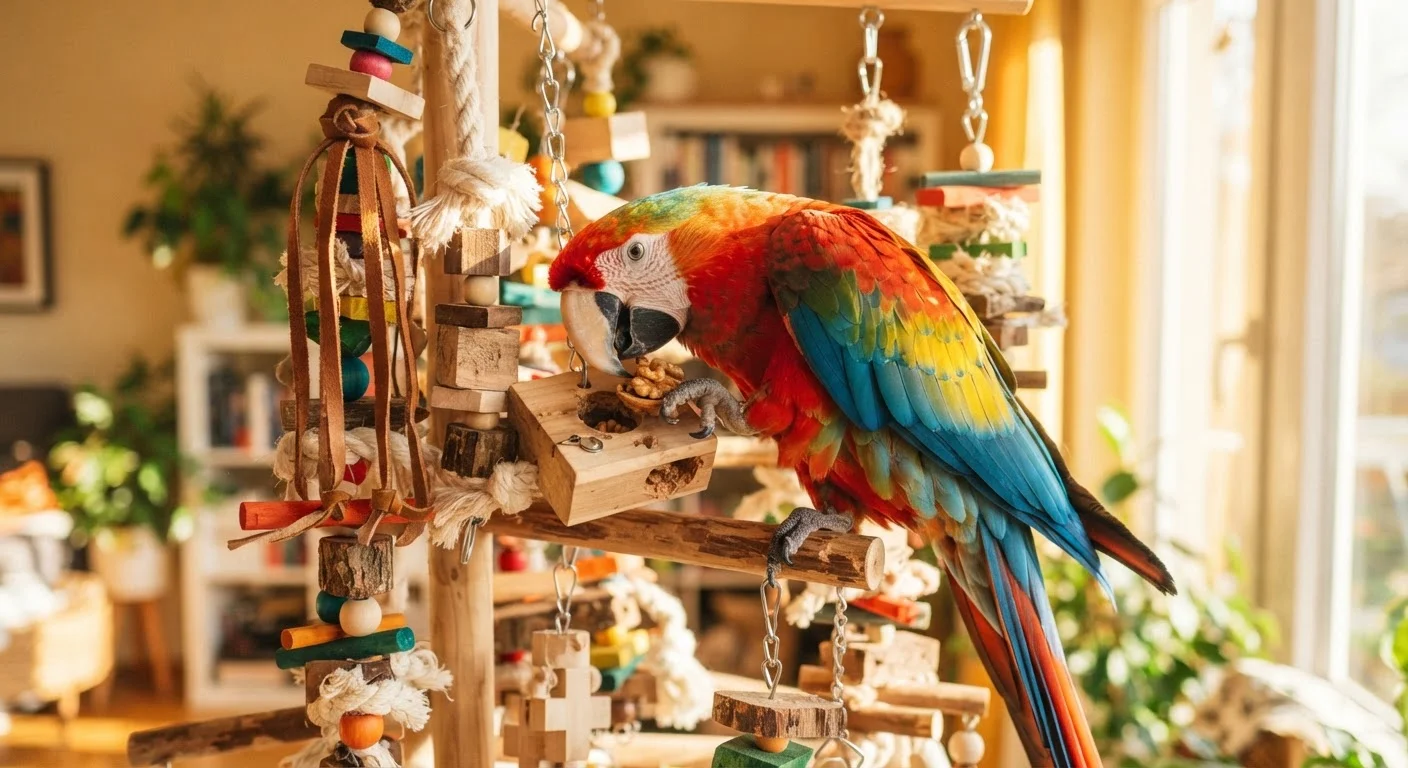
Why Mental Stimulation Matters for Pet Birds
In the wild, birds spend the majority of their waking hours foraging, navigating complex social structures, solving environmental puzzles, and responding to a constantly changing landscape. A caged bird, even one with excellent nutrition and veterinary care, can experience significant psychological stress when that cognitive demand disappears entirely.
Avian behaviorists and veterinarians widely recognize under-stimulation as a root cause of some of the most troubling behaviors seen in pet birds - feather-destructive behavior (often called feather plucking), excessive vocalization, repetitive movements, and even self-injury. These aren't personality flaws; they're signals that a bird's environment isn't meeting its behavioral needs.
Enrichment is the practical answer. It's the deliberate design of a bird's environment and daily routine to encourage natural behaviors, promote problem-solving, and reduce the cognitive monotony of cage life. If you're evaluating whether bird ownership is right for you, our overview of small pet care realities is a useful starting point. For birds already in your home, the strategies below offer concrete, species-appropriate ways to improve daily quality of life.
Introduce Foraging Opportunities Daily
Foraging - the act of searching for and working to obtain food - is one of the most natural and time-consuming behaviors birds engage in outside captivity. Replicating it in a cage setting is one of the highest-impact enrichment strategies available.
Practical foraging enrichment can be as simple as wrapping a piece of vegetable in paper for your bird to unwrap, hiding pellets inside a paper cup, or placing food in puzzle feeders that require manipulation to open. The goal is to make the bird work a little for its meal, not to restrict food access. Start with easy puzzles and increase complexity as your bird builds confidence.
Making birds work slightly for food replicates wild foraging and engages their problem-solving instincts powerfully.
Rotate Toys on a Scheduled Basis
Birds habituate quickly to static environments. A toy that captures a bird's attention on day one may be completely ignored by day five. Rotating toys - removing some items and reintroducing them weeks later alongside new ones - maintains novelty without requiring constant new purchases.
Aim to cycle through at least three to four toys per week, keeping two or three in the cage at any given time. Introduce new items gradually, especially for naturally cautious species like cockatiels, which may initially be wary of unfamiliar objects placed near food or perches.
Rotating a small pool of toys prevents habituation and costs nothing beyond an initial investment.
Use Training Sessions as Mental Exercise
Positive reinforcement training - teaching a bird to step up, wave, retrieve objects, or identify colors - is among the most cognitively demanding and socially rewarding activities you can provide. Short sessions of five to ten minutes, using small food rewards, engage a bird's intelligence while reinforcing your bond.
Training also gives birds a sense of agency and accomplishment, which behavioral researchers associate with reduced stress in captive animals. Even species not typically associated with tricks, such as finches or canaries, can benefit from habituation training that makes handling and veterinary care less stressful.
Brief daily training sessions provide cognitive challenge and strengthen the human-bird relationship simultaneously.
Provide Varied Perch Textures and Heights
Perch variety is an often-overlooked component of enrichment with real physical and behavioral implications. In the wild, birds navigate branches of varying diameter, texture, and angle - which exercises foot muscles, promotes healthy nail wear, and offers different sensory experiences.
A well-designed cage should include perches of multiple diameters, materials (natural wood, rope, and mineral or calcium perches each serve different functions), and heights. Avoid placing all perches at the same level; vertical variety encourages movement and allows the bird to choose preferred resting positions throughout the day.
Varied perch textures support foot health and encourage the natural movement birds need daily.
Incorporate Auditory and Visual Enrichment
Birds are highly sensitive to sound and visual stimulation. Placing a cage near a window with a view of outdoor bird feeders, trees, or garden activity can provide hours of passive engagement. Many birds also respond positively to music, nature soundscapes, or even the ambient sounds of a lived-in household.
Avoid placing cages in isolated rooms or in front of screens for extended periods without monitoring your bird's reaction - some birds find televisions stressful rather than stimulating. Experiment carefully and observe behavioral cues like feather posture and vocalization to gauge whether a given stimulus is enriching or aversive.
A window view of outdoor bird activity can provide hours of passive but meaningful visual engagement.
Match Enrichment to Your Bird's Species and Personality
Species differences matter significantly in enrichment design. A highly social parrot species like a cockatiel or conure has different stimulation needs than a more independent canary. If you're weighing species-specific considerations, our comparison of cockatiels and budgerigars outlines temperament and care differences that directly affect enrichment planning.
Individual personality also plays a role - some birds are bold explorers; others are cautious and need a slower, more gradual introduction to new stimuli. Watch your bird's behavior closely, especially when introducing enrichment items, and adjust based on what you observe rather than what a given species is stereotypically expected to enjoy.
Species norms are a starting point - individual temperament should always guide your enrichment choices.
Building Enrichment Into Your Routine
Enrichment works best when it's consistent and intentional rather than occasional. Birds are highly attuned to routine, which means both predictability (knowing when interaction happens) and novelty (new challenges within that routine) are valuable tools. Even 15 to 20 minutes of deliberate engagement per day - training, foraging setup, or out-of-cage exploration - can meaningfully reduce stress behaviors over time.
Start Simple, Then Add Complexity
If your bird has had limited enrichment exposure, introducing too many changes at once can cause stress rather than reduce it. Begin with one new foraging opportunity or toy at a time, observe your bird's response over several days, and build complexity gradually. Progress at your bird's pace, not yours.
It's also worth integrating enrichment into your broader pet care calendar. Our monthly small pet care checklist includes bird-specific prompts for rotating enrichment items, reviewing diet variety, and observing behavioral changes. If you're curious how bird enrichment compares to strategies used for other species, environmental enrichment for indoor cats covers parallel concepts grounded in feline behavioral research.
The content on this site is provided for informational purposes only and should not be considered a substitute for professional advice. While we strive to provide accurate and up-to-date information, we make no guarantees regarding its completeness or accuracy. Always consult a qualified professional for advice specific to your circumstances before making any decisions.