

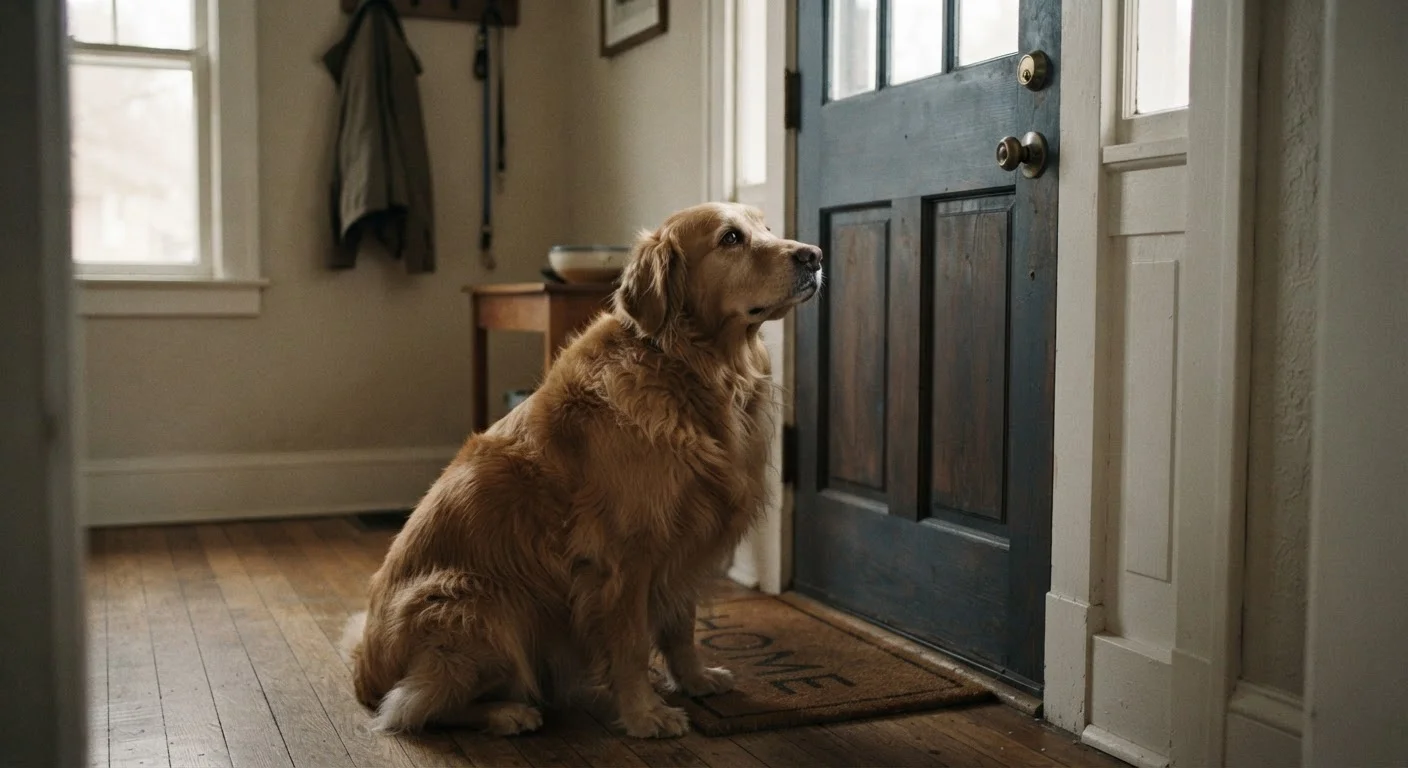
What Separation Anxiety Actually Is
Separation anxiety is a behavioral and emotional condition in which a dog experiences significant distress when left alone or separated from attachment figures. It is classified as a true anxiety disorder - not a training failure, not attention-seeking, and not spite. Dogs experiencing separation anxiety are in genuine psychological distress, which is why punishment-based responses tend to worsen rather than resolve the problem.
The condition exists on a spectrum. Mild cases may involve restlessness and some vocalization. Severe cases can lead to self-injury, destructive behavior, and complete inability to settle when alone. Understanding where a dog falls on that spectrum matters enormously for choosing an appropriate management plan.
If you are still in the early stages of building a relationship with a new dog, our guide on what to expect in the early weeks at home provides useful context for establishing routines that support emotional security from the start.
Recognizing the Signs
The defining feature of separation anxiety is that problematic behaviors occur specifically in the context of being alone or anticipating separation - not as general misbehavior throughout the day. Common signs include:
- Destructive behavior concentrated near exits (doors, windows)
- Excessive vocalization - howling, whining, or barking that begins shortly after departure
- Inappropriate elimination in house-trained dogs, occurring only when alone
- Pacing, salivation, or trembling before or during departures
- Escape attempts that sometimes result in self-injury
- Pre-departure anxiety - the dog becoming distressed as routine departure cues appear (picking up keys, putting on shoes)
Video monitoring is one of the most useful diagnostic tools owners have access to. Recording what a dog does in the first 30-60 minutes after departure provides information that is difficult to obtain any other way, and it helps distinguish true separation anxiety from boredom, under-stimulation, or other causes of problem behavior.
Set up a camera pointed at your dog's resting area before you leave, even for short trips. Reviewing the footage objectively - rather than relying on neighbor reports or post-return evidence - is the fastest way to accurately characterize what is actually happening.
Owner-reported behavior frequently underestimates or misidentifies anxiety symptoms, and video evidence is now considered a standard tool in veterinary behavioral assessments.
Avoid making arrivals and departures emotionally charged. Long, emotional goodbyes and exuberant greetings can inadvertently signal to your dog that these transitions are significant events worth being anxious about.
Calm, matter-of-fact departures and arrivals help normalize the routine and reduce the emotional weight the dog places on those moments, which is a consistent recommendation in behavioral guidance for separation anxiety.
Why It Develops
No single cause explains all cases of separation anxiety. Research points to several contributing factors:
- Early socialization gaps
- Puppies that miss key developmental windows may develop heightened sensitivity to novelty and isolation. The socialization window in early puppyhood has lasting effects on adult emotional resilience.
- Changes in routine or household composition
- A return to work after an extended period at home, the loss of a family member, or rehoming can all trigger or intensify separation-related distress.
- Genetic predisposition
- Some breeds and individual dogs appear more prone to attachment-based anxiety, though predisposition is not destiny - environment plays a significant role.
- History of abandonment or shelter stays
- Dogs with uncertain histories may arrive with pre-existing anxiety that requires careful, patient management from the beginning.
It is also worth noting that inadvertent reinforcement of clingy behavior - while not the primary cause - can complicate the picture if a dog learns that distress reliably brings the owner back.
~17%
Dogs estimated to show separation anxiety signs
Research published in veterinary behavioral literature estimates that roughly 17% of the general dog population displays signs consistent with separation-related problems.
Top 3
Most common reason dogs are relinquished to shelters
Separation anxiety and related destructive behaviors are consistently cited among the leading reasons owners surrender dogs to shelters in the United States.
Evidence-Based Management Approaches
The most robustly supported behavioral intervention for separation anxiety is systematic desensitization combined with counterconditioning. The core principle: expose the dog to the trigger (being alone) in increments so small that anxiety is never fully triggered, while pairing those absences with something positive.
In practice, this means starting with departures of only a few seconds, gradually extending duration only when the dog is reliably calm at each level. Progress is measured in weeks or months, not days. Rushing the process typically resets progress.
Practical supporting strategies include:
- Independence training: Rewarding calm, settled behavior when the owner is present and the dog is not actively seeking contact helps reduce hyper-attachment.
- Departure cue neutralization: Repeatedly performing pre-departure routines (keys, coat, shoes) without actually leaving reduces the predictive value of those cues.
- Environmental enrichment: Puzzle feeders, long-lasting chews, or activity toys used exclusively during absences can create positive associations with alone time.
- Consistent confinement decisions: Whether you use a crate or allow free roaming, consistency matters. Our article on crate training versus free roaming can help you weigh the options for your specific dog.
Start Smaller Than You Think You Need To
When beginning desensitization, most owners underestimate how small the starting increment needs to be. If your dog shows any visible anxiety at a 30-second absence, start at five seconds. Building tolerance on a solid foundation moves faster in the long run than pushing too quickly and having to backtrack.
When to Involve a Veterinarian or Behaviorist
Behavioral modification alone is not always sufficient. For moderate to severe separation anxiety, veterinary consultation is an important step - not a last resort. A veterinarian can assess whether an underlying medical condition is contributing to anxiety, and may discuss whether pharmacological support is appropriate alongside behavioral work. Medication, when indicated, is not a substitute for behavior modification; it is intended to reduce baseline anxiety enough that the dog can learn.
A certified applied animal behaviorist (CAAB) or a veterinary behaviorist (Dip ACVB) offers the highest level of expertise for complex cases. Board-certified practitioners use structured, individualized protocols rather than generic advice.
Do not delay professional help if:
- The dog is injuring itself attempting to escape
- There has been no measurable improvement after four to six weeks of consistent effort
- The anxiety is severe enough to affect the dog's quality of life or the owner's ability to leave home
Separation anxiety is a manageable condition for most dogs, but it requires realistic expectations, patience, and - in many cases - professional guidance. Understanding the condition clearly is the first step toward addressing it effectively.
This article is for general informational purposes only and is not a substitute for advice from a qualified veterinarian or certified animal behaviorist. If your dog is showing signs of significant distress, consult a veterinary professional.
The content on this site is provided for informational purposes only and should not be considered a substitute for professional advice. While we strive to provide accurate and up-to-date information, we make no guarantees regarding its completeness or accuracy. Always consult a qualified professional for advice specific to your circumstances before making any decisions.